Tornado Outbreak of April 27-28, 2011
2011 · Tuscaloosa, United States
A series of tornadoes struck the southern United States, particularly Alabama, resulting in over 300 deaths and extensive damage.
April 3, 1974
The Super Outbreak, the second largest tornado outbreak on record, occurred in the United States and Canada, with a total of 148 tornadoes confirmed over an 18-hour period.
Multiple, USA/Canada | National Weather Service
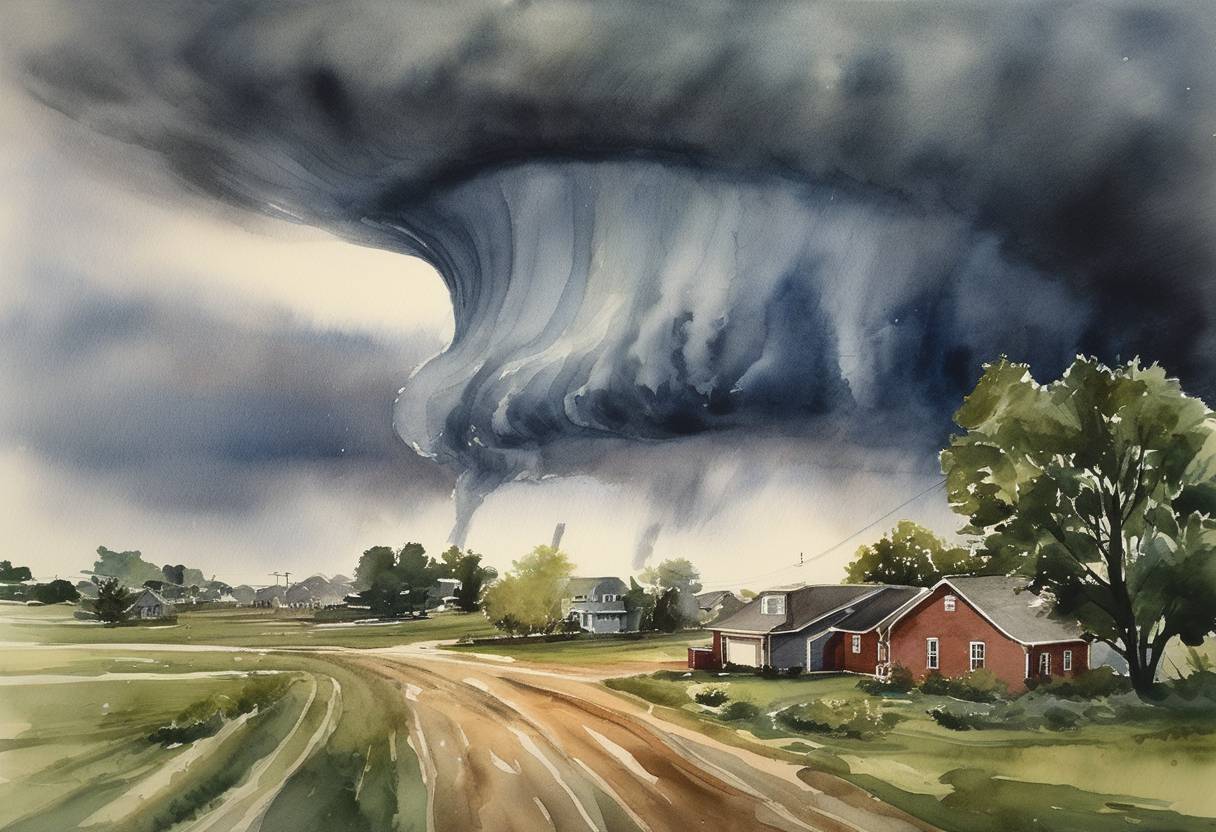
The Super Outbreak of April 3, 1974, remains one of the most significant natural disasters in the annals of meteorological history. It was the second-largest tornado outbreak recorded in the United States and Canada, overshadowed only by the 2011 Super Outbreak. This catastrophic event spanned across an 18-hour period, during which 148 tornadoes were confirmed to have touched down, wreaking havoc across the Midwest, Southeast, and parts of the Northeast regions of the United States and even southern Canada.
The outbreak on April 3, 1974, was driven by a potent combination of meteorological conditions. A strong low-pressure system moved through the Midwest, creating an unstable atmosphere conducive to tornado formation. Warm, moist air from the Gulf of Mexico collided with cooler, drier air from Canada, leading to severe thunderstorms. The significant wind shear and atmospheric instability provided the right environment for tornadoes to form intensively and prolifically.
The impact of the Super Outbreak was devastating:
The 1974 Super Outbreak led to significant advancements in tornado forecasting and emergency preparedness:
The Super Outbreak of April 3, 1974, not only highlighted the extreme power of natural weather phenomena but also paved the way for substantial improvements in meteorological science and public safety protocols, shaping how severe weather is understood and managed even today.
Source: www.weather.gov