Invasion of Luzon: January 9, 1945
1945 · Lingayen Gulf, Philippines
The United States began an invasion of the Philippines' main island of Luzon by landing on the beaches of Lingayen Gulf during World War II.
April 2, 1942
During World War II, Japanese forces began their assault on the Bataan Peninsula in the Philippines, leading to the eventual Bataan Death March.
Bataan, Philippines | Imperial Japanese Army
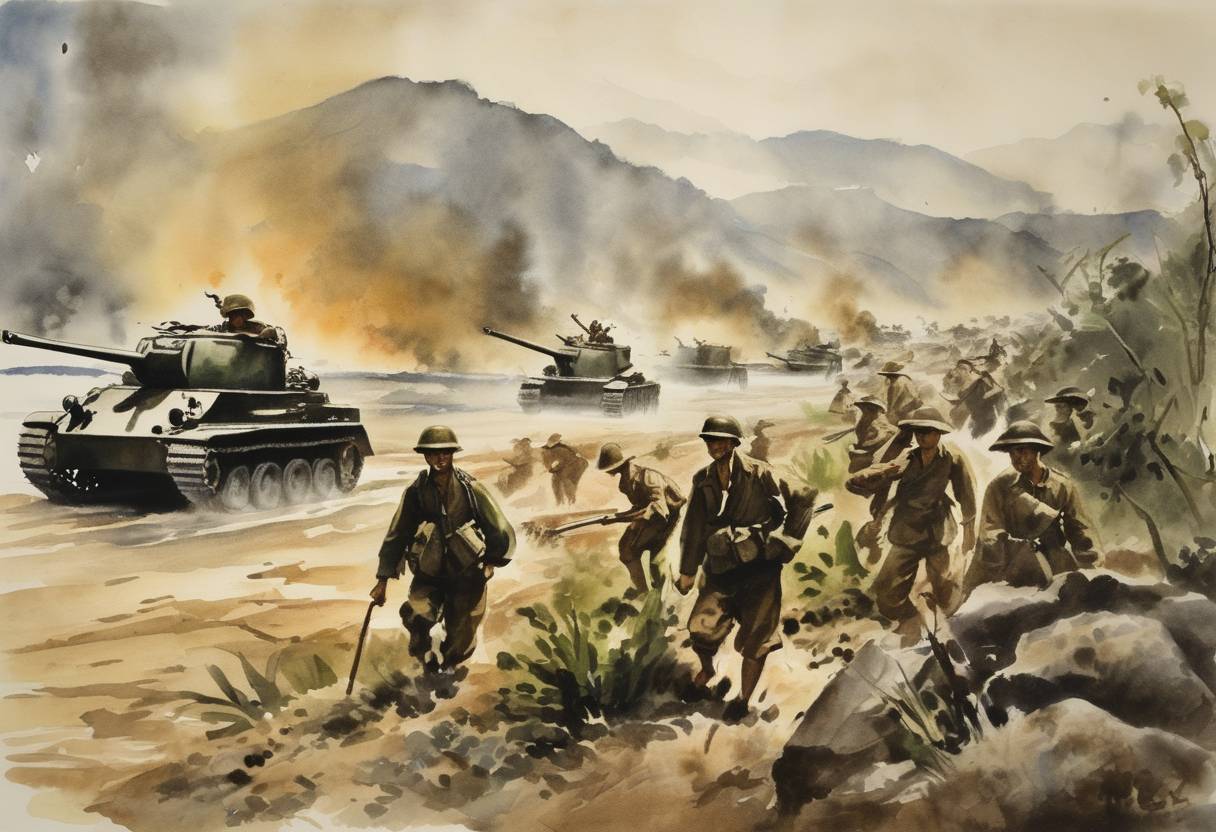
On April 2, 1942, during World War II, Japanese forces intensified their assault on the Philippines by initiating a determined attack on the Bataan Peninsula. This offensive was part of a broader campaign to secure the strategic archipelago following the Japanese invasion in December 1941.
The invasion of the Philippines began on December 8, 1941, the day after the attack on Pearl Harbor. Japanese forces rapidly advanced through the islands, compelling American and Filipino troops, under the command of General Douglas MacArthur, to retreat to the Bataan Peninsula by January 1942. For months, these Allied defenders endured grueling conditions, including shortages of food, medicine, and supplies, as they valiantly resisted Japanese forces.
Initial Defense: Following the fall of Manila, the capital of the Philippines, American and Filipino forces consolidated their defenses on Bataan, using the peninsula’s rugged terrain to their advantage.
Siege of Bataan: By early 1942, Japanese forces aimed to eliminate this last stronghold of resistance. The Japanese High Command increased pressure, leading to severe attrition among the entrenched Allied forces.
Build-Up to the Final Assault: In late March 1942, the Japanese amassed additional troops and artillery along the front lines, poised to deliver a decisive blow and capture Bataan.
On April 2, 1942, with superior numbers and overwhelming firepower, Japanese troops launched an all-out attack on the weakened and exhausted Allied forces in Bataan. This renewed offensive quickly broke through the defensive lines. Despite fierce resistance, the beleaguered defenders, suffering from malnutrition and disease, were ultimately unable to hold back the Japanese advance.
Fall of Bataan: The relentless assault forced the surrender of Allied forces on Bataan a few days later, on April 9, 1942. This defeat marked a significant loss for American and Filipino forces in the Pacific Theater.
The Bataan Death March: Following the surrender, roughly 76,000 American and Filipino soldiers were captured and subjected to the infamous Bataan Death March. During this forced transfer from Bataan to POW camps, thousands succumbed to harsh conditions, brutality, and executions.
Strategic Impact: The fall of Bataan and subsequent Japanese control over the Philippines shifted the balance in the Pacific, emphasizing the critical need for a robust Allied counteroffensive, which would later culminate in campaigns like the Battle of Midway and the eventual return of Allied forces to the Philippines in 1944.
The events on April 2, 1942, stand as a poignant moment in World War II history, illustrating the harsh realities of warfare and the enduring spirit of those who defended Bataan against overwhelming odds.
Source: www.britannica.com