The Fall of Mussolini: July 25, 1943
1943 · Rome, Italy
Benito Mussolini was dismissed as Italian Prime Minister and arrested following a vote of no confidence by the Grand Council of Fascism, leading to the fall of the Fascist regime in Italy.
July 14, 1948
Palmiro Togliatti, the leader of the Italian Communist Party, was shot and wounded in an assassination attempt in front of the Parliament buildings in Rome, leading to widespread strikes and unrest throughout Italy.
Rome, Italy | Italian Communist Party
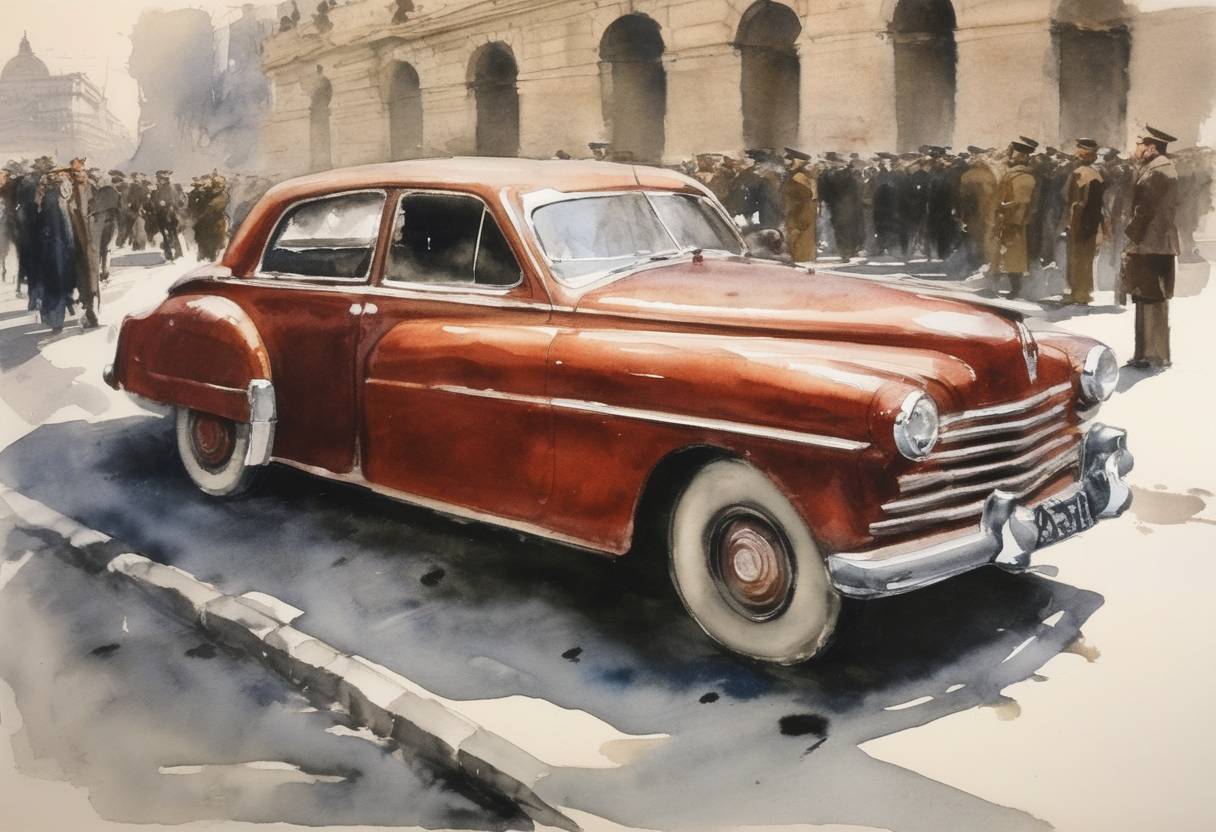
On July 14, 1948, Palmiro Togliatti, the leader of the Italian Communist Party (PCI), narrowly survived an assassination attempt that sent shockwaves through Italy and triggered a wave of civil unrest. This event underscored the intense political tensions in post-World War II Italy and had significant immediate and long-term implications for the country.
As Togliatti was leaving the Italian Parliament buildings in Rome, he was shot by a 25-year-old Italian nationalist named Antonio Pallante. Ordinarily, Togliatti might have been protected by police presence, but the political climate allowed Pallante to get close enough to fire multiple shots. The bullets struck Togliatti in the neck and chest, severely wounding him. Despite the critical nature of his injuries, rapid medical attention ensured Togliatti survived after intensive surgery.
Post-war Italy was marked by political instability, with tensions especially high between the Italian Communist Party and opposing forces, including the Christian Democrats then in power. Togliatti was not only a leading political figure but also a symbol of the leftist movement aiming to extend its influence in Italian politics during a time when Cold War dynamics heightened ideological conflicts in Europe.
News of the shooting quickly spread, leading to widespread strikes and protests across Italy. The PCI, with considerable support among workers and intellectuals, mobilized its followers. Factories halted production, and workers’ strikes became rampant, while street demonstrations erupted in numerous cities. Rome and Milan, in particular, saw significant social unrest.
The government, headed by Alcide De Gasperi of the Christian Democrats, faced an immediate crisis. The fear of potential revolutionary actions by the left prompted a heightening of security measures. The Italian government and political leaders worked frantically to stabilize the situation, urging restraint and calling for calm as Togliatti’s condition was closely monitored.
The events of July 14 reaffirmed the profound divisions within Italian society and politics in the post-war era. The attempted assassination highlighted the vulnerability and contentious nature of post-war Italian democracy, balancing on a knife’s edge between stabilizing democratic institutions and the risks of authoritarianism or chaos instilled by extremist factions.
In the longer term, Togliatti’s survival allowed him to continue to influence Italian politics and propose industrial reforms and policies aimed at promoting peace and democracy. His leadership through the volatile period further contributed to the PCI’s tactics, which evolved towards finding a cooperative stance within the Italian parliamentary framework.
The attempt on Togliatti’s life on July 14, 1948, was more than just an assassination attempt on an individual; it was an episode that encapsulated the ideological struggles of the time. It played a significant role in shaping the discourse around communism and democracy within Italy, influencing Italian politics and society in the ensuing years. The incident remains a testament to the era’s volatility and the enduring struggle for political balance in post-war Europe.
Source: www.marxists.org