Canonization of Ignatius of Loyola and Francis Xavier
1622 · Rome, Italy
Ignatius of Loyola and Francis Xavier, founders of the Society of Jesus (Jesuits), are canonized as saints by the Catholic Church.
October 23, 1593
The Catholic Church declared Henry IV of France legitimate ruler despite his Protestant past, marking a shift in the French Wars of Religion.
Rome, Italy | Catholic Church
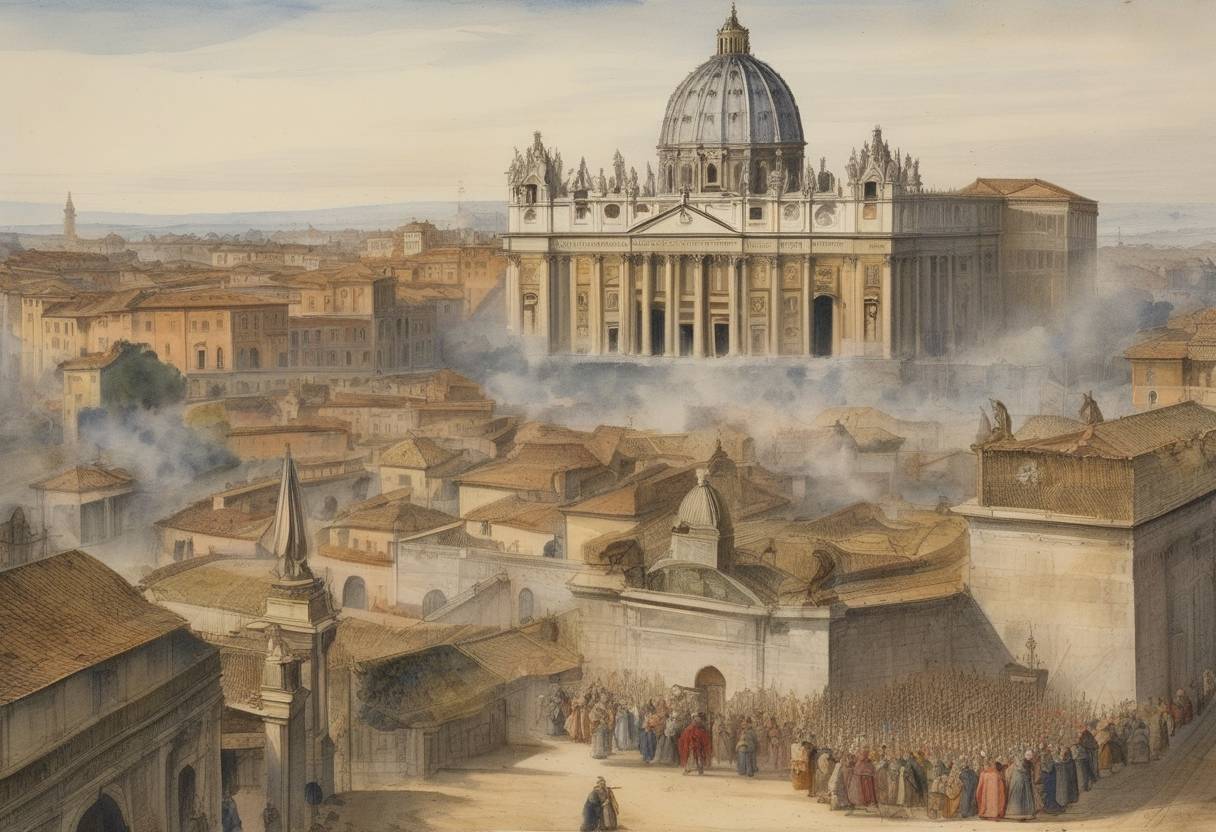
On October 23, 1593, a significant event in the French Wars of Religion took place: the Catholic Church formally recognized Henry IV of France as the legitimate ruler, despite his Protestant background. This declaration marked a pivotal moment in the resolution of religious conflicts that had long afflicted France, signaling a turning point in the wars between Catholics and Huguenots (French Protestants).
The French Wars of Religion (1562-1598) were a series of prolonged and brutal conflicts primarily between Catholics and Huguenots. Tensions had escalated since the 16th century, fueled by religious intolerance and political strife.
Henry IV, initially a Protestant and a member of the House of Bourbon, became heir to the French throne in the 1580s following the extinction of the Valois line. His accession was contentious and opposed by many Catholics in France and Europe who were reluctant to accept a Protestant king. This led to the War of the Three Henrys—one of the final conflicts in the religious wars.
Henry IV’s path to acceptance involved both military and diplomatic strategies. He famously converted to Catholicism in July 1593, reportedly declaring, “Paris is well worth a Mass,” in a pragmatic move to quell resistance and gain the support of Catholic France. This conversion was not immediate, as required trust-building and negotiation with various factions within France and the papacy.
The acknowledgment by the Catholic Church of Henry IV’s legitimacy was a crucial step in consolidating his reign. It confirmed his conversion as sincere and legally valid, thus bridging a path for peace between religious factions within France. This papal recognition helped allay fears from Catholic quarters and encouraged eventual acceptance from Catholic leaders both domestically and across Europe.
The declaration was a catalyst for the Edict of Nantes in 1598, which Henry IV issued to grant significant religious freedoms to the Huguenots, effectively ending the religious wars in France. Henry’s reign thereafter focused on reconstruction and reunification, leading to a period of prosperity and relative religious peace until his assassination in 1610.
The acceptance of Henry IV’s rule by the Catholic Church not only marked a strategic shift in papal policy but also underscored the political necessity of religious tolerance in ensuring national stability. This event profoundly impacted European dynamics and the future discourse of religion in state affairs.