German Bombardment of Hartlepool and Scarborough
1914 · Hartlepool and Scarborough, United Kingdom
World War I: German warships bombarded the English ports of Hartlepool and Scarborough.
June 21, 1919
The scuttling of the German Fleet at Scapa Flow occurred. Following the end of World War I, German sailors scuttled their own fleet of warships interned at Scapa Flow in Scotland to prevent them from falling into Allied hands.
Scapa Flow, United Kingdom | Imperial German Navy
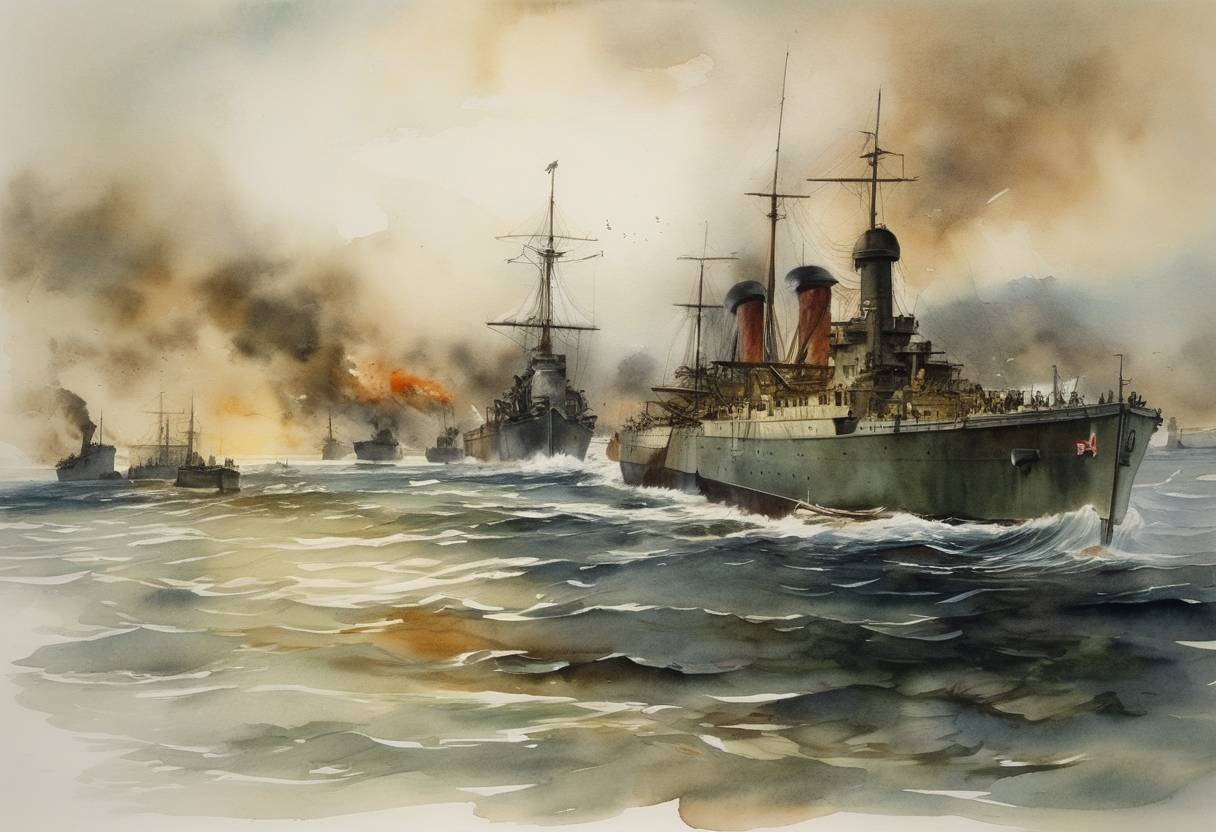
The scuttling of the German Fleet at Scapa Flow was a direct result of the end of World War I. Following the Armistice of November 1918, the German High Seas Fleet was interned at Scapa Flow, a body of water in the Orkney Islands of Scotland. This internment was part of the terms dictated by the Allies pending the resolution of the Treaty of Versailles, which aimed to formally end the state of war and negotiate the post-war order.
The fleet comprised 74 vessels, including battleships, cruisers, and destroyers, under the command of Rear Admiral Ludwig von Reuter. Despite being disarmed, the presence of these ships symbolized the remnants of the once formidable Kaiserliche Marine.
On the morning of June 21, 1919, Admiral von Reuter, anticipating the seizure of the fleet as spoils of war with the conclusion of the Treaty of Versailles, secretly ordered his crews to scuttle the ships. This decision was made without explicit orders from the German government, but von Reuter judged it necessary to deny the Allies the use of these vessels.
The scuttling commenced around noon, when the British guard ships had momentarily departed for exercises. The Germans opened sea valves and flooded the ships, resulting in 52 of the 74 vessels sinking to the bottom of Scapa Flow. The larger battleships and cruisers were the first to be affected. British forces attempted to beach or tow some of the vessels to prevent their loss, succeeding with only a few.
The scuttling represents one of the largest acts of maritime self-destruction in history. Nine Germans were killed in the disorder that ensued, the last fatalities between Britain and Germany in World War I.
While the incident initially caused diplomatic uproar, with the British viewing it as a violation of trust, it inadvertently resolved a contentious issue: the allocation of the fleet among the Allies. The ships remained largely unrecoverable as the cost and effort required for salvage did not align with the post-war priorities of the period.
In subsequent years, some ships from the wreckage were salvaged and scrapped, the metal proving valuable given that it had not been exposed to atmospheric nuclear tests. The scuttling had lasting environmental and historical implications and remains a significant event, illustrating a dramatic conclusion to Germany’s naval ambitions during World War I.
Source: www.britannica.com