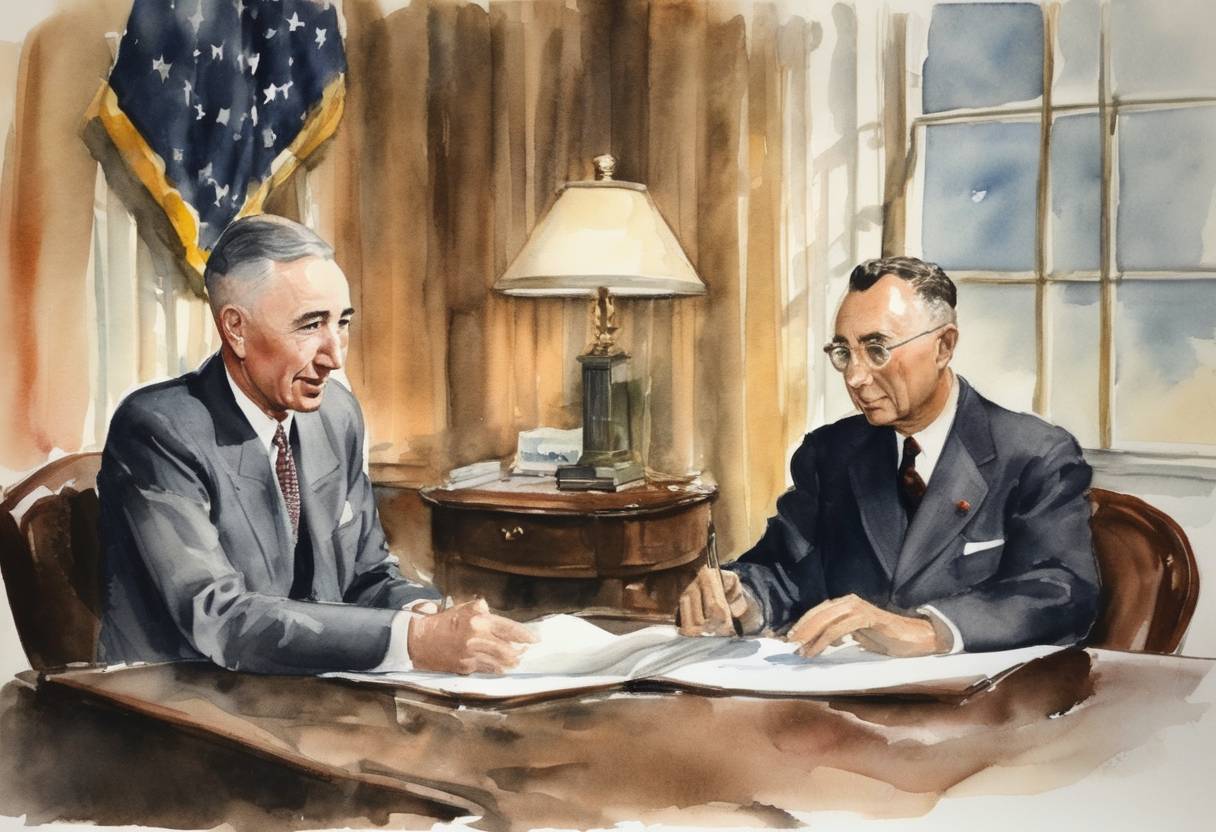
J. Robert Oppenheimer’s Meeting with President Harry Truman: December 8, 1945
On December 8, 1945, J. Robert Oppenheimer, often referred to as the “father of the atomic bomb,” met with U.S. President Harry S. Truman in Washington, D.C. This significant meeting came several months after the atomic bombings of Hiroshima and Nagasaki in August, which marked the end of World War II. The discussion was pivotal due to the massive impact and potential future implications of nuclear weaponry.
Context Leading to the Meeting
The Manhattan Project
- Development: The project began in earnest in 1942, with Oppenheimer as its scientific director. The goal was to develop an atomic bomb before Nazi Germany could achieve the same.
- Success: The first successful atomic bomb test, codenamed “Trinity,” occurred on July 16, 1945, in New Mexico.
Use of Atomic Bombs
- The bombings of Hiroshima on August 6 and Nagasaki on August 9 in 1945 led to Japan’s subsequent surrender, effectively concluding World War II.
Significance of the December 8 Meeting
Oppenheimer’s Role
- As the leading figure in the development of the atomic bomb, Oppenheimer’s insight into the technical and ethical considerations of atomic energy was crucial.
Discussion Points
- Post-war Policy: The meeting aimed to address the future control and regulation of atomic energy, which was now a central issue in post-war international relations.
- Moral Dilemma: Reports suggest Oppenheimer expressed personal moral reservations about the use of atomic bombs, reflecting the emerging debate on nuclear ethics.
President Truman’s Perspective
- Political Considerations: Truman’s administration was focused on establishing U.S. dominance and ensuring nuclear technology would not proliferate beyond American control.
Aftermath and Consequences
Establishment of Control Measures
- The meeting contributed to discussions that would eventually lead to the creation of the Atomic Energy Commission in 1946, tasked with overseeing nuclear technology’s use for both civilian and military applications.
Impact on Oppenheimer
- Oppenheimer’s relationship with the U.S. government became strained due to growing tensions over nuclear policy, leading to his later security clearance revocation during the Red Scare.
Broader Historical Significance
- The December 8 meeting exemplifies the immediate post-war shift from wartime necessity to peacetime governance of nuclear power.
- It set the stage for Cold War-era nuclear arms control efforts and the global discourse on the ethical implications of nuclear warfare.
This meeting highlighted the challenges faced by scientists and politicians in the atomic age, shaping the geopolitical landscape of the 20th century and beyond.