The Meiji Constitution Comes into Effect: November 29, 1890
1890 · , Japan
The Meiji Constitution came into effect in Japan, establishing a form of constitutional monarchy.
February 5, 1887
The European college of the University of Tokyo was reorganized into the Tokyo Imperial University, marking a significant development in Japan's higher education system.
Tokyo, Japan | University of Tokyo
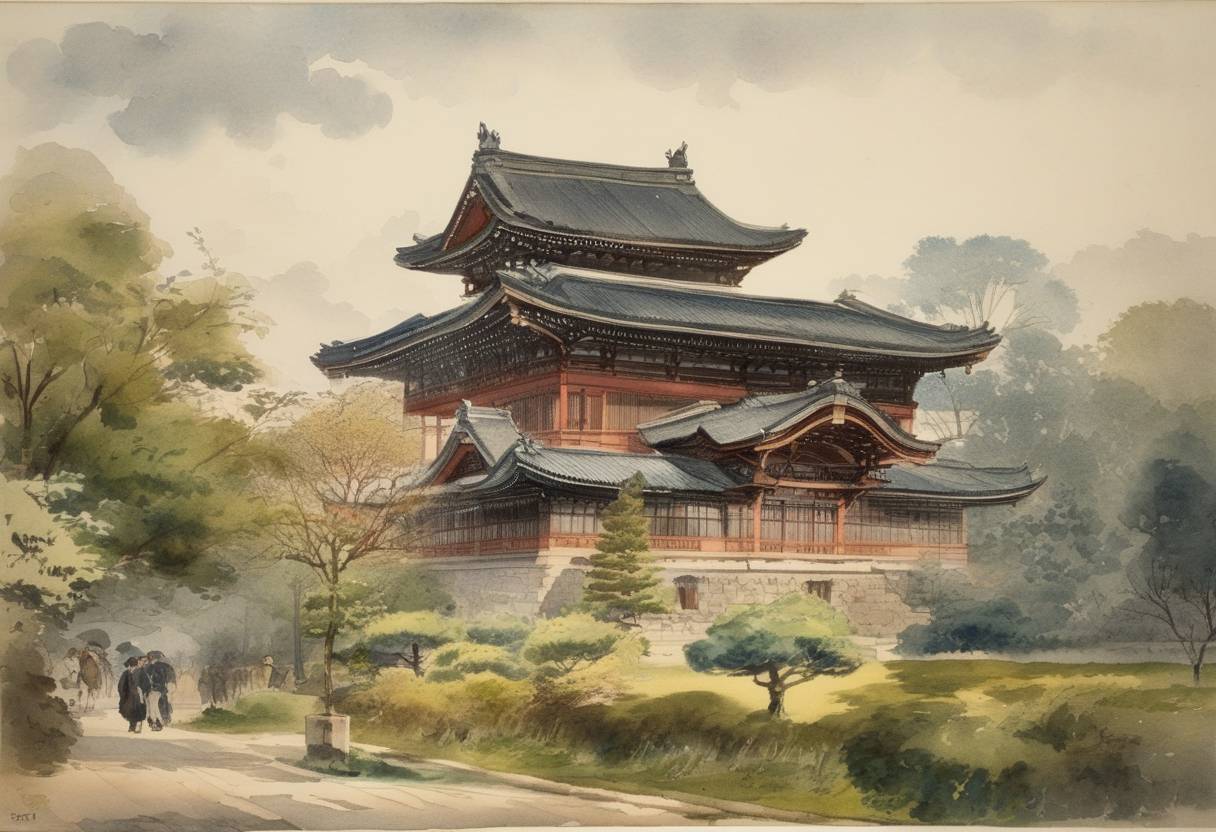
On May 2, 1887, a pivotal event in Japan’s educational history transpired with the reorganization of the European College of the University of Tokyo into Tokyo Imperial University. This transformation marked significant advancement in Japan’s modernization and educational reform efforts during the Meiji Era.
In the wake of the Meiji Restoration, Japan was undergoing rapid modernization and Westernization, striving to build a robust nation-state capable of standing shoulder to shoulder with Western powers. Education was a central focus, as it was deemed essential for fostering intellectual and technological advancement. The government sought to standardize education and cultivate talent capable of contributing to national progress.
Originally established as a school for Western studies, the University of Tokyo was comprised of various faculties, among them the European College, which offered Western-style education in sciences, literature, and law. The Japanese government, recognizing the necessity for a comprehensive and sophisticated educational infrastructure to support its reform ambitions, initiated the transformation of this institution.
The reorganization in 1887 was part of a broader effort to centralize and enhance Japan’s higher education system. The newly formed Tokyo Imperial University was envisioned as a top-tier institution for fostering elite scholars who would assume leadership roles in government and industry.
Tokyo Imperial University became the first of several imperial universities established across Japan, aiming to provide advanced education in various disciplines, including natural sciences, engineering, and humanities. As the premier institution of higher learning, it set educational standards nationwide, influencing curriculum development, educational policies, and academic research across the country.
The formation of Tokyo Imperial University represented a critical step in Japan’s pursuit of academic excellence and international prestige. It became instrumental in producing leaders who played key roles in Japan’s political, economic, and scientific advancements in the 20th century. The university’s legacy continues to influence Japan’s educational landscape, becoming a symbol of academic excellence and innovation.
This event is emblematic of Japan’s broader Meiji Era transformations, which laid the groundwork for its emergence as a major world power by the early 20th century. The reformation of the University of Tokyo into Tokyo Imperial University showcases the strategic efforts by the Japanese government to harness education as a vehicle for national development and modernization.
Source: en.wikipedia.org