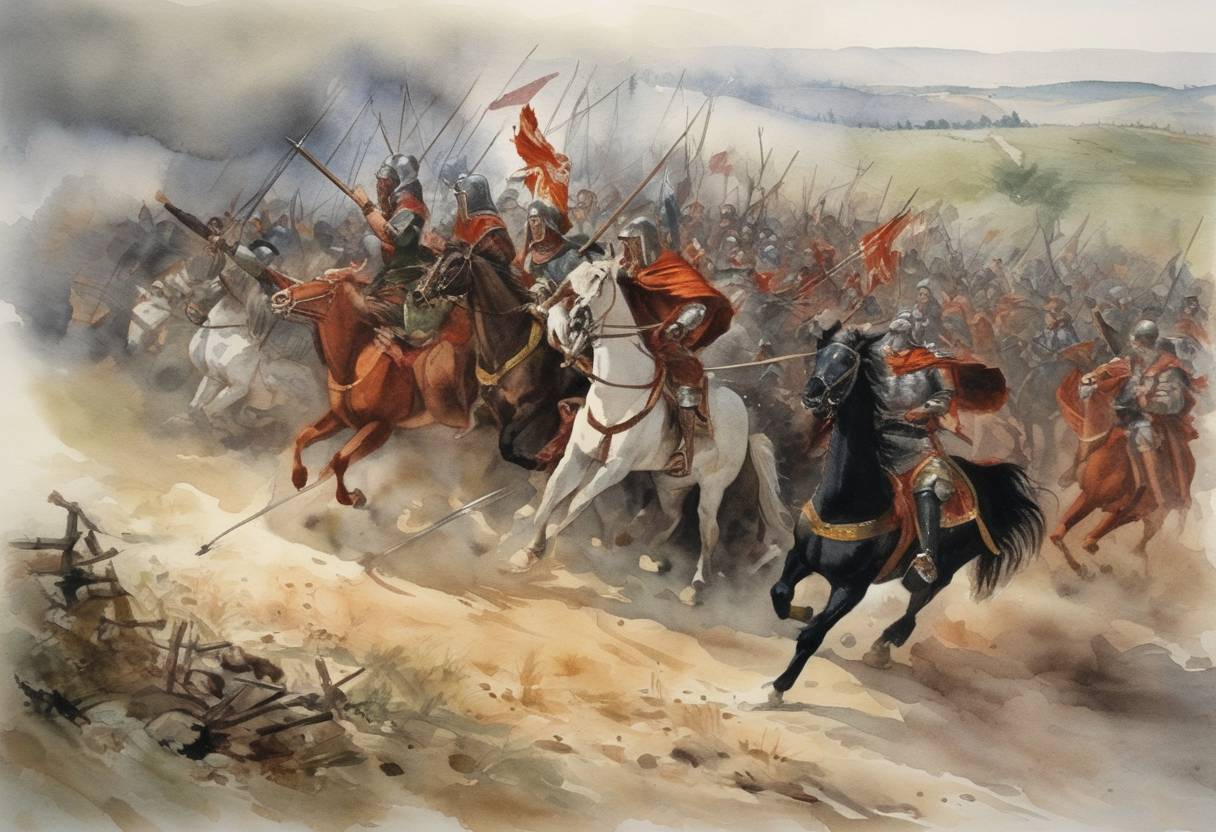
The Battle of Posada (November 9-12, 1330)
The Battle of Posada took place from November 9 to November 12, 1330, in a narrow pass in the Carpathian Mountains, present-day Romania. This significant conflict was fought between the forces of Basarab I, the Voivode of Wallachia, and the army of Charles I Robert, King of Hungary.
Background
Political Tensions: Prior to the battle, tensions had escalated between Wallachia and Hungary. Basarab I sought to establish Wallachian autonomy and resisted Hungarian overlordship. The refusal to pay tribute to King Charles I and territorial disputes triggered the conflict.
Hungarian Campaign: Charles I led an expedition into Wallachia in an attempt to subjugate Basarab I. The campaign initially seemed advantageous to Hungary, as they advanced into Wallachian territory.
The Battle
Ambush at Posada: From November 9-12, 1330, the Wallachian forces, utilizing their knowledge of the rugged terrain, ambushed Charles I’s retreating army within the narrow mountain pass at Posada.
Tactics and Strategy: Basarab’s troops, likely comprising local peasants and cavalry, utilized guerrilla tactics, raining rocks and arrows down from the heights upon the trapped Hungarian forces. The surprise and terrain offered the outnumbered Wallachians a strategic advantage.
Outcome: The battle ended in a decisive victory for Wallachia. Charles I narrowly escaped capture, while his army suffered heavy losses.
Aftermath and Significance
Wallachian Independence: The victory at Posada was pivotal in securing Wallachian independence and undermining Hungarian influence in the region.
Legitimacy and Prestige: Basarab I solidified his rule and gained significant prestige, laying the foundation for future Wallachian consolidation and resistance against external powers.
Historical Impact: The Battle of Posada is often celebrated as a moment of national triumph in Romanian history, symbolizing resilience and the ability of smaller states to successfully resist larger imperial forces.