1917 · Washington, D.C., United States
The United States Congress passes the Immigration Act of 1917, which restricts immigration by imposing literacy tests and barring immigrants from Asia.
May 6, 1882
The Chinese Exclusion Act was signed into law by President Chester A. Arthur in the United States. It was the first significant law restricting immigration into the United States, specifically targeting Chinese laborers.
Washington, D.C., United States | U.S. Government
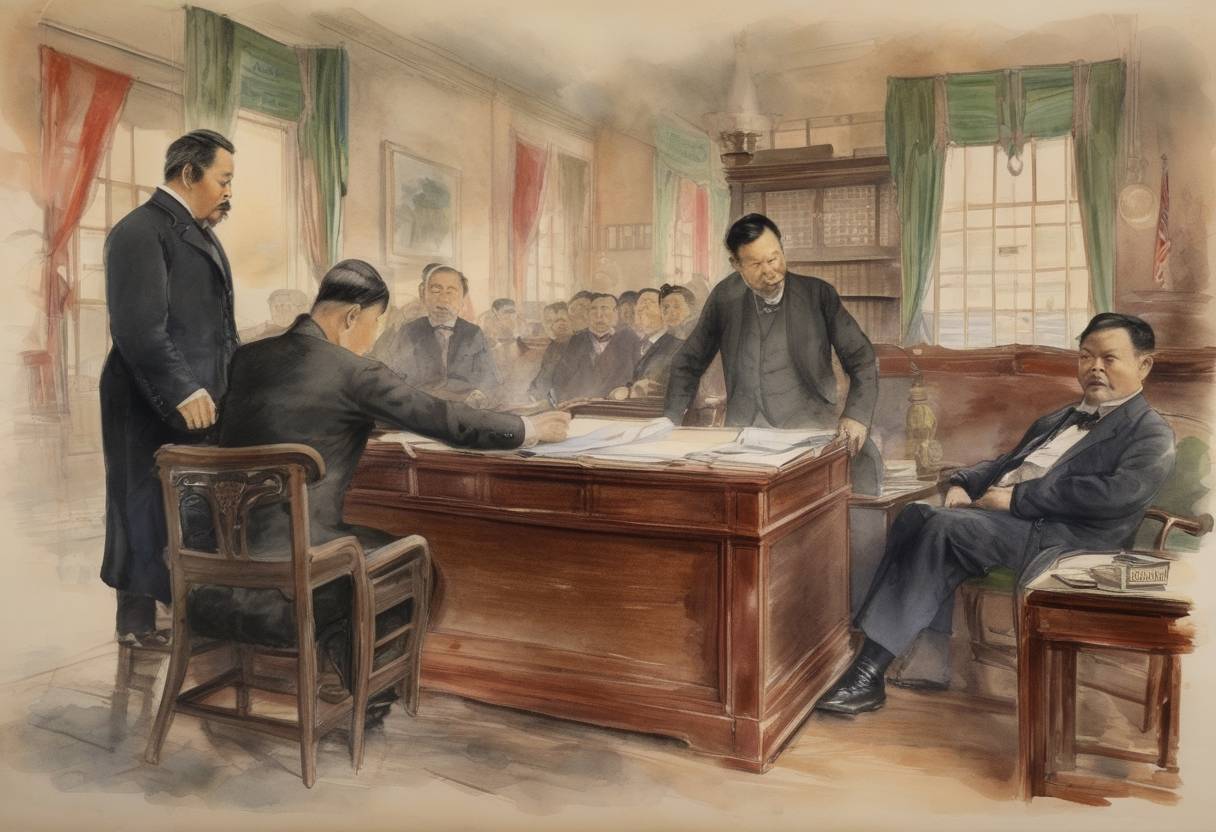
On May 6, 1882, President Chester A. Arthur signed into law the Chinese Exclusion Act, marking a significant and restrictive change in U.S. immigration policy. This legislation was the first major federal law that explicitly curtailed immigration by prohibiting all immigration of Chinese laborers for ten years.
The origins of this Act can be traced back to the late 19th century, when large numbers of Chinese laborers immigrated to the United States, primarily to work in the mining and railroad industries during and after the California Gold Rush. By the mid-1800s, significant anti-Chinese sentiment had developed, fueled by economic competition and racial discrimination. Many Americans, particularly in the western states, held the belief that Chinese immigrants were responsible for depressing wages and taking jobs away from white workers.
The Chinese Exclusion Act included the following key elements:
Enforcement of the Act led to a significant decrease in Chinese immigration. The law was renewed in 1892 with the Geary Act, which extended the exclusion for another ten years and added new requirements. In 1902, Congress made Chinese exclusion permanent, a policy stance that endured until the mid-20th century.
The Chinese Exclusion Act had far-reaching effects, setting a precedent for subsequent restrictive immigration laws. The Act damaged diplomatic relations between the United States and China, contributing to increased racial discrimination and social tension within the U.S. The exclusionary policies formally ended in 1943 with the Magnuson Act, which allowed a small number of Chinese immigrants to enter the U.S. annually and permitted them to become naturalized citizens.
The Chinese Exclusion Act remains a crucial example of institutionalized racial discrimination in the United States. It is studied as an essential event in the history of U.S. immigration policy and racial relations, serving as a reminder of the impacts of exclusionary laws on minority communities.
Source: en.wikipedia.org