The First Session of the French Legislative Assembly: October 1, 1791
1791 · Paris, France
The first session of the French Legislative Assembly was held, following the French Revolution's National Constituent Assembly.
July 12, 1790
The Civil Constitution of the Clergy was passed in France. This legislation, enacted during the French Revolution, aimed to restructure the Catholic Church in France, bringing it under state control and leading to significant tensions between the state and the church.
Paris, France | French National Constituent Assembly
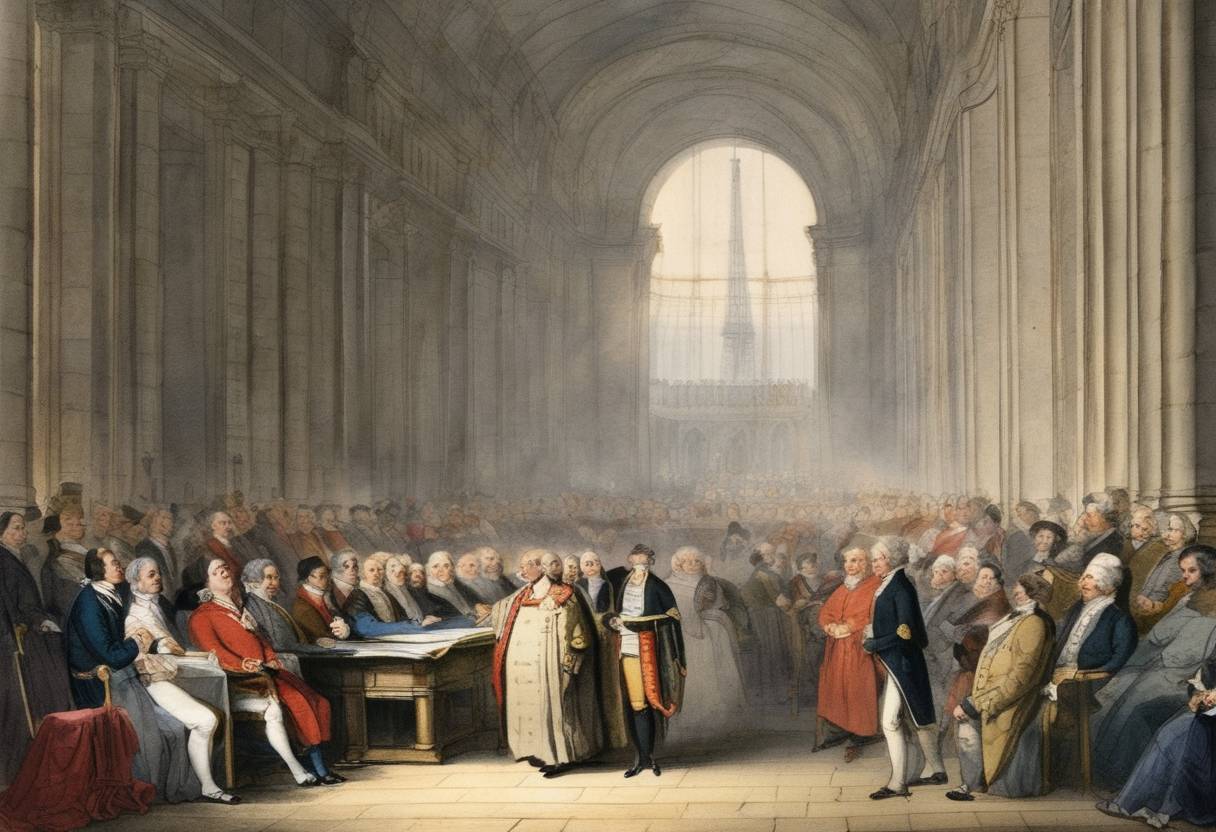
On July 12, 1790, the French National Constituent Assembly enacted the Civil Constitution of the Clergy, a significant legislative measure during the French Revolution aimed at restructuring the Catholic Church in France. This law sought to bring the Church under state control and address financial shortages by appropriating its wealth.
The French Revolution, which began in 1789, was a period of radical social and political upheaval. The revolutionaries sought to reduce the influence of the Catholic Church in state affairs and address the economic crisis by seizing church assets. Prior to 1790, the Church owned approximately 10% of the land in France and enjoyed privileges that exempted it from many taxes, contributing to public discontent.
Reorganization of the Clergy: The Civil Constitution of the Clergy reorganized the administrative structure of the Church. Bishops and priests were to be elected by the public, a move that diminished papal authority, as the Church in Rome traditionally appointed bishops.
Salaries and Expenses: Clergy salaries were to be funded by the state, effectively making them employees of the government. This changed the economic dynamics and allegiance of the clergy, aligning their interests more closely with the revolutionary government.
Diminished Papal Power: The law required that all bishops and priests swear an oath of allegiance to the state, undermining the Pope’s influence in ecclesiastical appointments and doctrinal matters in France.
Religious Schism: The Civil Constitution led to a schism within the French Catholic Church. Many clergy refused to swear the oath, leading to their replacement by state-aligned priests. This division resulted in tension and conflict, both within the church and among the laity.
Public Unrest: The legislation exacerbated tensions between revolutionary secular powers and religious citizens loyal to the traditional Church structure. It alienated devout Catholics and contributed to counter-revolutionary sentiment in parts of France, notably in the Vendée region, leading to uprisings and violence.
Impact on the Revolution: The Civil Constitution’s impact extended beyond religious circles, affecting the broader revolutionary landscape. It highlighted the deep fault lines in French society and contributed to the polarization that characterized much of the revolutionary era.
The implementation of the Civil Constitution marked a significant point in the destabilization of church-state relations. In subsequent years, the conflict would lead to persecution of non-juring clergy (those who refused the oath) and intensified the divide between revolutionary and conservative elements in France. The lingering effects of this schism would persist, influencing French politics and religion long after the revolution had ended. The Concordat of 1801, negotiated by Napoleon Bonaparte, eventually sought to reconcile the church and state, but the tensions and transformations initiated on July 12, 1790, remained a defining chapter in France’s history.
Source: en.wikipedia.org