Coronation of Henry V: April 9, 1413
1413 · London, England
Henry V was crowned King of England at Westminster Abbey.
August 23, 1100
Henry I was crowned King of England at Westminster Abbey after the death of his brother, William II.
London, England | English monarchy
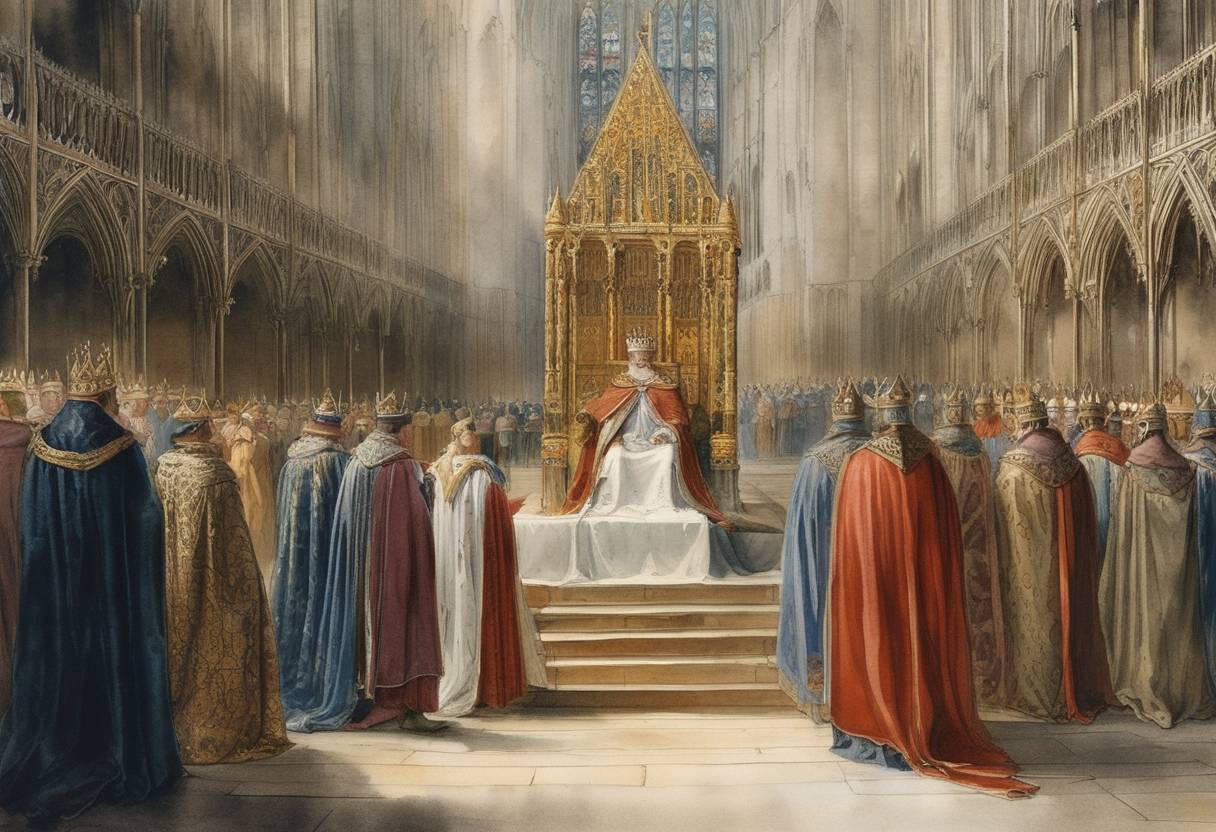
On August 23, 1100, Henry I was crowned King of England at Westminster Abbey, a significant event following the sudden death of his brother, King William II. This coronation marked the beginning of Henry’s reign, which would last for over three decades.
Henry was the fourth son of William the Conqueror and the youngest to survive into adulthood. The unexpected death of his brother William II, also known as William Rufus, who died from an arrow wound while hunting in the New Forest on August 2, 1100, precipitated Henry’s rise to the throne. William’s death was mysterious and contentious, with rumors of foul play, though no definitive evidence was ever found.
At the time of William II’s death, his elder brother Robert Curthose was on a pilgrimage and crusade in the Holy Land. Henry seized this opportunity, moving swiftly to secure his succession and prevent potential rivals, notably Robert, from laying claim to the English throne.
Henry’s coronation at Westminster Abbey was orchestrated with urgency and efficiency, reflecting the need for immediate legitimacy and stability in the wake of William II’s unexpected demise. Anselm of Canterbury, absent due to the political situation regarding investiture, was represented by the Bishop of Winchester, who performed the ceremony. This event was a declaration of Henry’s authority and was quickly followed by strategic actions to consolidate his power.
Consolidation of Power: Henry used the coronation to solidify his position as king. He issued the Charter of Liberties, designed to appease the English nobility by promising to end the arbitrary practices of his predecessor.
Relationship with the Church: Henry acted swiftly to repair the strained relationship with the Church, promising to respect ecclesiastical independence and recalling the exiled Archbishop Anselm.
Dynastic Changes: Henry’s reign ushered in a period of reform and administrative development. His marriage to Matilda of Scotland, which followed soon after his coronation, helped to unite the Norman and English factions and strengthened his claim to the throne.
Legacy: Known for his administrative acumen, Henry I reinforced the mechanisms of royal justice and finance, setting precedents that would influence English governance for generations.
Henry’s ability to secure the throne set the stage for a reign that witnessed considerable administrative and legal evolution. His effective rule and policies laid the groundwork for future monarchs. However, his succession after his death in 1135 would lead to a period of civil strife known as “The Anarchy,” as the question of succession remained contentious in the absence of a male heir.
Source: www.britannica.com