Founding of University College London (UCL)
1826 · London, United Kingdom
University College London is founded under the name 'University of London' as a secular alternative to the religious universities of Oxford and Cambridge.
January 8, 1902
The Imperial Institute is renamed as Imperial College of Science, Technology and Medicine and becomes part of the University of London.
London, United Kingdom | Imperial College London
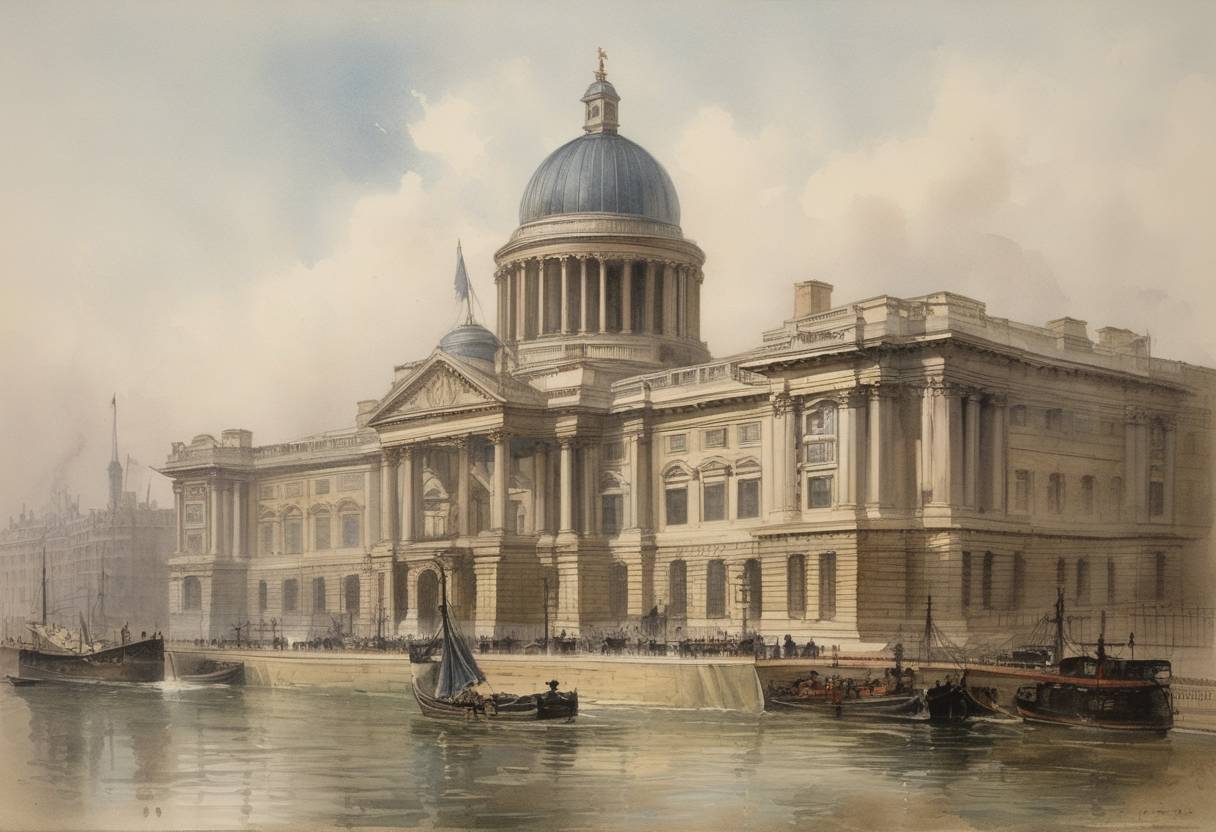
On August 1, 1902, The Imperial Institute in London underwent a significant transformation and was renamed the Imperial College of Science, Technology and Medicine. This renaming and restructuring were part of a broader initiative to advance the scientific and technical education landscape of the United Kingdom.
The Imperial Institute was originally established in 1887, commemorating Queen Victoria’s Golden Jubilee. It served as a symbol of the empire’s achievements and a venue for exhibitions and events related to the colonies. However, by the early 20th century, the need for specialized educational institutions focusing on science and technology had become increasingly apparent.
Integration with the University of London: The renaming and reconstitution of the Imperial Institute signified its incorporation into the University of London framework. This integration aimed to bolster the infrastructure for higher education in technological and scientific disciplines.
Expanded Focus: As the Imperial College of Science, Technology and Medicine, the institution expanded its academic offerings to focus more heavily on engineering, science, and medicine. This change positioned it as a leading center for higher education and research.
Support for Technological Progress: The rebranding was aligned with the UK’s ambitions to become a leader in technology and industry. The college was instrumental in training a new generation of engineers and scientists who would go on to make significant contributions to their fields.
The establishment of the Imperial College of Science, Technology and Medicine marked a significant moment in the history of higher education. It underscored the importance of modernizing educational institutions to keep pace with industrial advancements. This transition also reflected the ongoing redefinition of educational priorities in an era increasingly dominated by technological innovation.
Imperial College has since become one of the world’s foremost academic institutions, renowned for its research and academic programs in science, engineering, medicine, and business. Its establishment and growth have had long-lasting impacts on the educational and technological development within the UK and beyond.
Source: www.imperial.ac.uk