Capture of Pensacola: End of the First Seminole War
1818 · Pensacola, United States
General Andrew Jackson captures Pensacola, Florida, effectively ending the First Seminole War.
August 20, 1707
The first siege of Pensacola took place during Queen Anne's War when the Spanish captured the town of Pensacola from the British.
Pensacola, United States | Spanish military
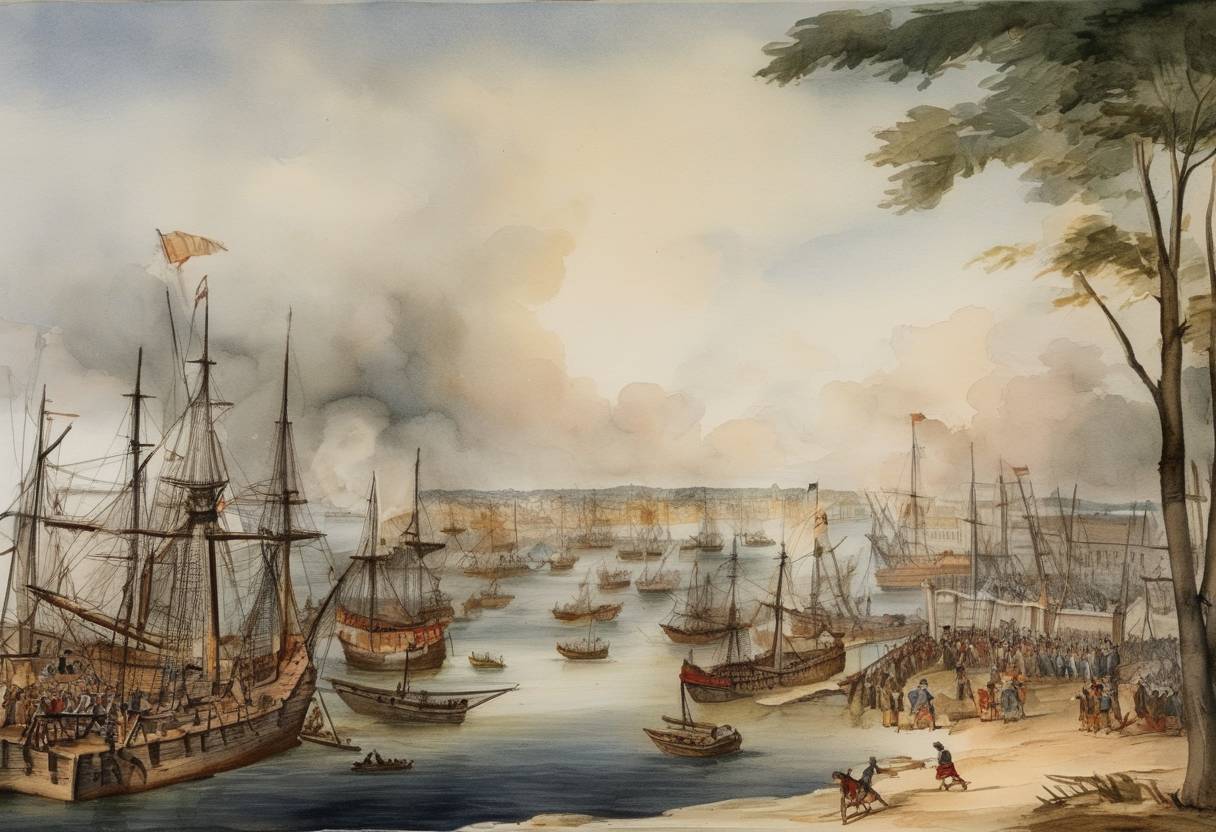
The first siege of Pensacola during Queen Anne’s War occurred on August 20, 1707, marking a pivotal moment during the early 18th-century conflicts between European powers in North America. This siege was part of the ongoing struggle for control over strategic locations and influence in the Gulf Coast region between the English and Spanish colonial powers.
Queen Anne’s War (1702-1713) was the North American theater of the War of the Spanish Succession. It involved several major European powers, with the British and Dutch on one side and the French and Spanish on the other. In North America, this conflict manifested as a series of clashes and territorial skirmishes as these nations sought to expand their colonial holdings.
Pensacola, located in present-day Florida, was a crucial port and settlement that controlled access to the Gulf of Mexico and served as a key point for European powers looking to strengthen their presence in the American southeast.
In the early stages of the war, control over Pensacola shifted between the Spanish and the British. Prior to the siege in 1707, Spanish forces had fortified Pensacola, understanding its strategic importance. However, its proximity to British territories made it a target for expansionist ambitions.
Before the siege on August 20, Spanish forces in the region prepared by strengthening defenses and consolidating resources, aware of the growing British interest in seizing the fort to enhance their regional influence.
On August 20, 1707, Spanish forces launched a successful operation to retake the town of Pensacola from British control. This military effort highlighted the Spanish commitment to maintaining their claims in the region against British encroachments. The success of the siege underscored the volatile nature of colonial territorial disputes during this period and demonstrated the strategic acumen and resourcefulness of the Spanish military outfits operating in North America.
The immediate consequence of the siege was the re-establishment of Spanish authority in Pensacola, which remained a Spanish stronghold until it was challenged again in future conflicts.
The broader implications of the siege included increased tension between the colonial powers in North America and contributed to the ongoing hostilities that characterized Queen Anne’s War. The control of Pensacola would remain a contentious issue and a focal point for both diplomatic maneuvering and military engagements until the resolution of broader European conflicts that mirrored their colonial skirmishes.
The first siege of Pensacola is an early example of the intensive military and strategic contests over pivotal territories in colonial America. It reflects the intricacies of European power struggles exported to the New World and reveals the complexities of maintaining and defending imperial interests during a period marked by near-constant warfare among European empires.
This event is emblematic of the broader themes of territorial ambition, resource competition, and the impact of European conflicts on the North American continent, shaping regional dynamics for decades.
Source: en.wikipedia.org