Deposition of Emperor Haile Selassie I - September 12, 1974
1974 · Addis Ababa, Ethiopia
Emperor Haile Selassie I of Ethiopia was deposed in a coup d'état, ending his reign and leading to the establishment of a Marxist-Leninist government.
April 2, 1930
Haile Selassie was proclaimed emperor of Ethiopia. He would become a defining figure in both Ethiopian history and the Rastafari movement, which saw him as a messianic figure.
Addis Ababa, Ethiopia | Ethiopian Monarchy
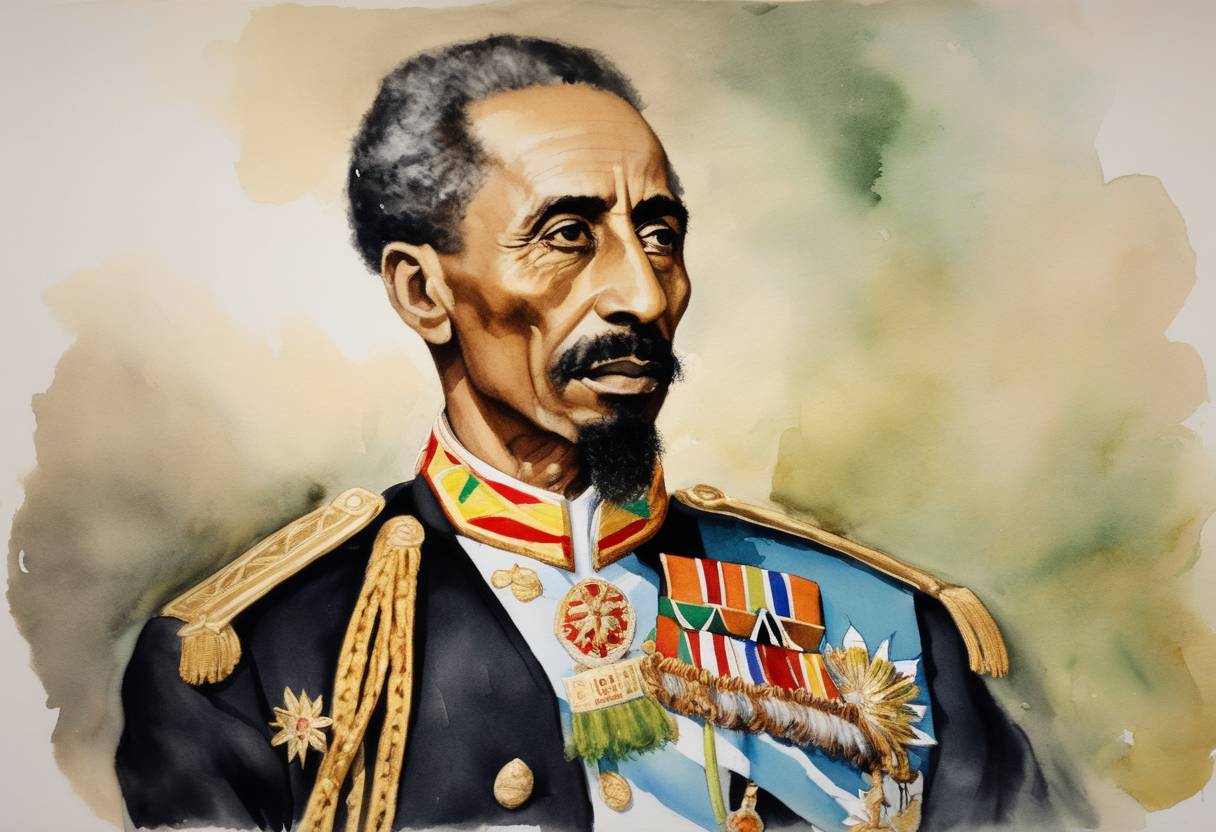
On April 2, 1930, Ras Tafari Makonnen was proclaimed Emperor of Ethiopia, taking the throne name Haile Selassie I. This event marked a pivotal moment in Ethiopian history, as Haile Selassie would become one of the most renowned leaders of the country, guiding it through periods of profound change and modernization.
Haile Selassie was born on July 23, 1892, in the Harar region of Ethiopia. As a member of the Solomonic Dynasty, which claims descent from the biblical King Solomon and the Queen of Sheba, he was part of Ethiopia’s royal lineage. Prior to ascending to the throne, Ras Tafari had served as regent and heir apparent from 1916, playing a crucial role in modernizing Ethiopia’s governmental infrastructure and advocating for its sovereignty on the world stage.
Ras Tafari’s proclamation as Emperor on April 2, 1930, set the stage for his official coronation later in November of the same year. As emperor, Haile Selassie embarked on an ambitious agenda to modernize Ethiopia. He implemented a new constitution in 1931 and sought to establish a central governmental authority, educational reforms, and the expansion of transportation and communication infrastructure.
Haile Selassie’s reign faced significant challenges, most notably the Italian invasion of Ethiopia in 1935, which led to a brief period of exile from 1936 to 1941. With the assistance of the Allied Powers during World War II, he was restored to power and became a symbol of anti-colonial resistance.
In the decades following his return, Haile Selassie’s leadership continued to influence Ethiopia and the African continent. He was instrumental in the establishment of the Organization of African Unity in 1963, reflecting his vision of pan-African unity and cooperation.
Haile Selassie’s legacy extends beyond the political realm into cultural and religious significance. He is revered by followers of the Rastafari movement, which emerged in Jamaica during the 1930s. The movement recognizes him as a messianic figure and views his reign as a fulfillment of Biblical prophecy.
Haile Selassie’s proclamation as emperor on April 2, 1930, was a defining event in Ethiopian history. His efforts to modernize Ethiopia and promote African unity, combined with his symbolic importance to the Rastafari movement, ensure his enduring legacy in both regional and global contexts.
Source: www.biography.com