Samuel Taylor Coleridge: A Reflection on His Passing
1834 · Highgate, United Kingdom
Samuel Taylor Coleridge, the renowned English poet and philosopher famous for his works such as 'The Rime of the Ancient Mariner', passed away.
April 7, 1827
John Walker, an English chemist, sold the first friction match, known as the 'lucifer match'.
Stockton-on-Tees, United Kingdom | None
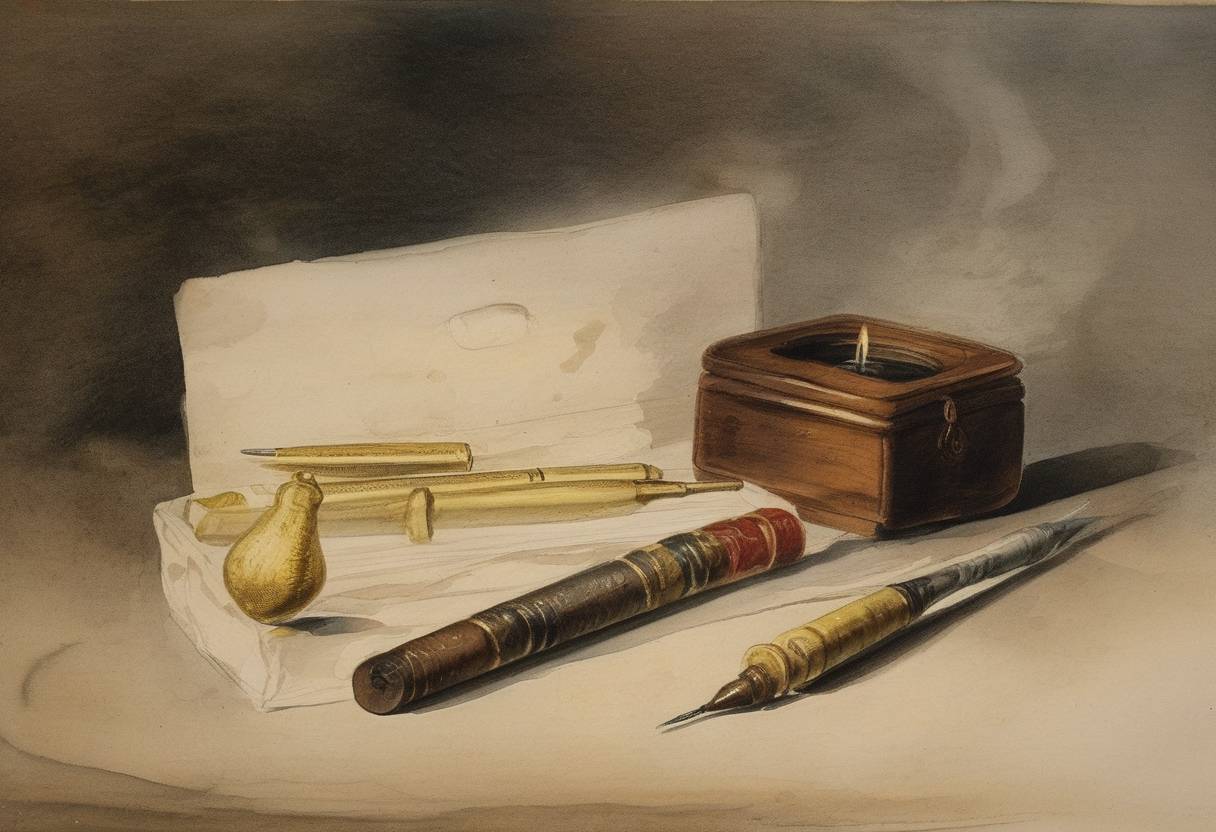
On April 7, 1827, John Walker, an English chemist from Stockton-on-Tees, sold the first commercially available friction match, known as the ‘lucifer match’. This marked a significant innovation in creating and handling fire, transforming everyday life by providing a convenient means to ignite a flame.
John Walker was a chemist and druggist with a keen interest in experimenting with materials that could spontaneously ignite when subjected to friction. Prior to his invention, fire was typically created using methods such as striking steel against flint, which were labor-intensive and less reliable.
The invention came about in 1826, initially as an accidental discovery. Walker was conducting experiments with a combination of antimony sulfide, potassium chlorate, gum, and starch, which he had been forming into wooden splints. After noticing that the stick ignited into a flame after dragging it across a rough surface, he realized the potential for a practical application.
The term ‘lucifer match’ was used because the matches emitted an initial bright light upon ignition, evoking the image of “light-bringer,” associated with Lucifer from Latin mythology. Walker’s invention was an immense improvement over existing options for lighting flames.
On April 7, 1827, Walker sold his first complete box of lucifer matches. The box comprised 50 matches and accompanying sandpaper, which served as a striking surface. This commercially available product rapidly gained popularity due to its convenience and effectiveness.
Walker’s lucifer matches revolutionized the way fires were started, making it simpler, quicker, and safer. They became widely popular not only domestically but also industrially, facilitating widespread adoption of matches worldwide.
Although Walker’s initial invention laid the foundation for modern matches, he chose not to patent his creation. As a result, others, including Samuel Jones from London, refined and marketed their own versions, capitalizing on Walker’s design. Despite this, Walker’s contribution remains groundbreaking in the history of consumer technology and chemistry.
Walker continued his work as a chemist until his death in 1859, but his invention indisputably changed everyday life and brought a new age of accessibility to fire-starting.
Source: royalsociety.org