Millard Fillmore Sworn in as the 13th President of the United States
1850 · Washington, D.C., United States
Millard Fillmore is sworn in as the 13th President of the United States following the death of President Zachary Taylor.
March 25, 1835
The first attempt to assassinate a U.S. president occurred when Richard Lawrence attempted to shoot President Andrew Jackson at the U.S. Capitol.
Washington D.C., United States | United States government
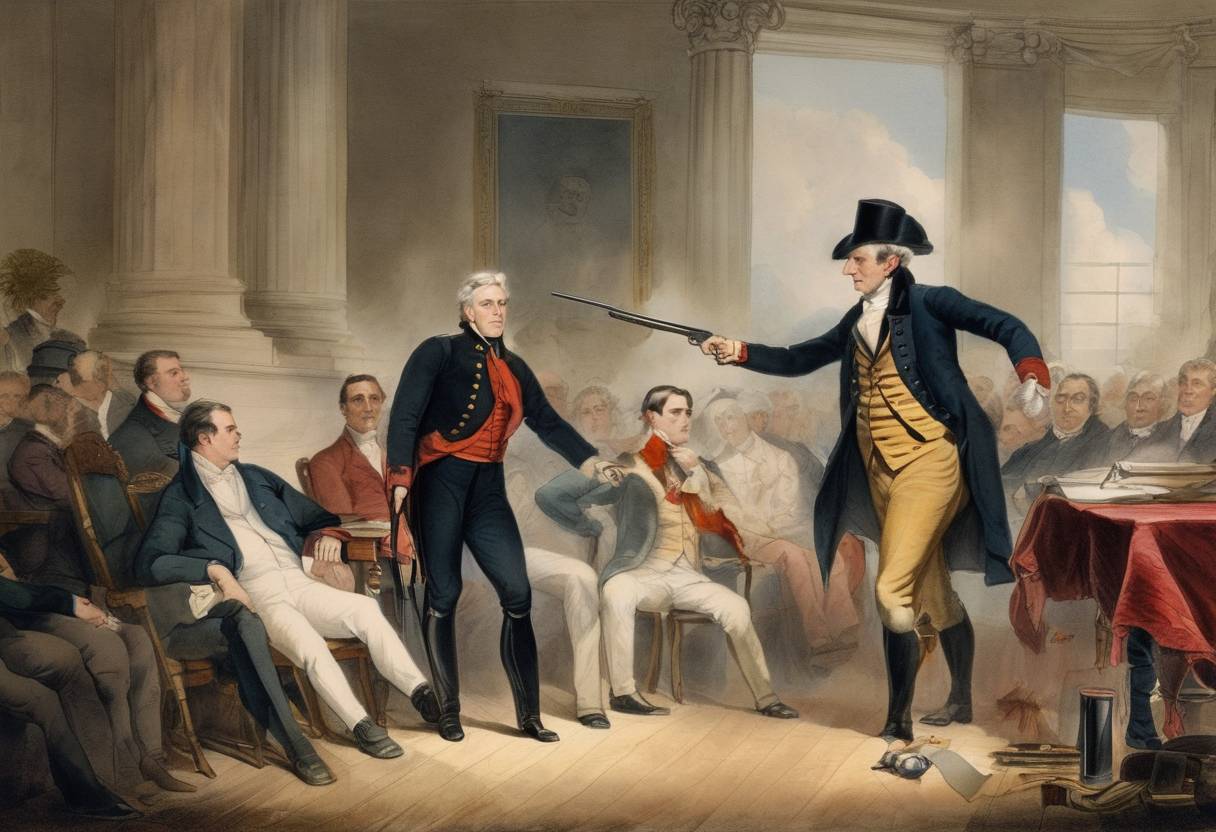
On January 30, 1835, President Andrew Jackson became the first sitting U.S. president to face an assassination attempt. The incident unfolded at the U.S. Capitol in Washington, D.C., when Richard Lawrence, a deranged house painter, tried to shoot Jackson as he exited a congressional funeral.
As President Jackson left the funeral of South Carolina Representative Warren R. Davis at the Capitol, Richard Lawrence emerged from behind a pillar and pointed a pistol at Jackson. Despite standing at close range, the pistol misfired. Remarkably undeterred, Lawrence drew a second pistol and aimed again, but it too misfired. Seizing the opportunity, the 67-year-old Jackson charged at Lawrence with his cane, subduing the would-be assassin with help from bystanders, including Davy Crockett, a Congressman from Tennessee.
Richard Lawrence was an English immigrant who had been exhibiting signs of mental instability prior to this event. He believed he was owed money by the U.S. government and that killing Jackson would somehow rectify his perceived injustices. Lawrence was ultimately found not guilty by reason of insanity and spent the remainder of his life in mental institutions.
This event marked a significant moment in U.S. history as it was the first documented assassination attempt on a sitting president. The incident raised awareness about the security of the president and highlighted the unpredictable nature of threats against public officials.
Jackson, known for his toughness, used the episode to bolster his image as a strong and unyielding leader. However, the attempt did little to change the broader political or social landscape of the time regarding the security protocols, as it took several more decades and additional incidents to prompt significant changes in presidential protection.
Source: en.wikipedia.org