Capture of Trinidad by British Forces on February 17, 1797
1797 · Port of Spain, Trinidad and Tobago
Sir Ralph Abercromby led British forces in the capture of the island of Trinidad from Spain during the French Revolutionary Wars.
January 6, 1781
The Battle of Jersey takes place, an attempt by French forces to invade the island of Jersey, which ends in a British victory.
Saint Helier, Jersey | British Army
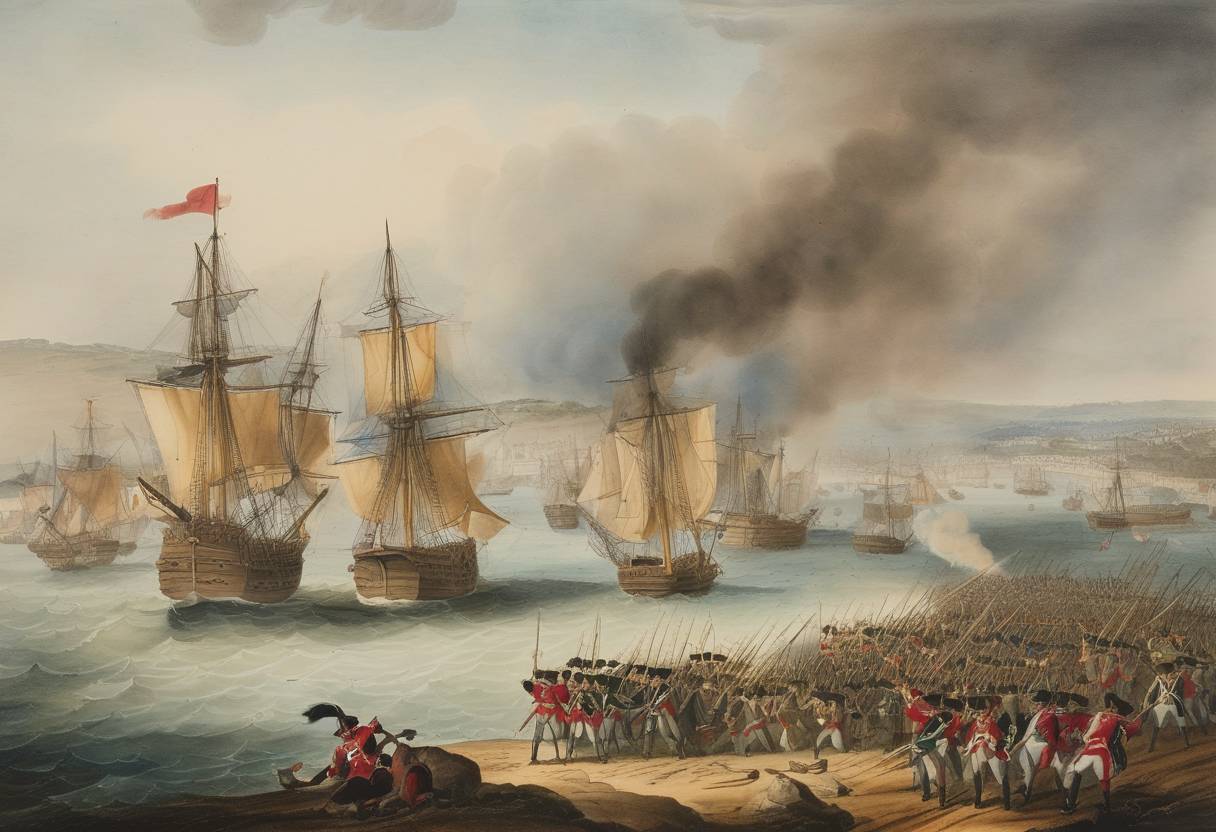
The Battle of Jersey, fought on January 6, 1781, was a significant military engagement between British forces and French invaders on the island of Jersey, located in the English Channel. Despite the relatively small scale of the conflict, it played an essential role in the larger context of the American Revolutionary War, representing one of the last attempts by French forces to directly assault British territories.
The strategic importance of Jersey was underscored by its position near the French coastline, making it a valuable asset for control over the Channel. During the late 18th century, tensions between Britain and France were exacerbated by the broader hostilities of the American Revolutionary War, with France aligning itself alongside the American colonies against Britain.
In late 1780, planning for the invasion of Jersey began under the command of Baron Philippe de Rullecourt, a French army officer. Rullecourt sought to seize the island through a swift and decisive operation. The French plan aimed to land troops secretly and capture the island’s key defensive positions quickly, relying on an element of surprise to overcome the British garrison.
On the night of January 5-6, 1781, de Rullecourt’s forces, comprising about 1,200 men, embarked from the French coast. Under the cover of darkness, they landed at La Rocque, a remote location on the east coast of Jersey, and proceeded to march toward the island’s capital, Saint Helier.
By early morning, French troops had reached Saint Helier and occupied some strategic positions, including the Market Square. However, their movements alerted the local British forces. The British garrison, led by Major Francis Peirson, quickly mobilized to confront the invaders.
Peirson, despite being only 24 years old, demonstrated decisive leadership. He organized a counterattack with about 2,000 British soldiers, including local militia and regular troops. The ensuing battle saw fierce urban combat around the center of Saint Helier.
The Battle of Jersey concluded in a decisive British victory. Baron de Rullecourt was fatally wounded during the fighting, and Major Peirson was also killed. Nevertheless, the British forces gained the upper hand, forcing the surrender of the remaining French troops.
The victory secured British control over Jersey, thwarting French ambitions in the region. The outcome of the battle was celebrated in Britain, portrayed as a testament to the determination and valor of the British defenders. It also underscored Jersey’s strategic importance in the English Channel.
The battle had lasting impacts on the local and national psyche, inspiring artwork and literature. Most notably, “The Death of Major Peirson,” a painting by John Singleton Copley, immortalized the event, capturing the heroic defense and tragic loss of life.
In the broader context of the American Revolutionary War, the Battle of Jersey signified the final attempt by French forces to challenge British territorial possessions in the Channel Islands, reinforcing British maritime dominance during this tumultuous period.
Source: www.britannica.com