Charles X and the July Ordinances of 1830
1830 · Paris, France
King Charles X of France signed the September Ordinances, marking an all-encompassing royal ordinance in his effort to consolidate power.
August 7, 1830
Louis Philippe becomes King of the French following the July Revolution, ushering in the July Monarchy period.
Paris, France | Government of France
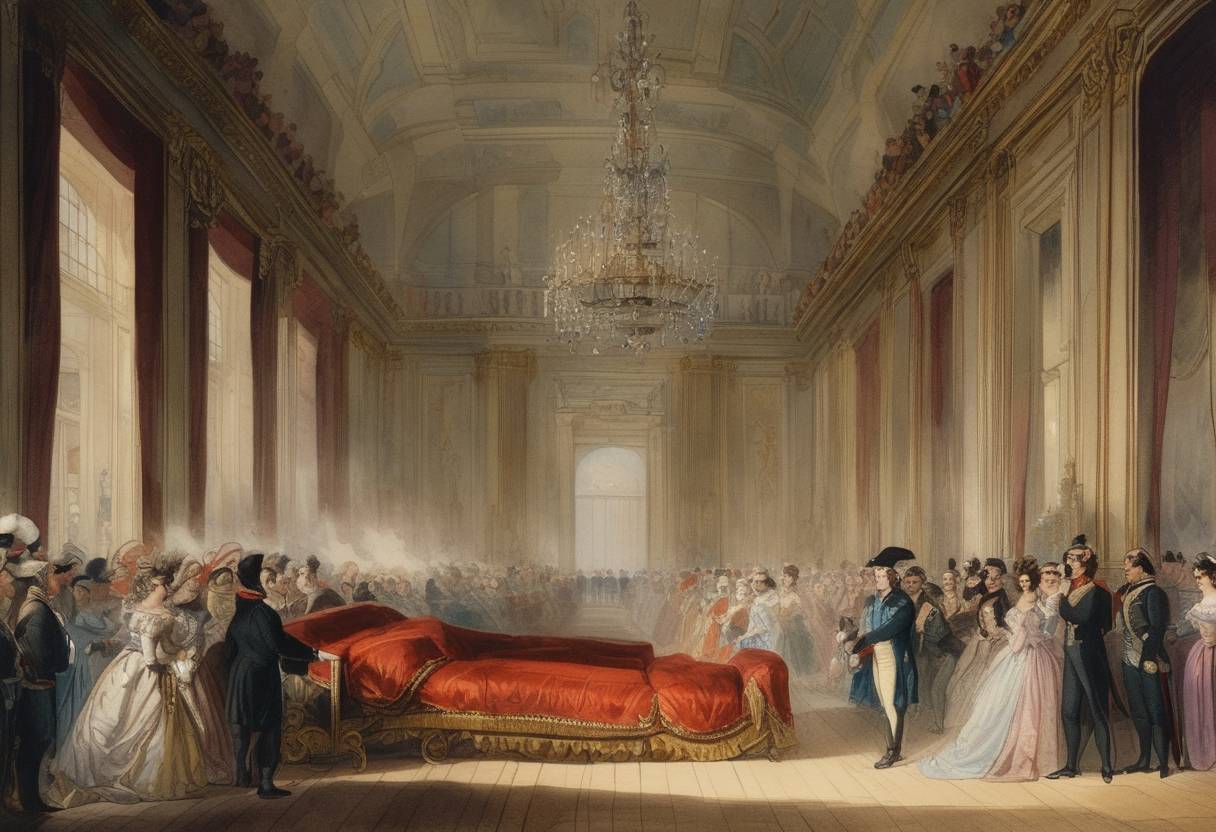
On August 7, 1830, Louis Philippe became King of the French, marking a new era in French history known as the July Monarchy. This event followed the July Revolution, a three-day insurrection in France aiming to overthrow the authoritarian rule of King Charles X and the Bourbon dynasty.
The July Revolution, also known as the “Three Glorious Days” (Les Trois Glorieuses), occurred from July 27 to July 29, 1830. This uprising was primarily a reaction to King Charles X’s July Ordinances. These edicts were highly unpopular as they:
These measures were perceived as a direct attack on the constitutional charter established after the fall of Napoleon. The resulting public outrage led to widespread protests and barricades being erected in the streets of Paris, culminating in violent clashes between revolutionaries and the military forces loyal to Charles X.
With the abdication of Charles X amidst the turmoil, political leaders sought a constitutional monarchy that reflected the values of the French Revolution. The choice fell upon Louis Philippe, a member of the Orléans branch of the Bourbon family, which had a reputation for supporting liberal and republican causes.
On August 7, 1830, facing little opposition, Louis Philippe was officially proclaimed “King of the French” rather than “King of France.” This title underscored his acceptance by the populace and symbolized the sovereignty of the people over the divine right of kings ideology. He accepted the new charter that significantly enhanced the power of the legislature and emphasized civil liberties.
The accession of Louis Philippe marked the beginning of the July Monarchy (1830–1848), a period during which:
Louis Philippe’s reign was characterized by a constitutional regime that balanced royal authority with democratic principles.
However, his government later faced criticism and unrest due to continued inequality and political corruption. This unrest eventually led to the revolution of 1848, which resulted in the establishment of the Second French Republic and the end of the July Monarchy.
The events of August 7, 1830, are pivotal for understanding the evolution of modern France, embodying the tensions between traditional monarchical rule and the emerging demands for democratic governance.
Source: www.britannica.com