The Surrender of Chief Joseph: The End of the Nez Perce War
1877 · Bear Paw Battlefield, United States
Nez Perce War ends as Chief Joseph surrenders to General Nelson Miles.
July 31, 1877
The Battle of the Big Hole, part of the Nez Perce War, took place as a series of engagements between the Nez Perce Native Americans and the United States Army in western Montana Territory.
Big Hole, United States | United States Army
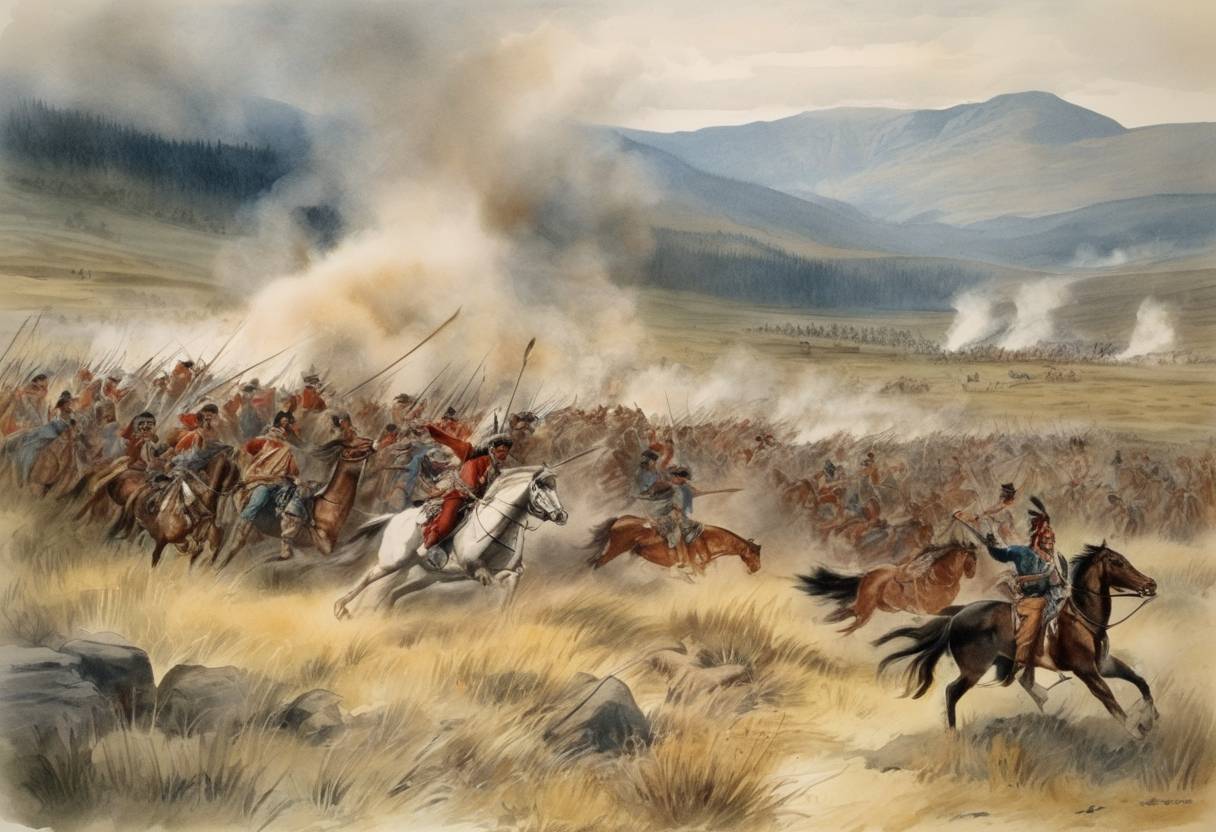
The Battle of the Big Hole, a pivotal clash during the Nez Perce War, unfolded starting on July 31, 1877, near the Big Hole River in the western Montana Territory. This engagement involved the Nez Perce, a Native American tribe led by Chief Joseph, and the United States Army troops under the command of Colonel John Gibbon.
The Nez Perce War began in June 1877 due to tensions over territorial disputes in the Pacific Northwest. The Nez Perce, composed of a band of warriors, women, and children, embarked on a strategic retreat toward Canada to seek asylum, pursued by U.S. military forces determined to relocate them onto reservations.
On the night of July 31, 1877, Colonel Gibbon’s forces approached the Nez Perce encampment with the intent to launch a surprise attack. Positioned defensively, the Nez Perce showed resilience and tactical acumen.
The Battle of the Big Hole was marked by high casualties on both sides, with significant losses among the Nez Perce women and children, highlighting the brutal environment of frontier warfare. It underscored the desperate and valiant struggle of the Nez Perce to preserve their way of life against overwhelming odds.
While the immediate outcome did not halt the Nez Perce’s retreat, this battle delayed their progress and highlighted their tactical sophistication despite facing a better-equipped U.S. force. This engagement remains a poignant reminder of the broader conflict between Native American tribes and expanding United States territories, serving as a stark testament to the fortitude and formidable spirit of the Nez Perce people amid encroaching colonial pressures.
Source: www.britannica.com