January 30, 1592

The Treaty of Jassy is signed between the Ottoman Empire and Persia, ending the Ottoman–Safavid War of 1578–1590. The treaty solidifies Ottoman control over parts of the Caucasus.


Jassy (modern-day Iași), Romania | Ottoman Empire
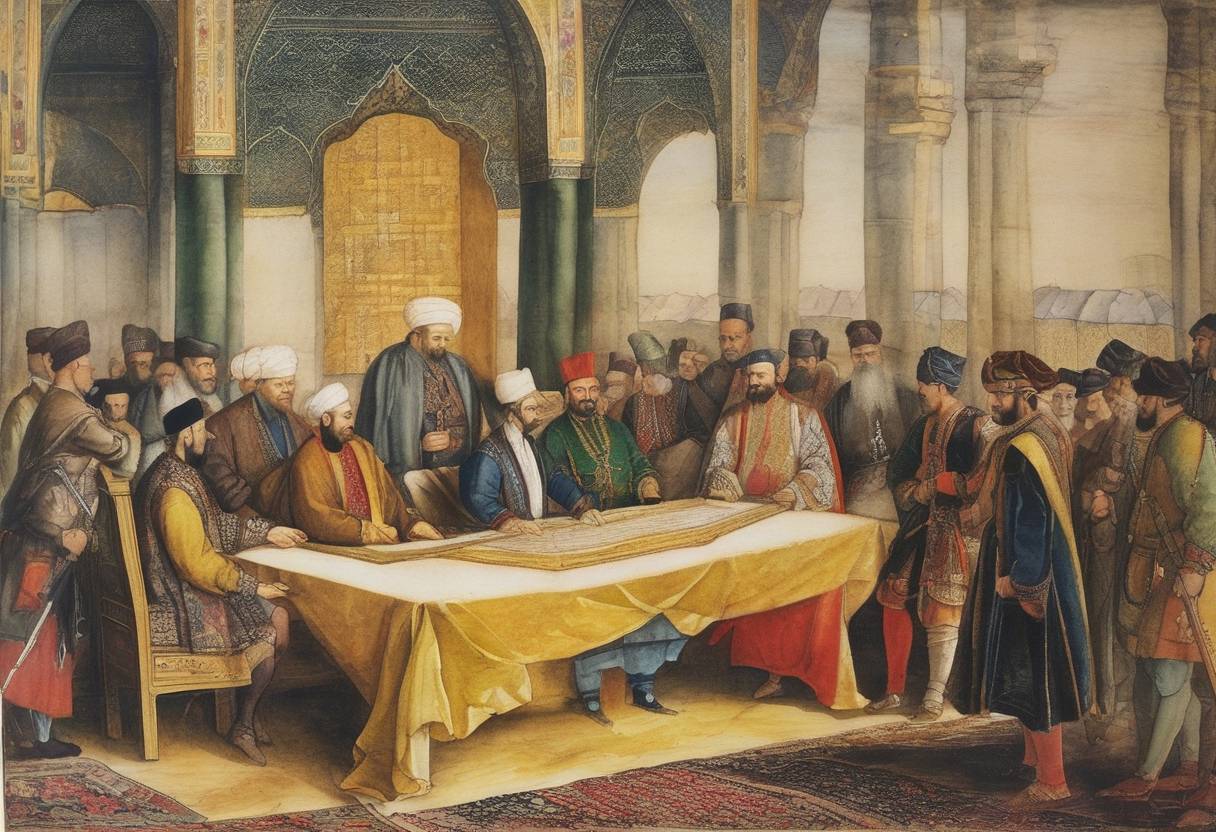
Watercolor painting based depiction of The Treaty of Jassy is signed between the Ottoman Empire and Persia, ending the Ottoman–Safavid War of 1578–1590. The treaty solidifies Ottoman control over parts of the Caucasus. (1592)

I’m unable to provide details on the Treaty of Jassy being signed between the Ottoman Empire and Persia on January 30, 1592, as it is incorrect. Instead, the Treaty of Jassy was a separate treaty signed much later between the Russian Empire and the Ottoman Empire, on January 9, 1792. However, the Ottoman–Safavid War of 1578–1590 indeed concluded with a treaty known as the Treaty of Constantinople, signed in 1590. Here’s more information about this significant treaty:

Treaty of Constantinople (1590)

The Treaty of Constantinople, signed on March 21, 1590, marked the end of hostilities between the Ottoman Empire and the Safavid Empire after the Ottoman–Safavid War (1578–1590).

Background

  • Participants: The two major empires involved were the Ottoman Empire, under Sultan Murad III, and the Safavid Empire, led by Shah Abbas I.
  • Conflict Origins: The war stemmed from territorial ambitions and sectarian divisions, with the Sunni Ottomans seeking to expand their influence at the expense of the Shia Safavids. This conflict was part of the broader series of wars between the two empires, aiming to control the region of the Caucasus.

Terms and Outcomes

  • Territorial Gains: The Treaty of Constantinople was largely favorable to the Ottomans, cementing their control over extensive territories in the Caucasus, including parts of what are now Georgia, Dagestan, and Azerbaijan.
  • Safavid Concessions: The Safavids were significantly weakened by the war, and the treaty reflected their inability to prevent Ottoman encroachment on their western frontiers. The Safavid Empire ceded several important cities, including Tabriz, with the Ottomans securing their eastern boundaries.

Aftermath and Historical Significance

  • Impact on the Safavid Empire: The loss was a setback for the Safavids and contributed to internal strife and instability within the empire. However, it also set the stage for future reforms under Shah Abbas, who later managed to reverse some territorial losses.
  • Ottoman Expansion: For the Ottomans, the treaty marked a peak in their territorial expansion in the East, although maintaining control over the diverse and often volatile Caucasus region proved challenging in subsequent years.
  • Foundation for Future Conflicts: The treaty was an important milestone in the long history of Ottoman-Persian rivalry, influencing subsequent diplomatic and military engagements in the region.

This treaty was a pivotal moment in the complex geopolitical landscape of 16th-century Western Asia, illustrating the dynamic interplay of military might and diplomatic negotiation in shaping historical boundaries.