Texas State Government Convenes For The First Time
1846 · Austin, United States
The newly formed Texas state government, which had been admitted to the Union as a state on December 29, 1845, officially convened for the first time.
February 18, 1841
The first ongoing filibustering trial begins in an American courtroom over the capture of two Cuban ships by Americans.
New Orleans, United States | United States Court
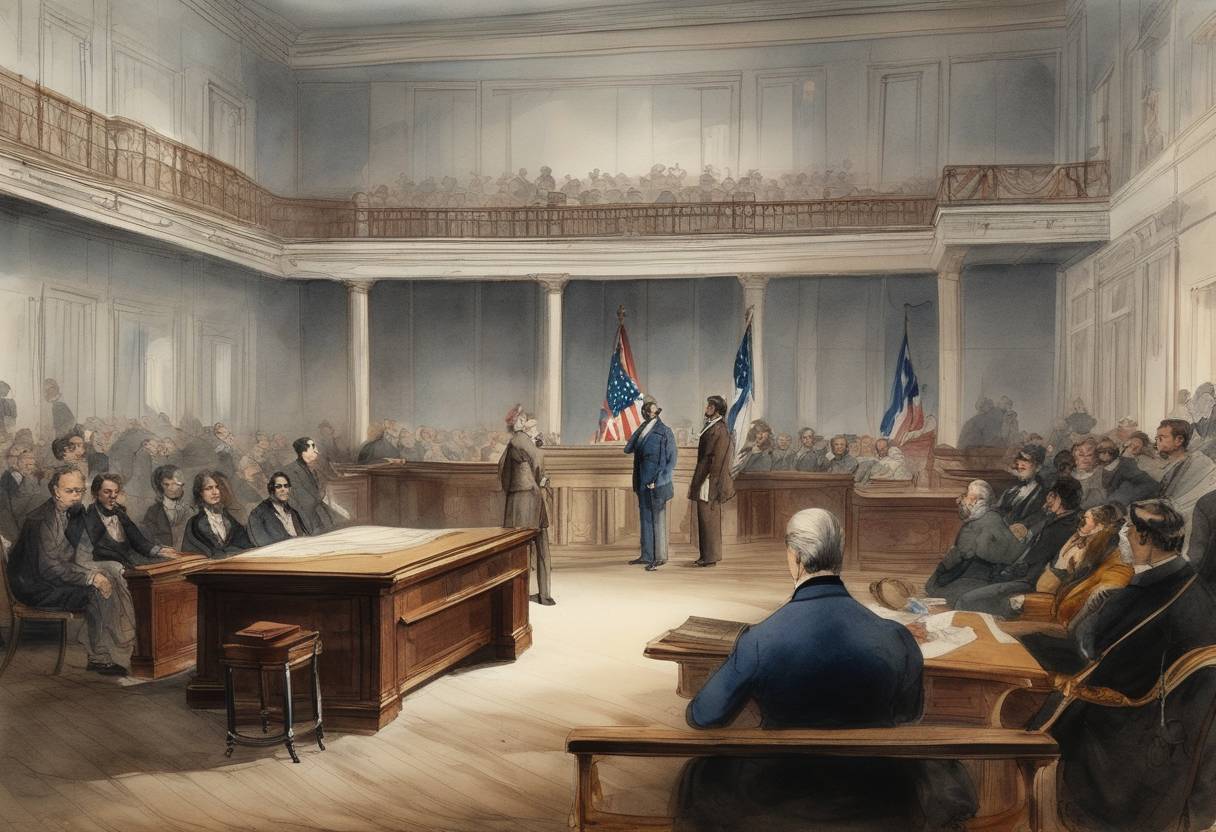
On February 18, 1841, a significant trial commenced in an American courtroom concerning the capture of two Cuban ships by Americans, marking the beginning of a legal confrontation over filibustering activities. This event took place in the backdrop of a tense period in U.S. and Spanish relations, particularly regarding the contentious issue of filibustering—private military expeditions launched by American citizens against foreign territories, often without official sanction.
Filibustering, at this time, was a common practice among adventurous Americans who sought to extend their influence and territory, often targeting neighboring nations in Central America and the Caribbean. These activities were highly controversial, as they frequently violated international law and treaties. The trial that began on this date was one of the first to formally address these illegal activities, setting a precedent for how the United States would handle such incursions.
Filibustering Motivations: American filibusters, driven by expansionist ideologies and economic ambitions, frequently sought to annex territories and spread slavery to new regions. Cuba, under Spanish control, was a prime target for these expansions.
The Incident: The specific case involved the capture of two Cuban ships by Americans, an act that was seen as a blatant violation of Spanish sovereignty. The two ships were seized in a bold move that underscored the escalating tension between private American interests and foreign governments.
The 1841 trial brought filibustering into the public eye, forcing the American legal system to confront the challenges posed by such extralegal activities. It underscored the growing need for the United States to regulate its citizens’ actions abroad and balance them against international diplomacy and law.
Impact on U.S.-Cuba Relations: The trial highlighted the fragile relations between the United States and Spain, the colonial ruler of Cuba. It necessitated careful diplomatic handling to prevent escalations that could lead to broader conflicts.
Legal and Diplomatic Precedents: It set important legal precedents regarding the treatment of individuals engaged in unlawful military expeditions and influenced the shaping of future U.S. policies aimed at curbing filibustering.
While the trial itself focused on specific acts of piracy and unauthorized military action, its larger impact lay in the growing awareness and subsequent legislative efforts to address unilateral actions by American citizens against foreign nations. It paved the way for future legal frameworks that would aim to curb filibustering by holding violators accountable under national and international law.
Source: en.wikipedia.org