Establishment of Time Zones and Daylight Saving Time by U.S. Congress
1918 · Washington, D.C., United States
The U.S. Congress established time zones and approved daylight saving time.
January 23, 1907
Charles Curtis, a Native American, begins serving in the U.S. Congress representing Kansas, and later becomes the first person of significant Native American ancestry to serve as Vice President of the United States.
Washington, D.C., United States | U.S. Congress
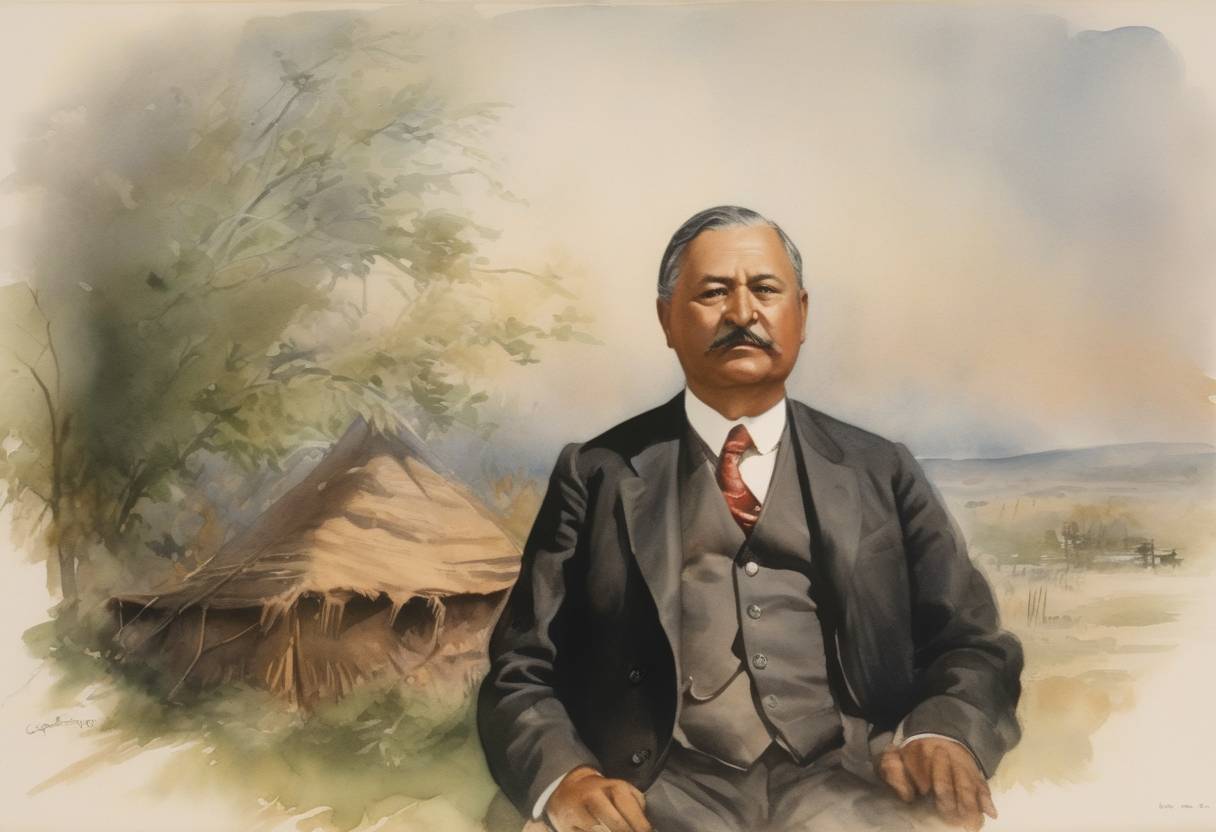
On January 23, 1907, Charles Curtis began serving in the U.S. Congress, appointed as a U.S. Senator from Kansas. Not just significant for his political role, Curtis was also notable for being the first person of significant Native American ancestry to achieve such a position. He belonged to the Kaw Nation, also known as the Kansa, and his heritage was an integral part of his identity and political narrative.
Born on January 25, 1860, in Topeka, Kansas Territory, Charles Curtis was the product of a culturally diverse upbringing. His mother, Ellen Pappan, was of mixed Native American ancestry, primarily of the Kaw Nation, and French, making Curtis fluent in French and Kansa alongside English. After his mother’s death, he was raised by his maternal grandparents on a Kaw reservation, experiencing firsthand the challenges facing Native American communities. Curtis later pursued a legal career, being admitted to the bar in 1881.
Curtis’s political journey began with his election to the House of Representatives in 1892 as a Republican. He served in the House until 1907, ascending to the Senate that same year as a result of gaining appointment by the Kansas state legislature. A staunch Republican, Curtis held firm conservative views which played a crucial role in his long-term political career.
Curtis’s service as a Senator marked an important step for diversity in U.S. politics, representing a pivotal moment for Native American representation. Throughout his political career, he advocated for and helped pass significant legislation, such as the Curtis Act of 1898. This act, though controversial, sought to incorporate Native American governments into the U.S. legal system, redistributing tribal lands to create private ownership among Native Americans in an effort to assimilate them into American society.
Curtis’s political acclaim continued to grow, culminating in his election as Vice President of the United States under President Herbert Hoover, serving from 1929 to 1933. As Vice President, he became the highest-ranking government official of Native American descent in U.S. history, a position not surpassed until the election of Kamala Harris as Vice President in 2020. Curtis left a complex legacy through his efforts to balance the interests of Native Americans while advocating for mainstream American policies of the era.
Charles Curtis’s career exemplifies the intricate balance between cultural heritage and political service. His contributions have continued to resonate as discussions about representation and diversity in U.S. politics advance. His tenure remains a crucial chapter in American history, highlighting the intersections of cultural identity and governance.