Austria Declares War on France: The Start of the War of the Second Coalition
1799 · Vienna, Austria
Austria declared war on France, signaling the start of the War of the Second Coalition.
May 21, 1809
The Battle of Aspern-Essling was fought between the forces of the Austrian Empire and the French Empire, led by Napoleon. It marked the first time Napoleon was personally defeated in a battle.
Aspern-Essling, Austria | Austrian Empire
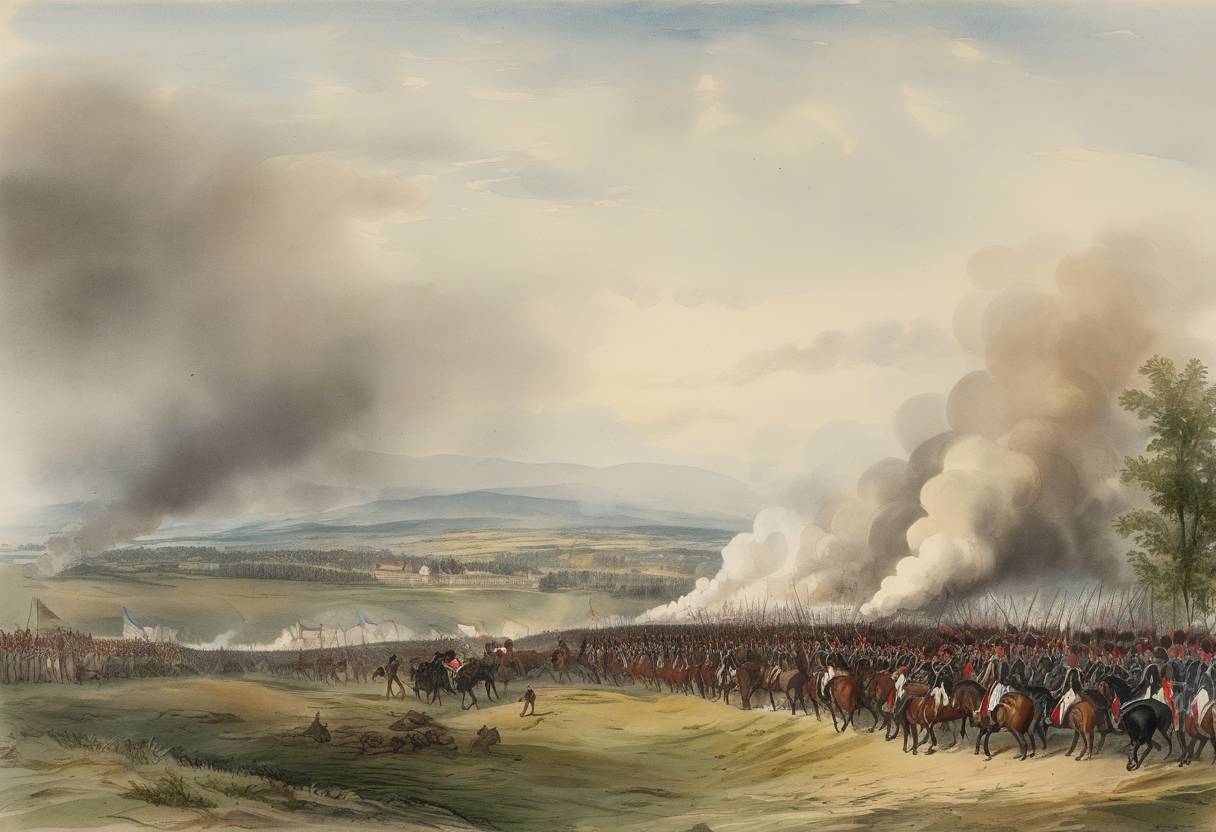
The Battle of Aspern-Essling occurred on May 21-22, 1809, marking a significant engagement during the War of the Fifth Coalition. This battle saw the forces of the Austrian Empire clashing with Napoleon I’s French Empire forces near Vienna, in present-day Austria. Notably, it was the first major defeat inflicted upon Napoleon in a battle, demonstrating the vulnerability of his hitherto invincible army.
First Day (May 21): The French, led by Marshal Jean Lannes, fiercely contested the Austrian attacks. The small village of Aspern changed hands multiple times throughout the day. Despite languishing supplies due to damaged bridges behind them, French artillery and infantry managed to hold key positions.
Second Day (May 22): With bridges further destroyed and reinforcements delayed, Napoleon found his position precarious. Austrian forces, outnumbering the Europeans on the field, launched coordinated assaults. The French suffered heavy casualties, with Marshal Lannes critically wounded.
Retreat and Casualties: By May 22, realizing the untenable situation wrought by disrupted logistics and sustained Austrian pressure, Napoleon ordered a tactical withdrawal to the south bank of the Danube. The battle concluded with significant losses on both sides: French casualties near 23,000 and Austrian around 23,400.
Historical Significance: The outcome of Aspern-Essling marked a vital morale boost for the Austrians, proving that Napoleon was not invincible. The interruption allowed the Austrians time to regroup, though it did not lead to their ultimate victory in the campaign, as Napoleon achieved a decisive win soon after at the Battle of Wagram in July 1809.
Napoleon’s Response: While the defeat was a setback, Napoleon swiftly rebuilt morale and reinforced his strategic positioning along the Danube. It showcased his resilience and adaptability, factors that would remain central to his military tactics in subsequent campaigns.
Military Doctrine Evolution: The battle underscored the importance of logistical planning and the vulnerability of isolated forces. It also highlighted the effectiveness of defensive positions and the strategic use of terrain by the Austrians, lessons absorbed by future military planners.
The Battle of Aspern-Essling stands as a critical point in the Napoleonic Wars, symbolizing not only the challenges of crossing strategic waterways under enemy fire but also the tactical finesse required to combat numerically superior forces.
Source: en.wikipedia.org