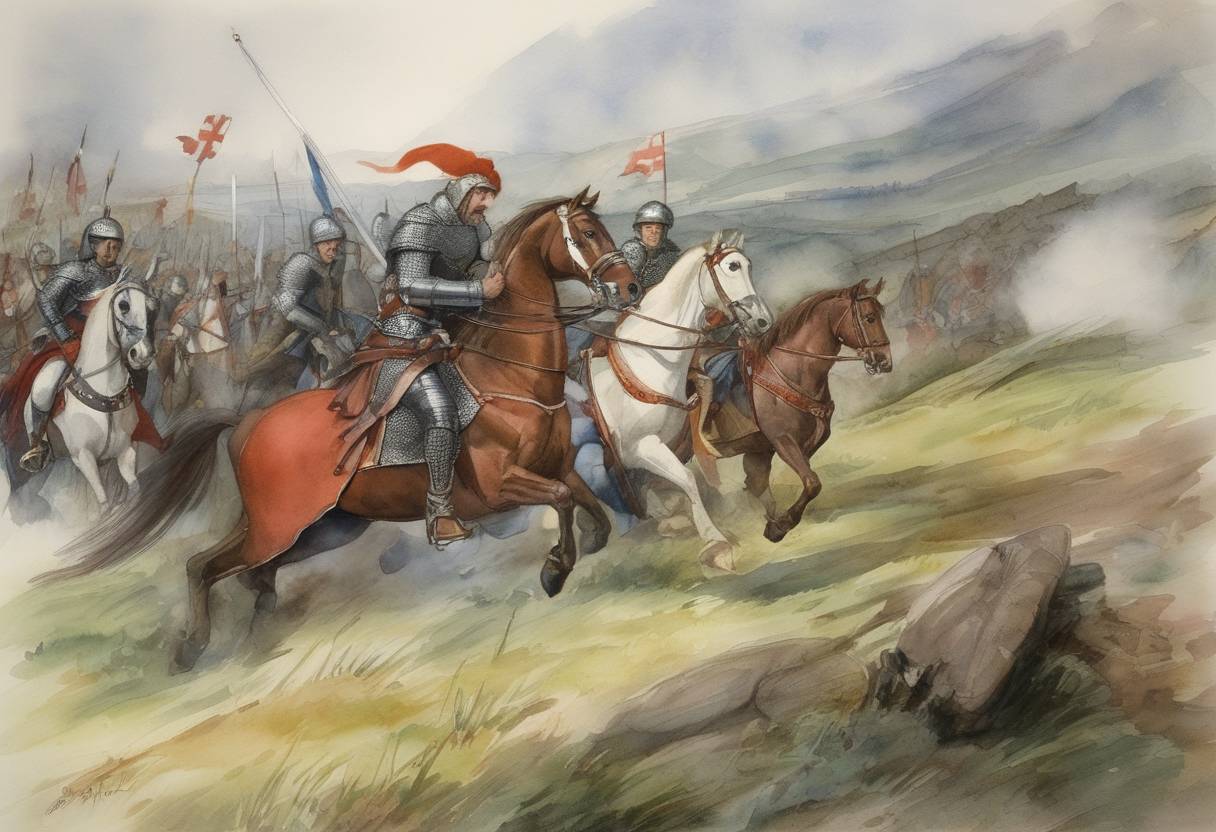
The Battle of St. George and the Brucean Wars: August 15, 1310
Context and Prelude
The Brucean Wars, part of the larger Scottish Wars of Independence, were a series of campaigns led by Robert the Bruce, King of Scots, aimed at asserting Scotland’s independence from English rule. In the early 14th century, the political landscape was turbulent as Scotland sought to liberate itself from English dominance following the capture and execution of William Wallace in 1305.
Robert the Bruce was crowned King of Scots in 1306, initiating a prolonged military struggle against English forces and their allies. Bruce’s initial campaigns were marked by defeats and the need for strategic withdrawals, but his resilience and tactical acumen gradually shifted the balance in favor of the Scottish cause.
The Battle of St. George: August 15, 1310
On August 15, 1310, Robert the Bruce’s forces resumed military operations in a series of engagements across Scotland, focusing on reclaiming lands held by English forces and their supporters. The Battle of St. George, occurring during this period, was part of a broader campaign to consolidate Bruce’s control over Scotland’s territory.
Although detailed records of this specific day’s battle are sparse, the overall military strategy employed by Bruce during this period involved guerrilla tactics and strategic sieges, allowing him to capitalize on his knowledge of the Scottish terrain and the localized support from Scottish clans and allies. These tactics effectively undermined English strongholds, gradually leading to Scottish dominance in the region.
Aftermath and Consequences
The campaigns of 1310 and similar operations significantly weakened English power in Scotland and bolstered Robert the Bruce’s position as a legitimate ruler. By continuing to reclaim Scottish lands, Bruce’s persistence laid the groundwork for future victories, culminating in the pivotal Battle of Bannockburn in 1314.
The success of operations such as the one on August 15, 1310, was instrumental in maintaining the momentum of the Scottish resistance, eventually leading to the recognition of Scottish independence with the signing of the Treaty of Edinburgh-Northampton in 1328.
Historical Significance
The events of August 15, 1310, highlight the resilience and strategic prowess of Robert the Bruce as a military leader. His efforts not only ensured the survival and resurgence of the Scottish kingdom but also served as a defining moment in Scotland’s struggle for sovereignty. The echoes of these battles resonate in Scottish national identity, symbolizing resistance and autonomy against domination.