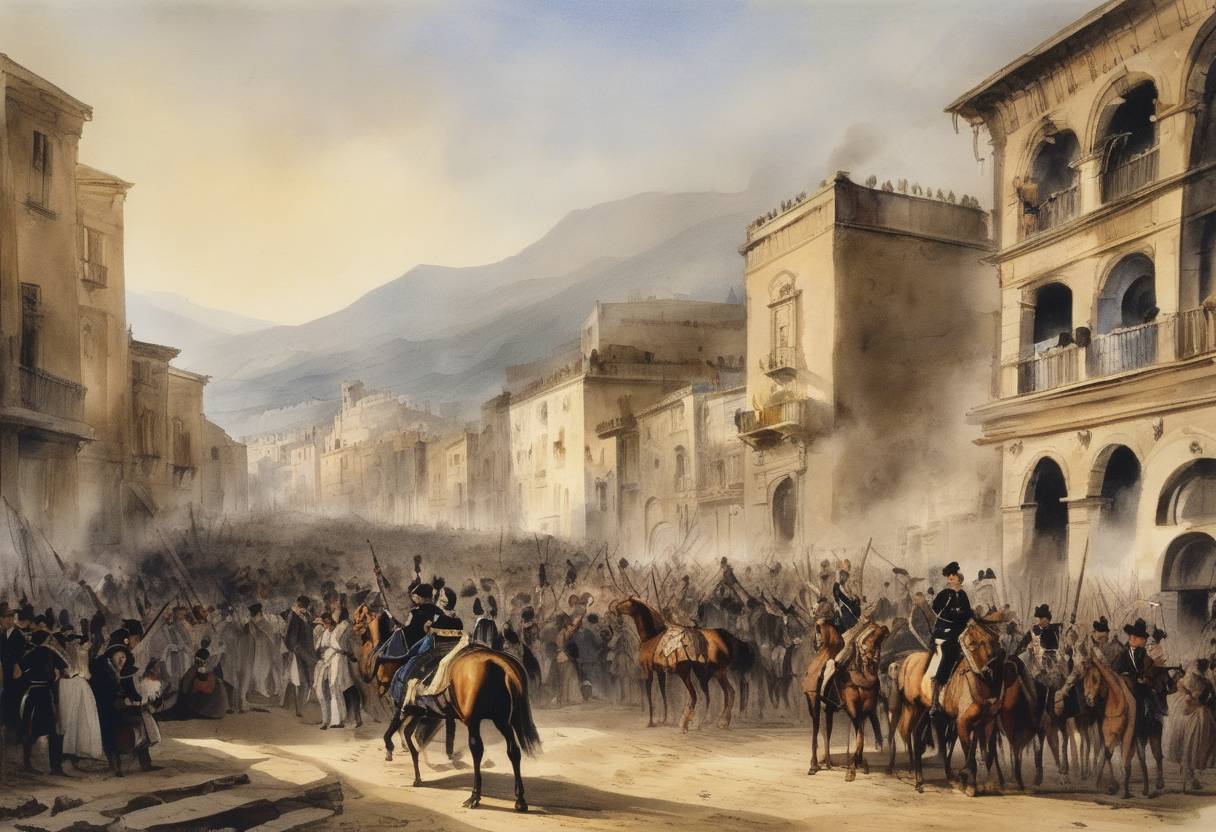
Palermo Uprising - January 12, 1848
The Palermo Uprising on January 12, 1848, marked a significant moment in the wave of European revolutions that year. As a pivotal part of the Sicilian revolution against Bourbon rule, the uprising was deeply rooted in the island’s long-standing discontent with the Kingdom of the Two Sicilies.
Background
The Kingdom of the Two Sicilies was under Bourbon control, with Ferdinand II reigning as king. The political climate in Sicily was tense due to economic hardships, oppressive governance, and a desire for autonomy and constitutional reform. This dissatisfaction was pervasive throughout Europe, primarily in response to conservative monarchies suppressing emerging liberal ideas.
The Uprising
On January 12, 1848, the insurrection commenced in Palermo, fueled by a collective call for independence and the establishment of a constitution. Citizens, including middle-class Patriots and Italian nationalists, rallied against the Bourbon regime. The choice of Palermo as a starting point was strategic, as it was a key city with significant influence.
The rebels quickly took control of key positions in the city, driving out Bourbon troops. The successful initial push ignited similar uprisings across Sicily, signaling the start of a larger revolution. Sicilians were determined to break free from Neapolitan control and seek a self-governing, constitutional state.
Consequences
The upheaval in Palermo triggered a broader series of revolutionary actions across the island and the wider Italian peninsula, contributing to the larger context of the Revolutions of 1848 across Europe. Though the revolution in Sicily initially saw success, with Palermo and other regions declaring independence, the movement eventually faced a military crackdown.
Despite being temporarily subdued when Bourbon forces recaptured the island later that year, the uprising sowed the seeds for future attempts at unification and independence, significantly impacting the Risorgimento, the movement for Italian unification that would eventually lead to the creation of the Kingdom of Italy in 1861.
The Palermo uprising emphasized the strength of popular movements and the deep-rooted desire for national self-determination, playing a crucial role in shaping modern Italian identity and politics.