1200 · Le Goulet, France
King John of England and King Philip II of France sign the Treaty of Le Goulet, which recognized John's possession of Normandy, Anjou, Maine, and Brittany, whereas Philip II retained most of the disputed Vexin region.
November 26, 1161
The Treaty of Chaumont-en-Vexin was signed between Louis VII of France and Henry II of England, establishing a truce during the long-standing Anglo-French conflicts.
Chaumont-en-Vexin, France | French Crown, English Crown
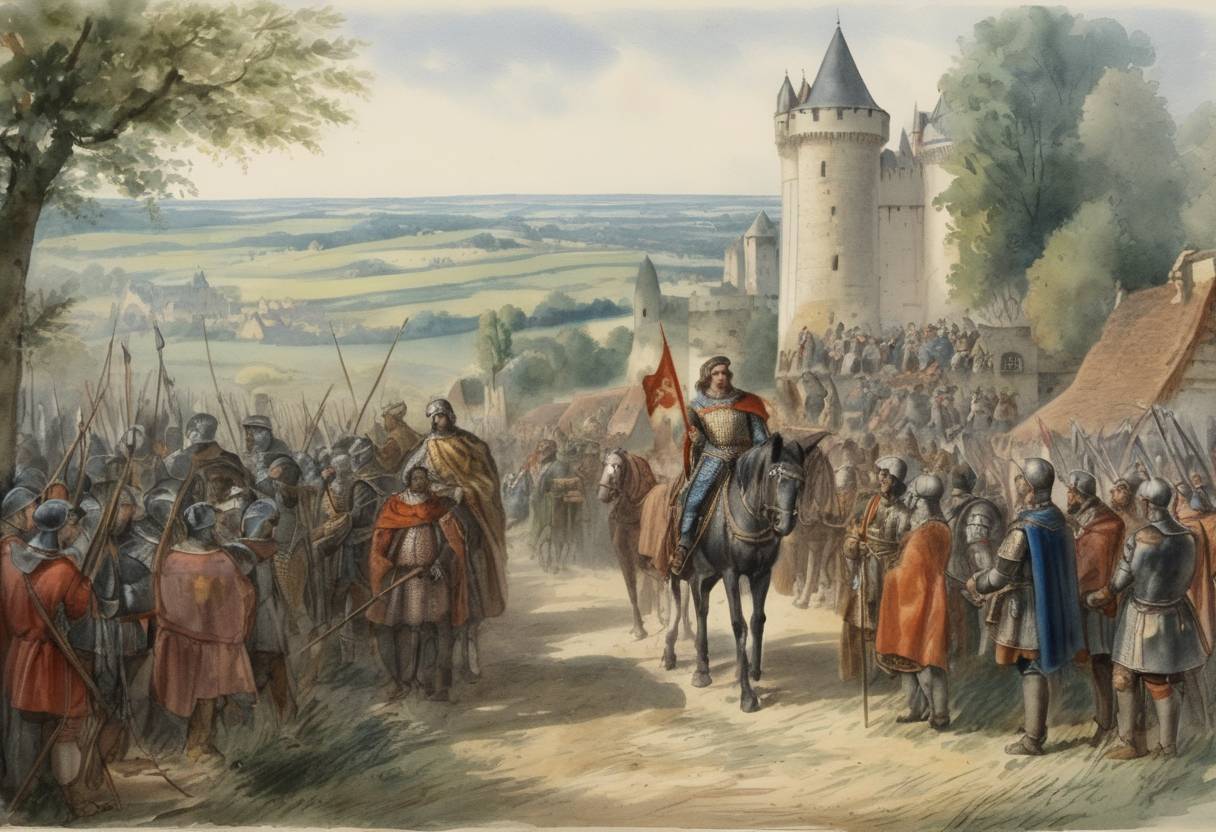
The Treaty of Chaumont-en-Vexin was a pivotal accord signed on November 26, 1161, between two prominent monarchs: Louis VII of France and Henry II of England. This treaty was a significant moment during the period of fluctuating hostilities and territorial disputes between England and France, which spanned much of the medieval era.
Louis VII of France: Ascending to the French throne in 1137, Louis VII was characterized by efforts to consolidate and expand royal power within France. His early reign saw conflict with Henry II concerning territorial claims, particularly in Normandy and the Angevin territories.
Henry II of England: Having succeeded to the English throne in 1154, Henry II was also Duke of Normandy and Count of Anjou, roles that entrenched him in disputes over lands under dual claims by both the English crown and the French kingdom.
Both rulers desired to stabilize their dominions, which often required temporary peace or truce agreements amidst ongoing power struggles. The period leading up to 1161 was marked by sporadic warfare, territorial incursions, and shifting political alliances.
The Treaty of Chaumont-en-Vexin represented a mutual desire for de-escalation and temporary peace. While specific terms of the agreement are not exhaustively documented, the core outcomes are reflected in the cessation of hostilities and the mutual recognition of certain territorial claims. The agreement allowed both monarchs to realign their focuses:
Louis VII was occupied with internal challenges and the assertion of Capetian authority, and sought a diminished level of tension on his northern frontier.
Henry II needed to manage his extensive Angevin Empire, which stretched across parts of modern France, and required a halt to battles that drained critical resources.
The Treaty of Chaumont-en-Vexin, while not permanent, was part of ongoing diplomatic efforts between England and France throughout the 12th century. Its significance lies in its function as a temporary reprieve that allowed for strategic regrouping and planning on both sides. However, the cessation of hostilities proved to be a mere intermission, as Anglo-French rivalry persisted well beyond this treaty into the later centuries.
In the broader landscape of medieval European politics, such treaties punctuated the long narrative of dynastic and territorial disputes. They underscore the complexity of monarchical rule, wherein war and diplomacy were intertwined methods of resolving conflicts. The treaty exemplified the constant balancing act faced by European rulers in maintaining authority and managing relationships both within and beyond their borders.
Source: history.wisc.edu