The Battle of Ia Drang: November 14, 1965
1965 · Ia Drang Valley, Vietnam
The Battle of Ia Drang, the first major engagement between regular American and North Vietnamese forces, begins in the Vietnam War.
June 18, 1965
The Vietnam War escalated as the United States deployed its first major combat unit, 3,500 marines, to South Vietnam to participate in the Battle of Van Tuong.
Van Tuong, Vietnam | United States Marine Corps
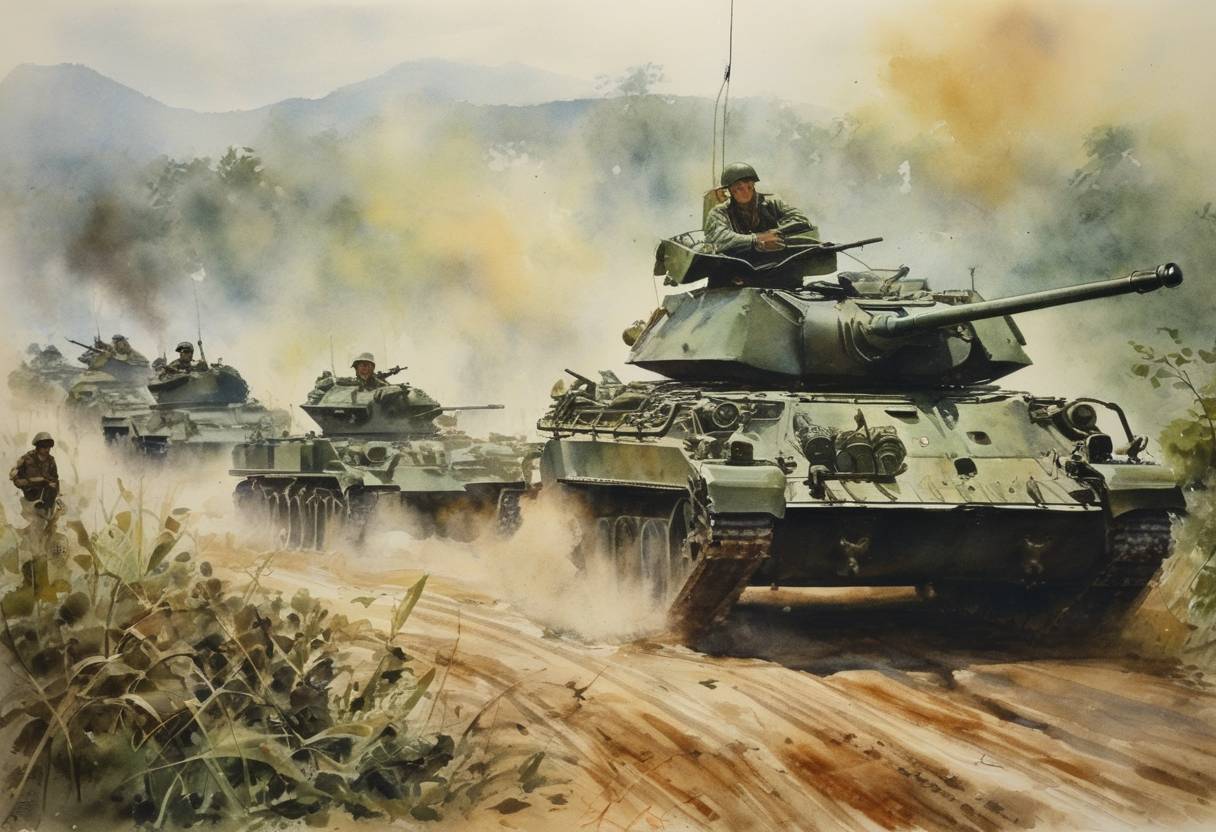
The deployment of 3,500 marines to South Vietnam and the involvement in the Battle of Van Tuong is incorrectly attributed to June 18, 1965. Instead, these events are tied to different timelines in the Vietnam War, illustrating the complexities and frequent misunderstandings surrounding historical events.
Deployment of U.S. Marines: The significant deployment of American combat troops to Vietnam actually began earlier, with the landing of 3,500 U.S. Marines at Da Nang on March 8, 1965. This marked the official start of major U.S. ground force involvement in the Vietnam War. By June 1965, the U.S. presence in Vietnam was already escalating, with President Lyndon B. Johnson authorizing additional troop deployments.
Battle of Van Tuong: Known as Operation Starlite, the Battle of Van Tuong was the first major offensive action conducted by a purely American unit on August 18-24, 1965. It involved about 5,500 U.S. Marines and aimed to destroy Viet Cong forces believed to be concentrated near Chu Lai, South Vietnam. This operation was a significant engagement in the Vietnam War, setting a precedent for the increasing role of American forces in direct combat.
Background: The deployment of U.S. Marines in March 1965 and subsequent actions like Operation Starlite indicated a shift in U.S. policy from advisory roles and limited engagements to active combat operations. This escalation was part of a broader strategy to combat the spread of communism in Southeast Asia during the Cold War.
Significance: The presence of U.S. combat troops marked the Vietnam War as a major military conflict involving significant American involvement, impacting domestic opinion and policy. The growing U.S. military engagement spurred a gradual increase in anti-war sentiment back home, ultimately influencing political and military decisions in the subsequent years.
Aftermath: The Battle of Van Tuong was considered a tactical victory for the U.S. but also set the stage for the complexities of counterinsurgency warfare that would challenge U.S. forces throughout the Vietnam War. It demonstrated the potential for success in direct combat but underscored the difficulties of achieving long-term strategic goals against an elusive and resilient enemy.
The misattribution of dates is a reminder of the intricacies and challenges in accurately understanding historical narratives, requiring careful attention to detail and sources.
Source: www.history.com