Martin Luther’s Pivotal Vow: July 2, 1505
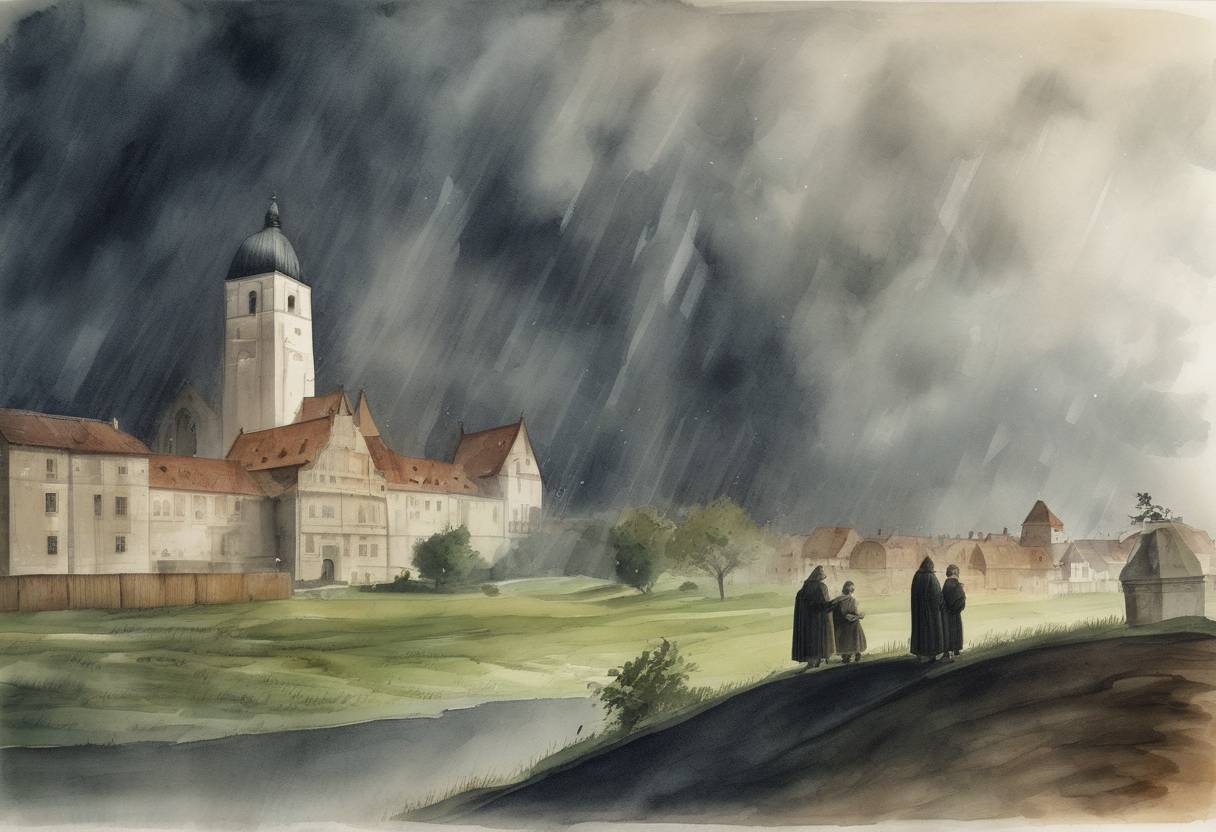
On July 2, 1505, a significant event occurred that would eventually lead to the Protestant Reformation: Martin Luther, then a young law student, found himself caught in a violent thunderstorm near the village of Stotternheim, Germany. This moment of crisis became a turning point in his life and, subsequently, in the history of Christianity.
Context Leading to the Event
Martin Luther was born on November 10, 1483, in Eisleben, Saxony, part of the Holy Roman Empire. He was raised in a devout Catholic family and was sent to study law at the University of Erfurt, following his father’s wishes. Luther was an exemplary student, but he was also deeply introspective and concerned with spiritual matters.
The Thunderstorm and the Vow
On that fateful day in July 1505, as Luther was returning to Erfurt after visiting his family, he was caught in a severe thunderstorm. Fearing for his life amidst the lightning and thunder, Luther cried out to St. Anne, the patron saint of miners (his father’s profession), promising, “Save me, St. Anne, and I will become a monk!”
This vow marked a dramatic shift in Luther’s life. True to his word, just two weeks later, on July 17, 1505, Luther entered the Augustinian Monastery in Erfurt, abandoning his legal studies. This decision was met with resistance from his father, who had hoped for a prosperous legal career for his son.
Consequences and Historical Significance
Luther’s entry into monastic life set him on a path of theological study and reflection. He was ordained as a priest in 1507 and later became a professor of theology at the University of Wittenberg. His deep engagement with the scriptures and the teachings of the Church led him to question certain practices, most notably the sale of indulgences.
This questioning culminated in 1517 when Luther famously nailed his “95 Theses” to the door of the Wittenberg Castle Church, challenging the Catholic Church’s practices and sparking the Protestant Reformation. This movement led to significant religious, political, and cultural changes across Europe, ultimately resulting in the formation of various Protestant denominations.
Broader Historical Impact
Luther’s vow and subsequent actions contributed to a major schism within Christianity, altering the religious landscape of Europe. The Reformation encouraged the translation of the Bible into vernacular languages, increased literacy, and promoted individual interpretation of the scriptures. It also led to religious wars and conflicts, reshaping political boundaries and alliances.
In summary, the thunderstorm of July 2, 1505, and Luther’s vow to become a monk were pivotal moments that set the stage for the Reformation, a movement that profoundly influenced the course of Western history.