Romulus Augustulus Proclaimed Western Roman Emperor
475 · Ravenna, Western Roman Empire
Romulus Augustulus is proclaimed Western Roman Emperor.
April 12, 0467
Anthemius is proclaimed Roman Emperor of the West by Ricimer, a powerful military leader and kingmaker in the Western Roman Empire.
Rome, Western Roman Empire | Western Roman Empire
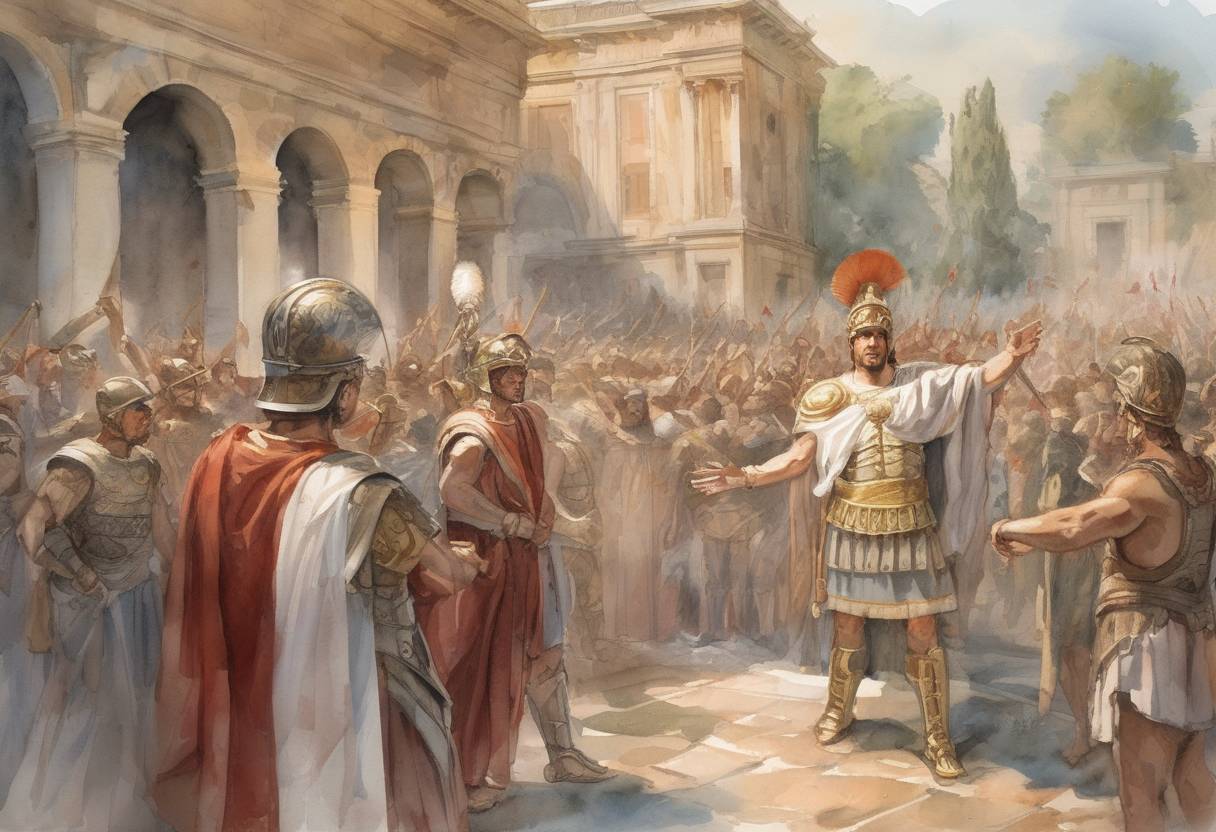
On April 12, 467, Anthemius was proclaimed Roman Emperor of the West, a significant event orchestrated by Ricimer, a powerful military leader and kingmaker in the Western Roman Empire. This proclamation marked a pivotal moment in the waning years of the Western Roman Empire, characterized by political instability and the influence of military strongmen.
By the mid-5th century, the Western Roman Empire was in a state of decline, plagued by internal strife, economic troubles, and external pressures from barbarian groups. The position of the Western Emperor had become largely ceremonial, with real power often held by influential military leaders like Ricimer. Ricimer, of Germanic descent, wielded considerable influence as a magister militum (master of soldiers) and had a history of installing and deposing emperors to suit his political needs.
Anthemius was a member of the Eastern Roman Empire’s aristocracy, with strong connections to the Eastern court. His marriage to Marcia Euphemia, the daughter of the Eastern Roman Emperor Marcian, further solidified his standing. In 467, the Eastern Roman Emperor Leo I sought to stabilize the Western Empire and counter the threat posed by the Vandals in North Africa. To this end, he supported Anthemius as a candidate for the Western throne.
Ricimer, recognizing the need for a strong alliance with the Eastern Empire and perhaps seeking to legitimize his own power, agreed to support Anthemius’s ascension. On April 12, 467, Anthemius was officially proclaimed Emperor of the West in Rome.
Anthemius’s reign was marked by efforts to restore stability and address the empire’s pressing military and economic challenges. One of his primary objectives was to deal with the Vandal threat, which had been a persistent issue for the Western Empire. In 468, Anthemius and Leo I launched a massive joint military expedition against the Vandals, which ultimately ended in failure and further strained the empire’s resources.
Despite his efforts, Anthemius struggled to maintain control over the Western Empire. His relationship with Ricimer deteriorated over time, leading to tensions and eventual conflict. In 472, Ricimer turned against Anthemius, besieging Rome and ultimately leading to the emperor’s downfall and death.
The proclamation of Anthemius as emperor highlights the complex interplay of military and political power in the late Western Roman Empire. It underscores the influence of figures like Ricimer, who could make or break emperors, and the challenges faced by the Western Empire in its final decades. Anthemius’s reign, though ultimately unsuccessful, represents one of the last significant attempts to restore the Western Roman Empire before its eventual collapse in 476.
In summary, the elevation of Anthemius to the Western throne on April 12, 467, was a key event in the twilight years of the Western Roman Empire, reflecting the era’s political dynamics and the ongoing struggle to preserve Roman authority in the face of mounting challenges.
Source: en.wikipedia.org