The Ousting of Tunisian President Zine El Abidine Ben Ali
2011 · Tunis, Tunisia
Tunisian President Zine El Abidine Ben Ali flees to Saudi Arabia after a month of protests, marking the first successful ousting of an Arab leader in the Arab Spring.
January 5, 2011
The Arab Spring protests began in Oman, marking the start of a series of demonstrations and uprisings across the Arab world.
Muscat, Oman | none
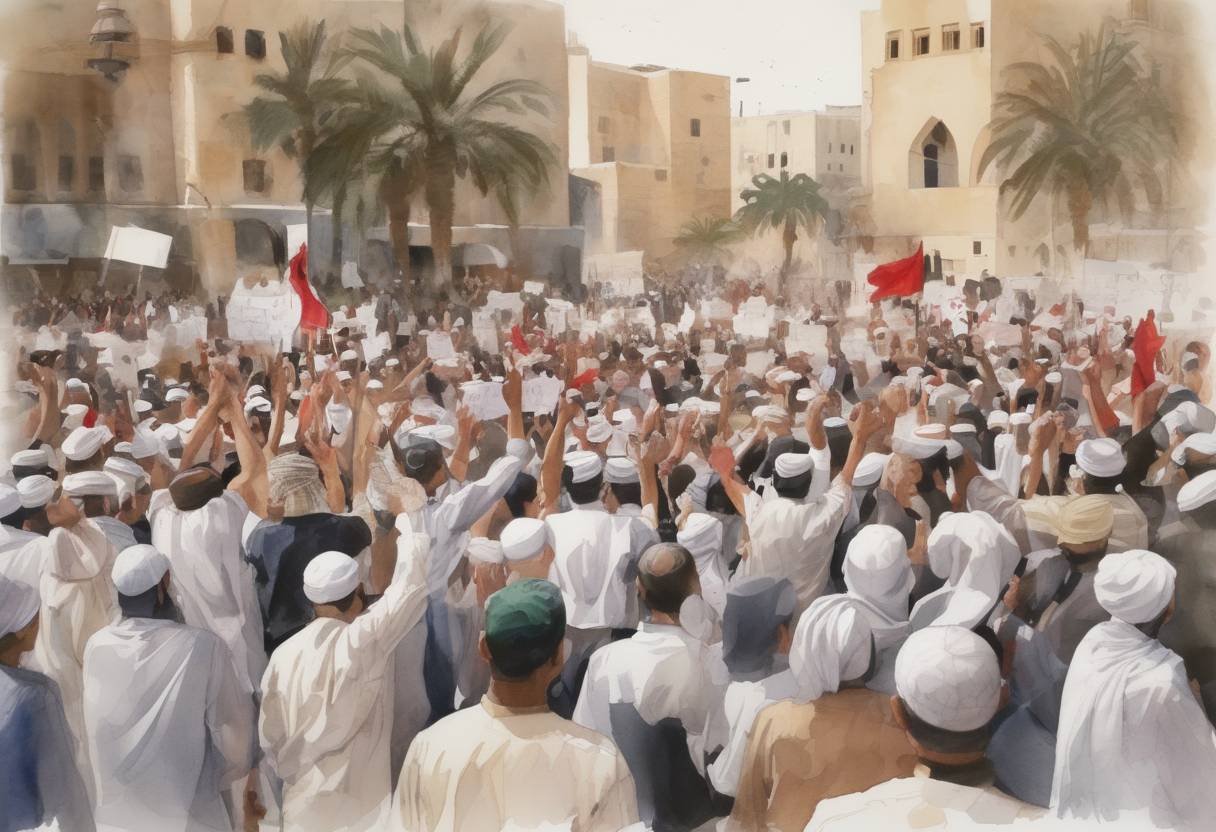
On January 5, 2011, Oman witnessed the beginning of protests that were part of the broader wave of demonstrations known as the Arab Spring. This series of uprisings and protests swept across the Arab world, challenging long-standing autocratic regimes and demanding political reform, economic opportunities, and social justice.
The Arab Spring began in late 2010 in Tunisia, where the self-immolation of Mohamed Bouazizi, a street vendor, sparked widespread protests that led to the ousting of President Zine El Abidine Ben Ali. This event inspired similar movements across the Middle East and North Africa, as citizens in various countries expressed their frustrations over corruption, unemployment, and lack of political freedoms.
Oman, a relatively stable and prosperous nation under the rule of Sultan Qaboos bin Said, was not immune to these regional currents. Although the scale of protests in Oman was smaller compared to other countries like Egypt and Libya, the demonstrations were significant in the context of Omani society, which had traditionally been characterized by political stability and limited public dissent.
Initial Protests: The protests in Oman began in the industrial city of Sohar, where demonstrators gathered to demand better job opportunities, higher wages, and an end to corruption. The protests were largely peaceful, with participants calling for reforms rather than the overthrow of the government.
Government Response: Sultan Qaboos responded swiftly to the protests by announcing a series of economic and political reforms. These included creating more public sector jobs, increasing the minimum wage, and reshuffling the cabinet to include new ministers. The government also promised to grant more powers to the consultative council, a move aimed at increasing political participation.
Continued Demonstrations: Despite these concessions, protests continued sporadically throughout 2011, with demonstrators seeking further reforms. The government maintained a generally restrained approach, avoiding the violent crackdowns seen in other countries.
The protests in Oman, while not as transformative as those in other Arab Spring countries, did lead to significant changes. Sultan Qaboos’s reforms helped to address some of the immediate grievances of the protesters and contributed to maintaining stability in the country. The events also highlighted the importance of addressing economic and social issues to prevent future unrest.
The Arab Spring was a pivotal moment in modern Middle Eastern history, reshaping the political landscape of the region. While the outcomes varied from country to country, the protests in Oman underscored the universal demand for dignity, economic opportunity, and political voice. The events in Oman demonstrated the potential for peaceful protest to effect change, even in societies with limited traditions of public dissent.
In summary, the Arab Spring protests in Oman on January 5, 2011, were part of a larger regional movement that sought to address longstanding grievances and push for reform. While Oman managed to avoid the turmoil seen in other countries, the protests were a reminder of the need for ongoing dialogue and reform in response to citizens’ demands.
Source: www.bbc.com