Nepotianus Proclaims Himself Roman Emperor - June 3, 350
350 · Rome, Roman Empire
Nepotianus, a member of the Constantinian dynasty, proclaims himself Roman Emperor, entering Rome with a group of gladiators.
February 6, 0337
The death of Julius Constantius, a prominent Roman politician and member of the Constantinian dynasty, occurred. He was the father of the future Roman Emperor Julian the Apostate.
Constantinople, Roman Empire | Roman Empire
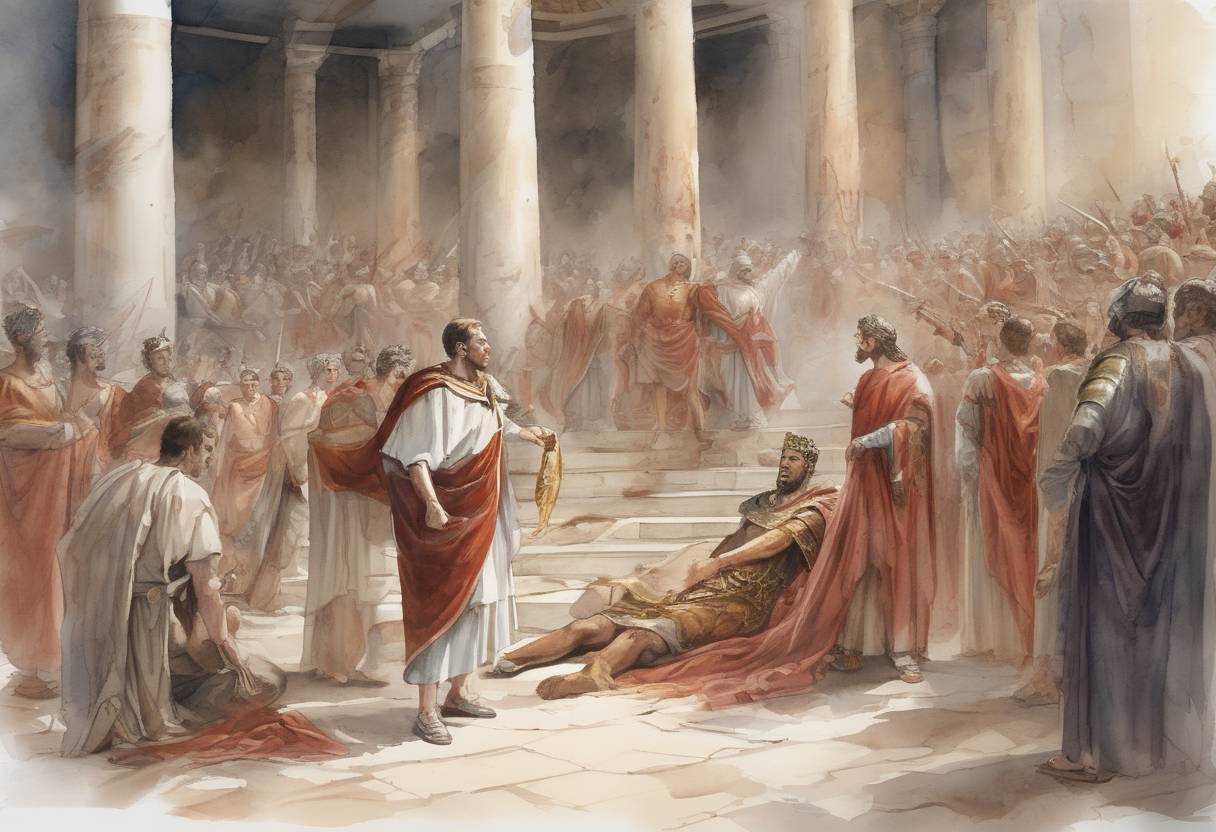
Julius Constantius was a notable figure in the Roman Empire, belonging to the influential Constantinian dynasty. His life and death are significant in the context of the political dynamics of the Roman Empire during the 4th century.
Julius Constantius was born into the Constantinian dynasty, being the son of Constantius Chlorus and Flavia Maximiana Theodora. This made him the half-brother of Constantine the Great, one of the most prominent emperors in Roman history, known for his role in the establishment of Christianity as a major religion within the empire.
Julius Constantius held several important positions throughout his life. He was appointed as a consul and served as a member of the imperial family, which afforded him significant influence within the Roman political sphere. His marriage to Galla, a member of the Roman nobility, further cemented his status within the elite circles of the empire.
Julius Constantius died on February 6, 337. His death occurred during a period of significant transition within the Roman Empire. Just a few months later, in May 337, his half-brother Constantine the Great would also pass away, leading to a power struggle among Constantine’s sons and other members of the Constantinian dynasty.
The death of Julius Constantius had notable implications for his son, Julian, who would later become known as Julian the Apostate. Julian’s rise to power was marked by his efforts to restore paganism and reduce the influence of Christianity, a stark contrast to the policies of his uncle Constantine. Julius Constantius’s death, therefore, indirectly set the stage for the future religious and political shifts that Julian would attempt to implement during his reign as emperor from 361 to 363.
The death of Julius Constantius is a reflection of the turbulent and often dangerous nature of Roman imperial politics, where familial ties could both elevate and endanger individuals. His life and legacy are intertwined with the broader narrative of the Constantinian dynasty, which played a pivotal role in shaping the Roman Empire during a time of significant transformation.
In summary, Julius Constantius’s death marked the end of a life deeply embedded in the political machinations of the Roman Empire and set the stage for the future actions of his son, Julian the Apostate, whose reign would challenge the religious status quo established by Constantine the Great.
Source: en.wikipedia.org