The Watts Riots: August 11, 1965
1965 · Los Angeles, United States
The Watts Riots begin in Los Angeles, California, lasting for six days.
July 23, 1967
The 12th Street Riot begins in Detroit, Michigan, leading to 43 deaths and over 1,000 injuries.
Detroit, United States | N/A
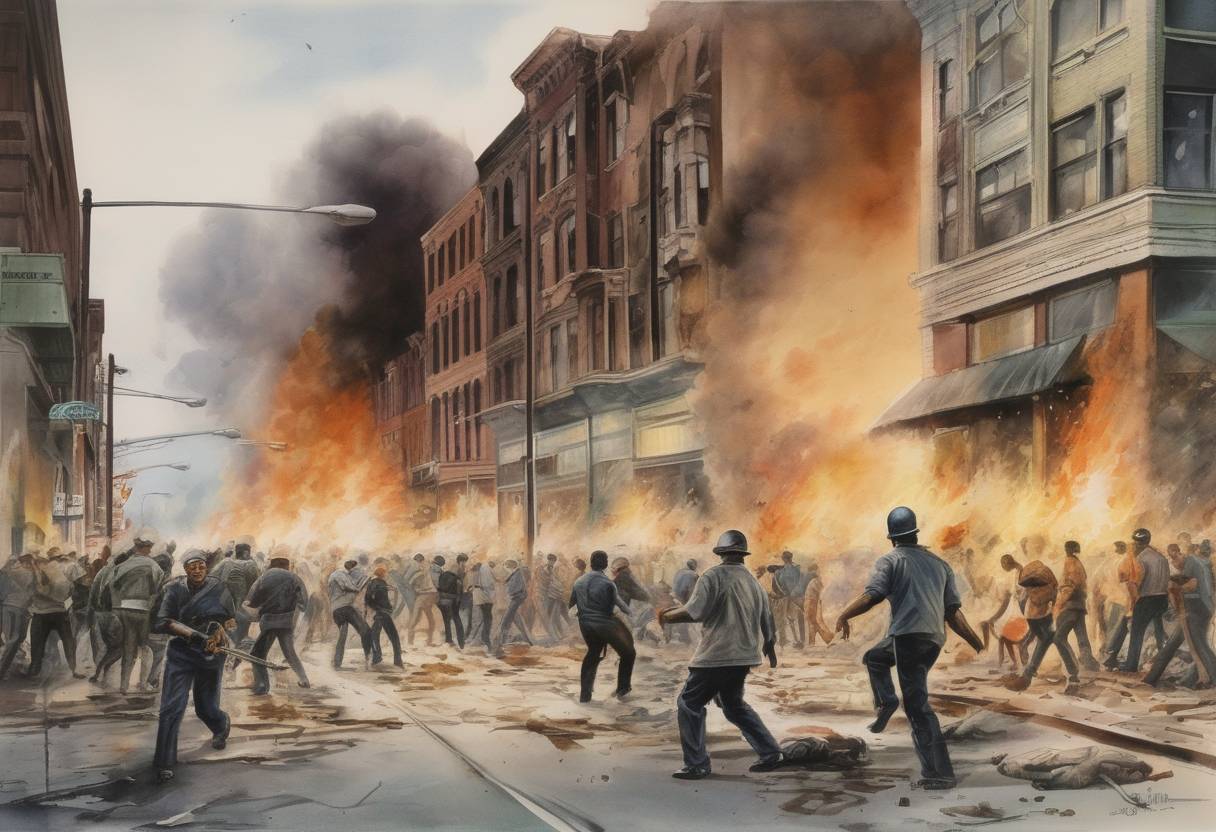
The 12th Street Riot, also known as the Detroit Riot of 1967, was one of the most severe instances of civil unrest in United States history. It occurred during a period of heightened racial tension and civil rights struggles across the country. Detroit, like many other American cities, was grappling with issues such as racial segregation, economic inequality, and police brutality, which disproportionately affected African American communities.
Economic and Social Disparities: Detroit’s African American population faced systemic discrimination in housing, employment, and education. Despite the city’s booming auto industry, many African Americans were confined to low-paying jobs and substandard living conditions.
Police Relations: Tensions between the African American community and the predominantly white police force were high. Incidents of police brutality and racial profiling were common, contributing to a deep-seated mistrust of law enforcement.
Civil Rights Movement: The 1960s were marked by significant civil rights activism. The successes and setbacks of the movement heightened awareness and frustration over racial injustices.
Triggering Incident: In the early hours of July 23, 1967, Detroit police raided an unlicensed after-hours bar known as a “blind pig” on 12th Street, where a party was being held for returning Vietnam War veterans. The police arrested 82 African Americans, sparking outrage among onlookers.
Escalation: The situation quickly escalated as a crowd gathered, leading to looting and arson. The unrest spread rapidly across the city, with thousands participating in the chaos.
Response: Michigan Governor George Romney deployed the Michigan National Guard, and President Lyndon B. Johnson sent in federal troops to restore order. Despite these efforts, the violence continued for five days.
Casualties and Damage: The riot resulted in 43 deaths, over 1,000 injuries, and more than 7,000 arrests. Property damage was extensive, with hundreds of buildings destroyed or severely damaged.
Long-term Impact: The riot highlighted the urgent need for reforms in urban policy and race relations. It prompted federal investigations and led to the establishment of the Kerner Commission, which examined the causes of urban riots and recommended measures to address racial inequality.
Legacy: The 12th Street Riot remains a pivotal moment in Detroit’s history, symbolizing the broader struggles for civil rights and social justice in America. It underscored the necessity for systemic change to address the root causes of racial unrest.
The Detroit Riot of 1967 was part of a series of urban uprisings during the 1960s, reflecting widespread dissatisfaction with racial and economic conditions in the United States. It served as a catalyst for discussions on race relations and urban policy, influencing future legislation and civil rights initiatives. The events of that summer continue to resonate in contemporary discussions about race, policing, and social justice.
Source: en.wikipedia.org