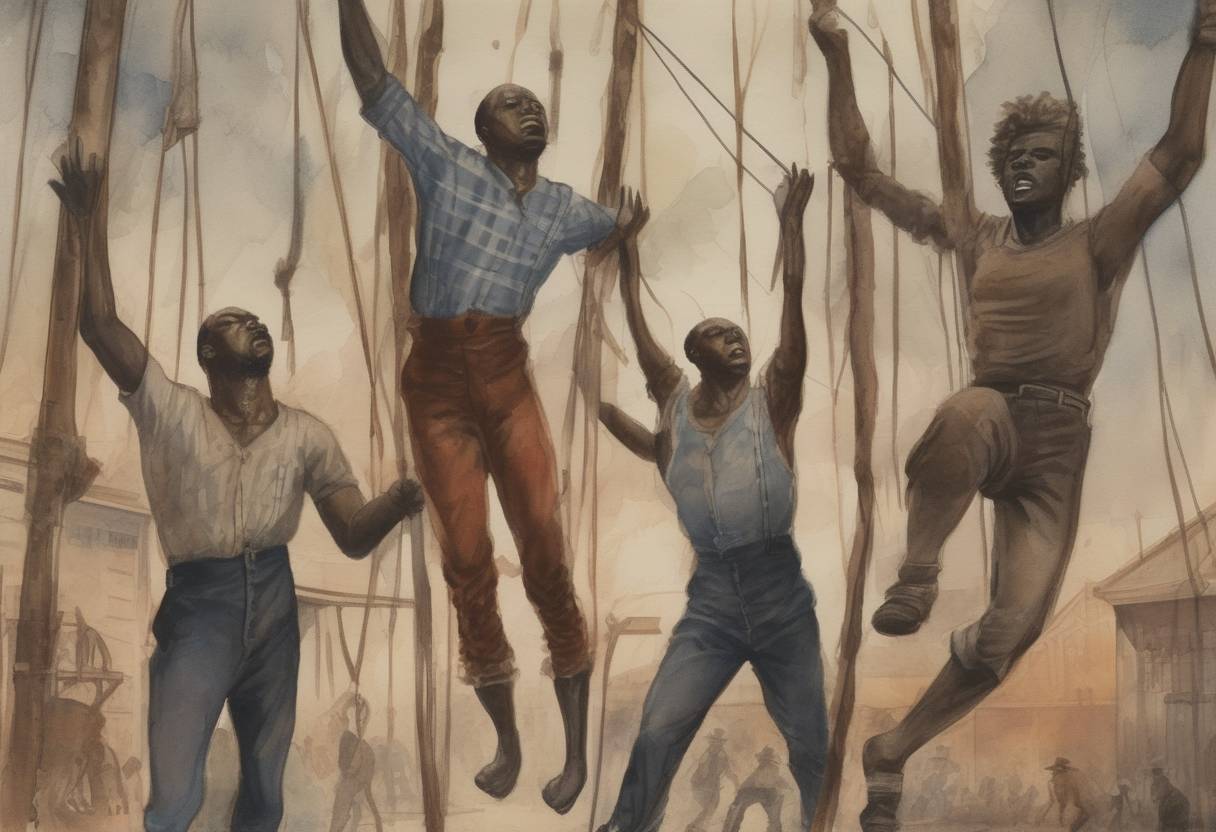
The Duluth Lynchings: June 15, 1920
On June 15, 1920, a tragic and racially charged event unfolded in Duluth, Minnesota, when three African-American circus workers—Elias Clayton, Elmer Jackson, and Isaac McGhie—were lynched by a mob. This brutal incident was precipitated by false accusations of rape, reflecting the deep-seated racial tensions and injustices of the era.
Context and Events Leading Up to the Lynching
The incident began on June 14, 1920, when the John Robinson Circus arrived in Duluth. That evening, Irene Tusken, a 19-year-old white woman, and James Sullivan, her male companion, attended the circus. Later, Sullivan claimed that Tusken had been raped by several African-American circus workers. Despite the lack of physical evidence or medical examination to substantiate the claim, the accusation quickly spread through the community.
The following day, police arrested several black circus workers based on Sullivan’s allegations. The situation escalated rapidly as a mob, fueled by racial animosity and sensationalized media reports, gathered outside the Duluth city jail where the men were held.
The Lynching
On the night of June 15, a mob estimated to be between 5,000 to 10,000 people overpowered the police and stormed the jail. They seized Elias Clayton, Elmer Jackson, and Isaac McGhie, dragging them to a nearby street corner. There, the mob brutally lynched the three men, hanging them from a lamppost. Photographs of the lynching were taken and later distributed as postcards, a grim testament to the racial violence of the time.
Aftermath and Historical Significance
The lynchings in Duluth shocked the nation and highlighted the pervasive racial violence and injustice faced by African Americans, even in northern states. In the aftermath, the Minnesota National Guard was deployed to restore order, and several members of the mob were arrested. However, only a few were convicted, and those who were received relatively light sentences.
The event spurred civil rights activism in Minnesota and contributed to the broader national conversation about racial violence and justice. In 1921, the Minnesota Legislature passed an anti-lynching law, one of the first of its kind in the United States.
Legacy
The Duluth lynchings are remembered as a somber chapter in American history. In 2003, the city of Duluth dedicated a memorial to Clayton, Jackson, and McGhie, acknowledging the injustice they suffered and serving as a reminder of the need for continued vigilance against racial hatred and violence.
This tragic event underscores the importance of confronting and addressing racial injustice, both in historical contexts and in contemporary society.