Iraq Declares Kuwait its 19th Province: August 28, 1990
1990 · Baghdad, Iraq
Iraq declares Kuwait to be its 19th province following its invasion earlier in August, escalating tensions leading to the Gulf War.
January 16, 1991
The Gulf War, also known as Operation Desert Storm, began as coalition forces led by the United States launched air strikes against Iraq in response to Iraq's invasion of Kuwait.
Baghdad, Iraq | United Nations Coalition
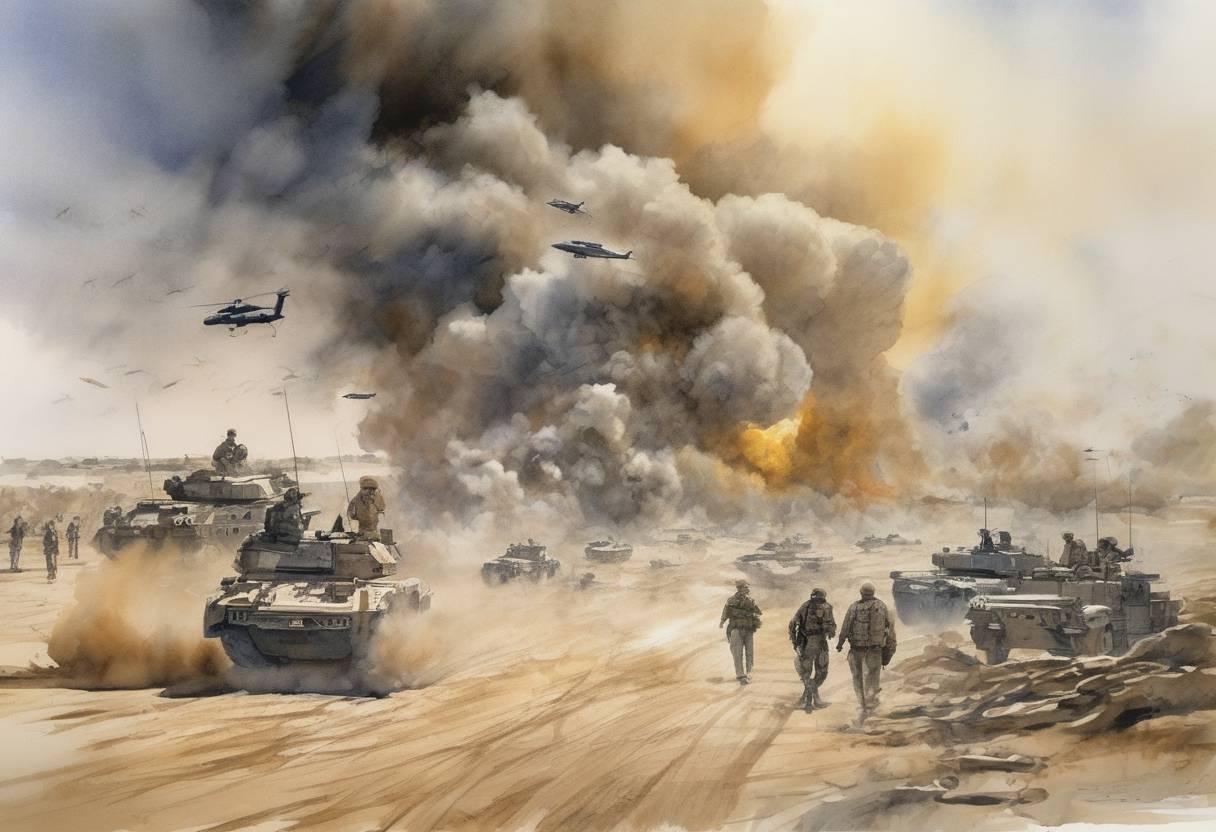
The Gulf War, also known as Operation Desert Storm, was a conflict that arose from Iraq’s invasion of Kuwait on August 2, 1990. The invasion was ordered by Iraqi President Saddam Hussein, who accused Kuwait of overproducing oil and driving down prices, which harmed the Iraqi economy. Additionally, Iraq claimed that Kuwait was historically part of its territory.
The international community, led by the United States, condemned the invasion. The United Nations Security Council passed a series of resolutions demanding Iraq’s immediate withdrawal from Kuwait and imposed economic sanctions on Iraq. Despite diplomatic efforts, Iraq refused to comply, leading to the formation of a coalition force to liberate Kuwait.
On January 16, 1991, Operation Desert Storm commenced with a massive aerial bombardment campaign. The coalition forces, comprising 35 nations and led by the United States, launched air strikes against strategic targets in Iraq and Kuwait. The primary objectives were to destroy Iraq’s air defenses, communication networks, and military infrastructure, thereby crippling its ability to wage war.
The air campaign, which began on January 16, 1991, was characterized by its intensity and precision. It involved over 100,000 sorties and targeted key military and infrastructure sites. The coalition’s technological superiority, including the use of stealth aircraft and precision-guided munitions, played a crucial role in minimizing coalition casualties and maximizing damage to Iraqi forces.
The air campaign lasted for several weeks and was followed by a ground assault on February 24, 1991, which quickly overwhelmed Iraqi forces. By February 28, 1991, President George H. W. Bush declared a ceasefire, and Kuwait was liberated.
The Gulf War marked a pivotal moment in post-Cold War international relations, highlighting the role of multinational coalitions in addressing regional conflicts.
Source: www.britannica.com