The Issuance of the First Traveler's Cheques by the London Credit Exchange Company
1772 · London, United Kingdom
The first traveler's cheques, which can be used in 90 European cities, are issued by the London Credit Exchange Company.
February 16, 1659
The first known cheque is written in England.
London, England | Banking
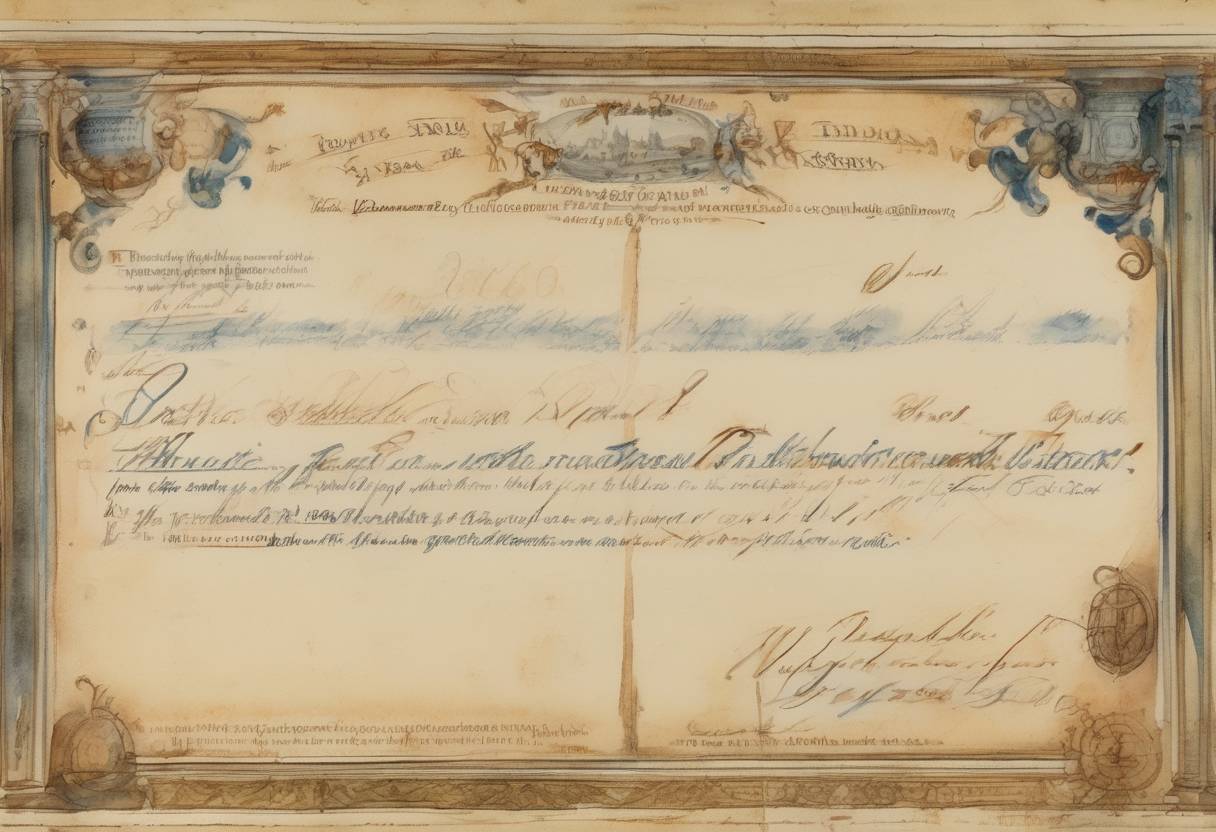
On February 16, 1659, a significant milestone in the history of banking and financial transactions occurred with the writing of the first known cheque in England. This event marked the beginning of a new era in the way financial transactions were conducted, paving the way for modern banking practices.
During the mid-17th century, England was undergoing significant economic and political changes. The English Civil War had recently concluded, and the country was in a period of reconstruction and stabilization. The financial system was evolving, with the establishment of more structured banking practices. The use of cheques emerged as a convenient alternative to the cumbersome and risky practice of carrying large sums of money.
The cheque written on February 16, 1659, was issued by Nicholas Vanacker, a London merchant. It was drawn on Messrs. Morris and Clayton, a banking firm in London. This document is considered the earliest surviving example of a cheque in England. The cheque was a simple written order directing the bank to pay a specified sum to a named individual or bearer.
The introduction of cheques revolutionized financial transactions by providing a safer and more efficient method of payment. It reduced the need for physical money handling and minimized the risks associated with theft and loss. Over time, the use of cheques became widespread, contributing to the development of the modern banking system.
The use of cheques continued to grow throughout the 18th and 19th centuries, becoming a standard method of payment in many parts of the world. The concept of the cheque has evolved with technological advancements, leading to the development of electronic payments and digital banking.
Today, while the use of paper cheques has declined with the rise of digital transactions, the fundamental principles established by that first cheque in 1659 remain integral to modern financial systems. The cheque’s legacy is evident in the continued use of similar instruments in various forms, including electronic funds transfers and online banking.
In conclusion, the writing of the first known cheque in England on February 16, 1659, was a pivotal moment in financial history, laying the groundwork for the sophisticated banking systems we rely on today.
Source: www.bankinghistory.org