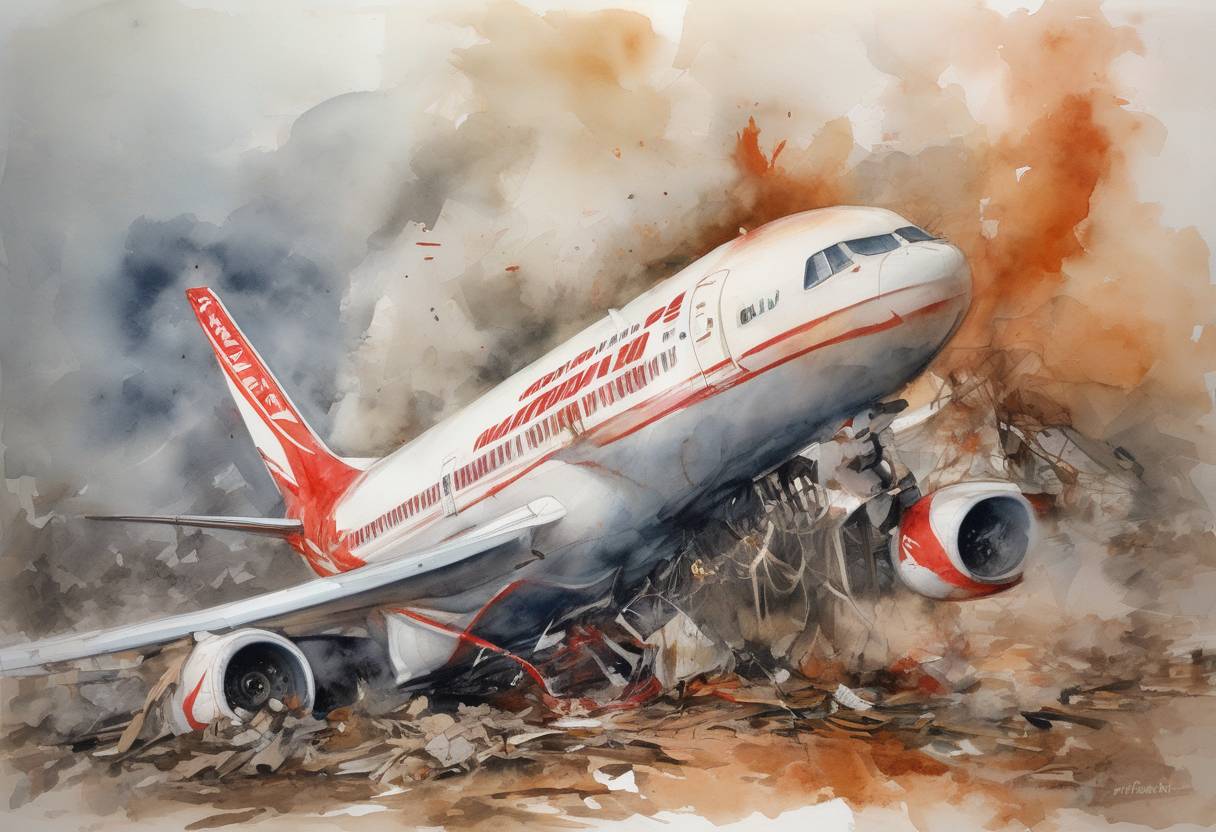
Air India Express Flight 812 Crash: May 22, 2010
On May 22, 2010, Air India Express Flight 812, a scheduled passenger flight from Dubai to Mangalore, India, tragically crashed upon landing at Mangalore International Airport. This disaster resulted in the deaths of 158 people, with only 8 survivors, marking it as one of the deadliest aviation accidents in India.
Background
- Aircraft: The flight was operated using a Boeing 737-800 aircraft, a popular model known for its reliability and efficiency in short to medium-haul flights.
- Route: The flight originated from Dubai International Airport, a major hub in the Middle East, and was destined for Mangalore, a city on the southwestern coast of India.
- Passengers and Crew: Onboard were 160 passengers and 6 crew members, totaling 166 individuals.
The Crash
- Landing Attempt: The crash occurred during the aircraft’s landing attempt at Mangalore International Airport. The airport is known for its challenging topography, with a tabletop runway surrounded by a valley, requiring precise landing maneuvers.
- Overshooting the Runway: The aircraft overshot the runway, failing to stop within the designated landing area. It continued beyond the runway’s end, breaking through the airport’s perimeter fence.
- Impact and Fire: The plane plunged into a gorge and burst into flames, leading to the high fatality rate. The impact and subsequent fire made rescue operations extremely difficult.
Investigation and Findings
- Pilot Error: The investigation, led by the Directorate General of Civil Aviation (DGCA) of India, concluded that pilot error was a significant factor. The captain, despite being warned by the co-pilot, continued with the landing approach under unsuitable conditions.
- Fatigue: It was also suggested that pilot fatigue might have contributed to the captain’s impaired judgment during the critical phase of landing.
- Runway Conditions: The tabletop runway’s challenging conditions were noted, though they were not deemed the primary cause of the accident.
Aftermath and Consequences
- Safety Measures: In response to the crash, there was a renewed focus on improving safety measures at airports with tabletop runways. This included better training for pilots and enhanced runway safety features.
- Compensation and Support: Air India provided compensation to the victims’ families and support to the survivors, while also facing scrutiny over its operational practices.
- Regulatory Changes: The incident prompted discussions on aviation safety regulations in India, leading to stricter oversight and implementation of safety protocols.
Broader Significance
The crash of Air India Express Flight 812 highlighted the critical importance of pilot training, fatigue management, and the need for rigorous safety standards in aviation. It served as a somber reminder of the potential consequences of human error in high-stakes environments and underscored the necessity for continuous improvements in aviation safety practices worldwide.