Valentina Tereshkova: First Woman in Space
1963 · Baikonur, Kazakhstan
Valentina Tereshkova became the first woman to fly in space, aboard Vostok 6, marking a significant milestone in space exploration and gender equality.
March 31, 1966
The Soviet Union launched Luna 10, which later became the first spacecraft to orbit the Moon.
Baikonur, Kazakhstan | Soviet space program
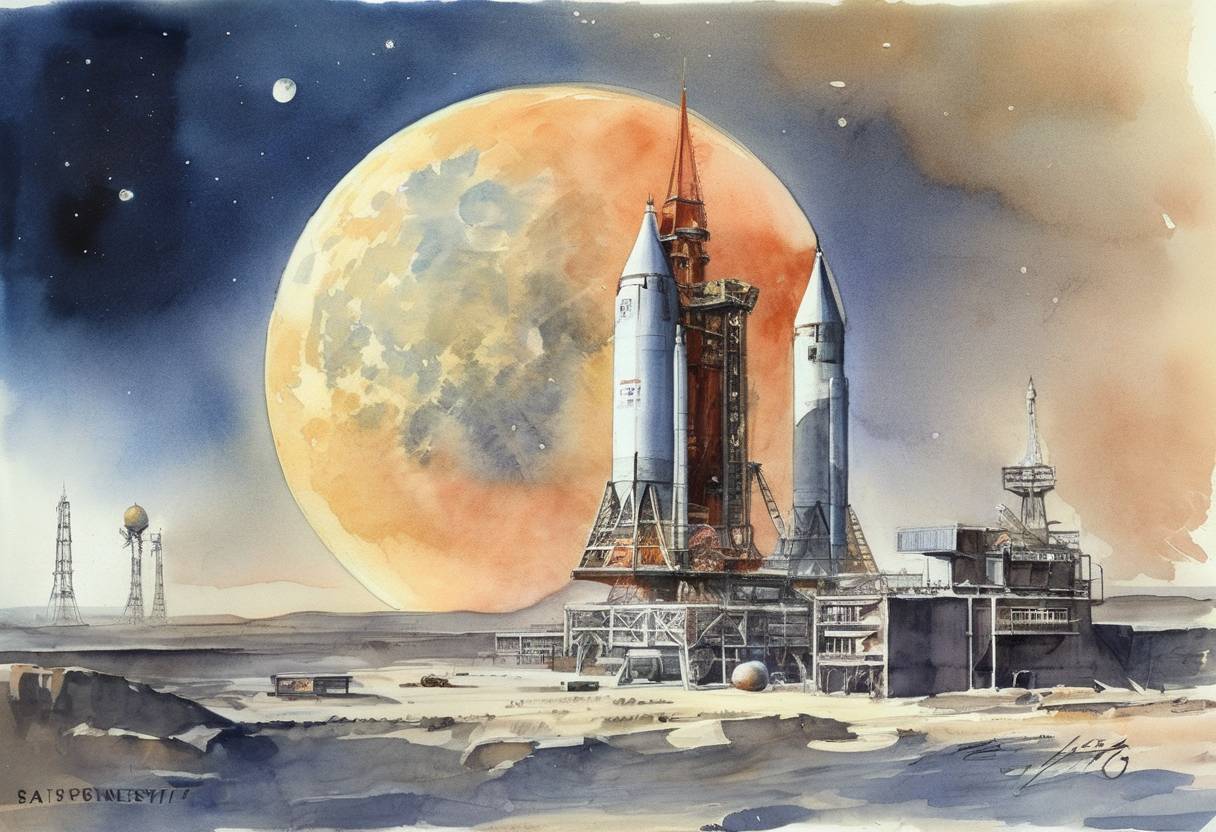
On March 31, 1966, the Soviet Union launched Luna 10, marking a significant milestone in space exploration as it became the first spacecraft to successfully orbit the Moon. This achievement was part of the Soviet Luna program, which aimed to explore the Moon and demonstrate the capabilities of Soviet space technology during the Cold War era.
The Luna program was initiated by the Soviet Union in the late 1950s, with the goal of exploring the Moon through a series of unmanned spacecraft. The program was a critical component of the space race, a period of intense competition between the United States and the Soviet Union to achieve superior spaceflight capabilities.
Prior to Luna 10, the Soviet Union had already achieved several firsts in space exploration, including the first artificial satellite, Sputnik 1, in 1957, and the first human in space, Yuri Gagarin, in 1961. Luna 9, launched earlier in 1966, had been the first spacecraft to achieve a soft landing on the Moon and transmit photographs back to Earth.
Luna 10 was designed to study the Moon’s environment and surface. It carried scientific instruments to measure gamma rays, magnetic fields, and cosmic rays, among other phenomena. The spacecraft’s journey to the Moon took approximately three days.
The success of Luna 10 paved the way for future lunar missions and deepened scientific knowledge about the Moon. It demonstrated the feasibility of orbiting another celestial body, a crucial step for subsequent manned and unmanned missions.
The Luna program continued with further missions aimed at exploring the Moon, culminating in the successful return of lunar soil samples to Earth with Luna 16 in 1970. The achievements of the Luna program laid the groundwork for future exploration and international cooperation in space.
Luna 10 remains a testament to the ingenuity and ambition of the Soviet space program and its role in advancing human understanding of the cosmos.
Source: en.wikipedia.org