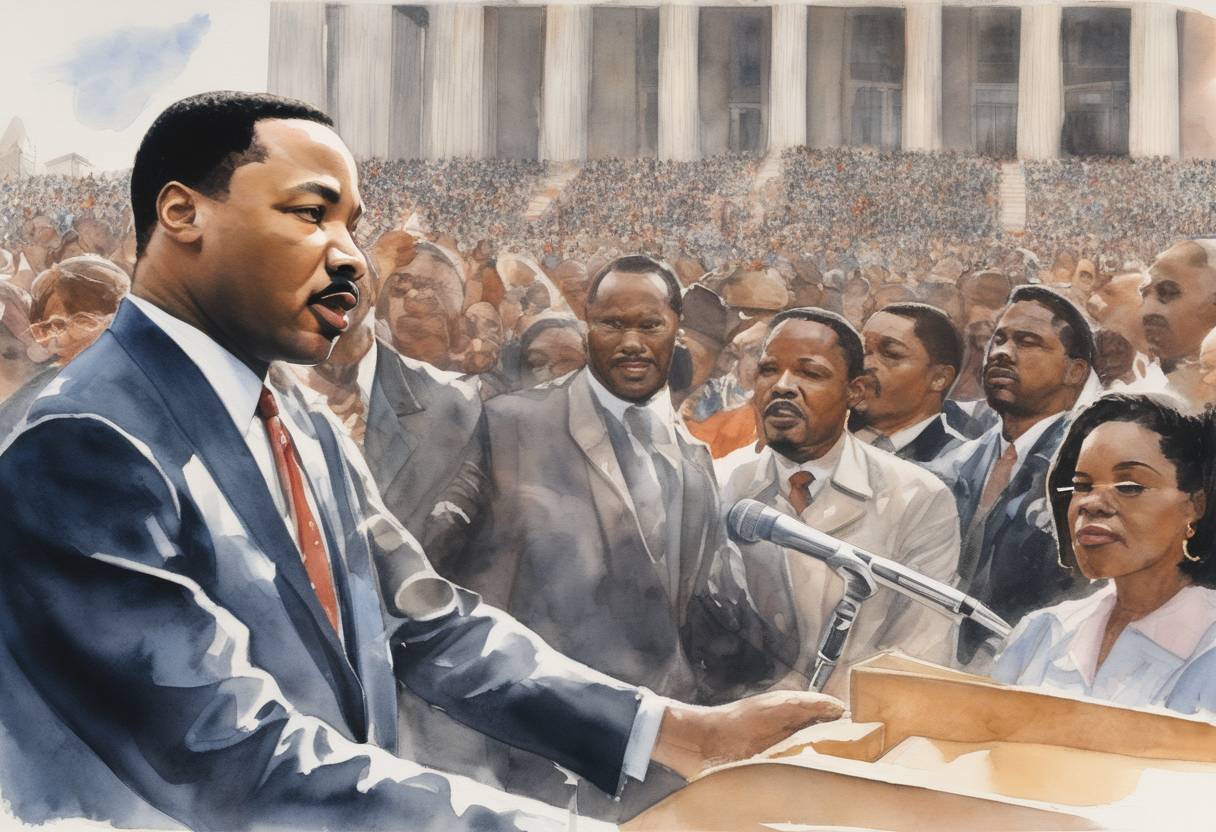
Martin Luther King Jr. Day: First Observance as a Federal Holiday
On January 20, 1986, the United States observed Martin Luther King Jr. Day as a federal holiday for the first time, marking a significant moment in the nation’s history. This day honors the life and legacy of Dr. Martin Luther King Jr., a pivotal leader in the American civil rights movement, renowned for his advocacy of nonviolent protest and his role in advancing civil rights for African Americans.
Background
Dr. Martin Luther King Jr. emerged as a prominent figure in the civil rights movement during the 1950s and 1960s. His leadership in events such as the Montgomery Bus Boycott and the March on Washington, where he delivered his iconic “I Have a Dream” speech, were instrumental in the fight against racial segregation and discrimination. King’s efforts were crucial in the passage of landmark legislation, including the Civil Rights Act of 1964 and the Voting Rights Act of 1965.
Tragically, Dr. King was assassinated on April 4, 1968, in Memphis, Tennessee. His death was a profound loss to the nation, but his legacy continued to inspire movements for equality and justice.
Establishment of the Holiday
The campaign to honor Dr. King with a national holiday began soon after his assassination. Congressman John Conyers of Michigan first introduced legislation for a holiday in King’s honor just four days after his death. However, it faced significant opposition and took years of advocacy and public support to gain momentum.
The turning point came in the 1980s, with increased public pressure and support from various groups, including labor unions and civil rights organizations. The campaign received a significant boost from musician Stevie Wonder, whose song “Happy Birthday” became an anthem for the movement. In 1983, after years of debate, Congress passed the bill, and President Ronald Reagan signed it into law on November 2, 1983, establishing the third Monday of January as Martin Luther King Jr. Day.
The First Observance
The first official observance of Martin Luther King Jr. Day as a federal holiday took place on January 20, 1986. It was marked by celebrations and events across the country, reflecting on King’s contributions to American society and his enduring impact on the struggle for civil rights. The holiday provided an opportunity for Americans to engage in community service, educational programs, and discussions about racial equality and justice.
Broader Significance
The establishment of Martin Luther King Jr. Day as a federal holiday was a significant acknowledgment of the importance of the civil rights movement and the ongoing struggle for racial equality in the United States. It serves as a reminder of the progress made and the work that remains in achieving King’s vision of a just and equitable society.
Today, Martin Luther King Jr. Day is observed not only as a day of remembrance but also as a “day of service,” encouraging individuals to volunteer and contribute to their communities in honor of King’s legacy of activism and service.