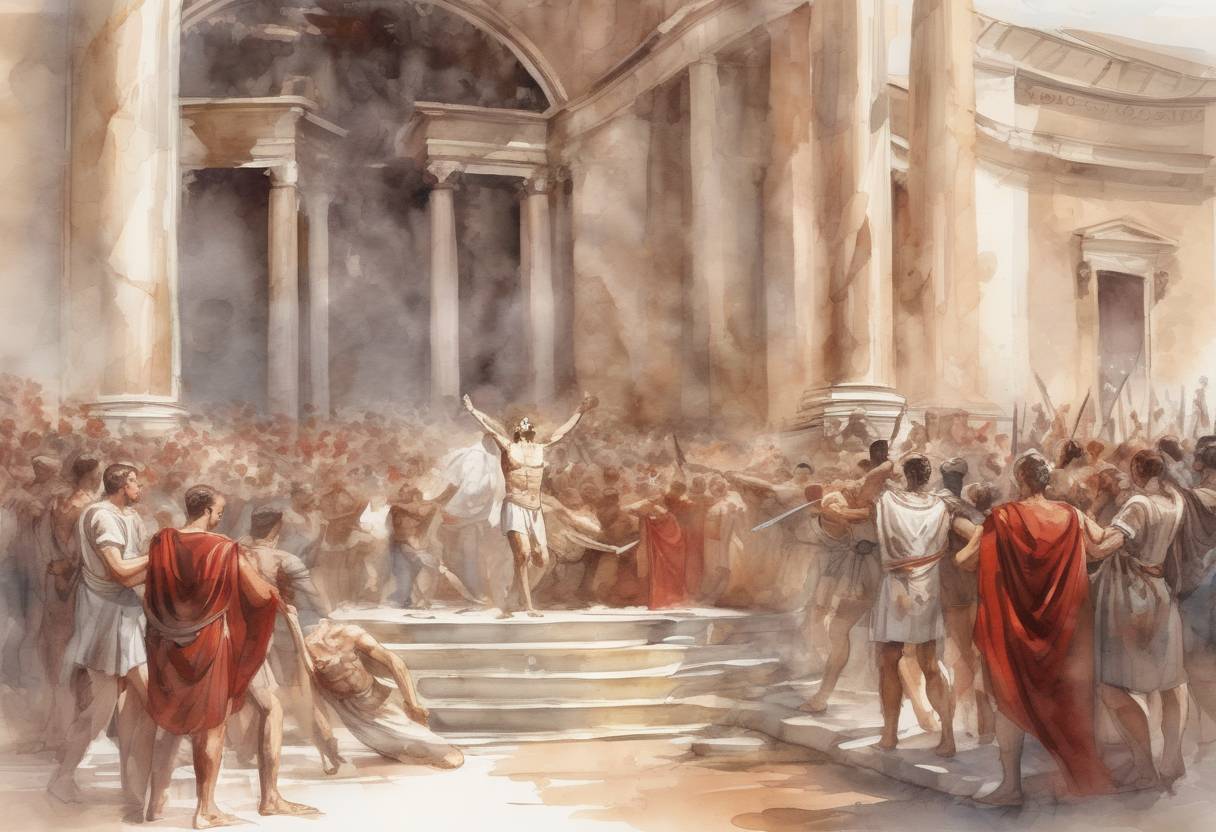
The Assassination of Julius Caesar
On March 15, 44 BCE, a pivotal event in Roman history unfolded: the assassination of Julius Caesar. This date, known as the Ides of March, marked a turning point in the Roman Republic, leading to the eventual rise of the Roman Empire.
Background
Julius Caesar was a military general and statesman who played a critical role in the events that led to the demise of the Roman Republic. By 44 BCE, Caesar had declared himself “dictator perpetuo” or dictator for life, a title that alarmed many senators who feared the erosion of the Republic’s traditional political structures and the concentration of power in a single individual.
The Conspiracy
The conspiracy to assassinate Caesar was led by Gaius Cassius Longinus and Marcus Junius Brutus, among others. Brutus, in particular, was a significant figure due to his close relationship with Caesar, who had previously pardoned him after a civil war. The conspirators, numbering around 60, were motivated by a combination of personal grievances, political ideology, and the desire to restore the Republic’s traditional governance.
The Assassination
The assassination took place in the Theatre of Pompey, where the Senate was meeting. As Caesar arrived, he was surrounded by the conspirators. According to historical accounts, including those by Plutarch and Suetonius, Caesar was stabbed 23 times. The attack was brutal and swift, with each conspirator taking part to ensure collective responsibility.
Aftermath
The immediate aftermath of Caesar’s assassination was chaotic. The conspirators, who called themselves the “Liberators,” believed they would be hailed as heroes for restoring the Republic. However, they underestimated Caesar’s popularity among the Roman populace and the loyalty of his supporters.
The power vacuum and ensuing political instability led to a series of civil wars. Ultimately, Caesar’s adopted heir, Octavian (later Augustus), emerged victorious. He established the Roman Empire, marking the end of the Roman Republic.
Historical Significance
The assassination of Julius Caesar is a landmark event in world history. It highlights the tensions between autocracy and republicanism and serves as a cautionary tale about the concentration of power. The event has been immortalized in literature, most notably in William Shakespeare’s play “Julius Caesar,” which explores themes of betrayal, ambition, and the public versus private self.
In conclusion, the assassination of Julius Caesar on the Ides of March was not just the murder of a leader but a catalyst for the transformation of Roman governance, influencing the course of Western history for centuries to come.