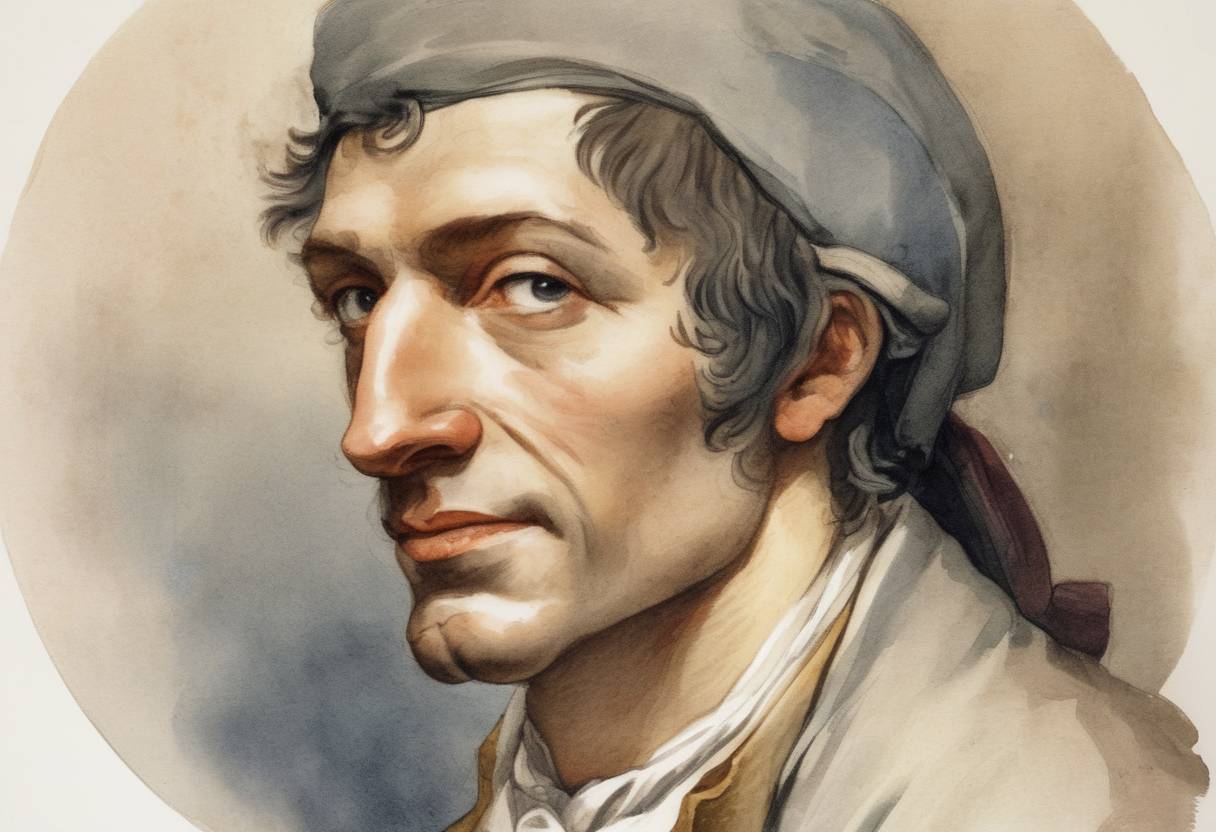
Assassination of Jean-Paul Marat
On July 13, 1793, Jean-Paul Marat, a prominent figure during the French Revolution, was assassinated by Charlotte Corday. This event marked a significant moment in the turbulent period of revolutionary France.
Background
Jean-Paul Marat
Jean-Paul Marat was a radical journalist and politician, known for his fiery rhetoric and staunch advocacy for the rights of the lower classes. Born in Switzerland in 1743, Marat moved to Paris, where he became involved in the revolutionary movement. He gained notoriety as the editor of the newspaper L’Ami du peuple (“The Friend of the People”), where he vociferously criticized the monarchy and called for radical reforms.
Marat’s influence grew during the Revolution, and he became a leading voice among the Jacobins, a radical political faction. His writings often incited violence and were instrumental in the rise of revolutionary fervor, contributing to the atmosphere that led to the Reign of Terror.
Charlotte Corday
Charlotte Corday, born in 1768 in Normandy, was a member of a minor aristocratic family. Initially supportive of the Revolution, she became disillusioned with its increasingly violent turn, particularly the actions of the Jacobins and Marat’s role in inciting the September Massacres of 1792, where hundreds of prisoners were killed.
Corday believed that Marat’s death would save France from further bloodshed and restore peace. Her decision to assassinate him was driven by a desire to halt the radicalization of the Revolution.
The Assassination
On July 13, 1793, Corday traveled to Paris and gained access to Marat’s residence by claiming she had information about a counter-revolutionary plot. Marat, who suffered from a debilitating skin condition, was working from his medicinal bath when Corday approached him. She stabbed him in the chest with a kitchen knife, killing him almost instantly.
Aftermath
Corday was arrested immediately after the assassination. During her trial, she expressed no remorse, stating that she had killed one man to save a hundred thousand. She was found guilty and executed by guillotine on July 17, 1793.
Marat’s death had significant repercussions. He was quickly martyred by the Jacobins, who used his assassination to further justify the Reign of Terror. His image became iconic, immortalized in Jacques-Louis David’s famous painting, The Death of Marat.
Historical Significance
The assassination of Jean-Paul Marat highlighted the deep divisions within revolutionary France and underscored the intense ideological conflicts of the period. It also exemplified the extreme measures individuals were willing to take in pursuit of their political beliefs. Marat’s death did not halt the violence of the Revolution; instead, it intensified the radicalization and contributed to the continuation of the Reign of Terror, which claimed thousands of lives before its conclusion in 1794.