The Treaty of Utrecht: Foundation of the Dutch Republic
1579 · Utrecht, Netherlands
The Treaty of Utrecht is signed, marking the foundation of the Dutch Republic.
October 1, 1596
The city of Groningen, after several sieges, officially joins the Dutch Republic as part of the Union of Utrecht.
Groningen, Netherlands | Dutch Republic
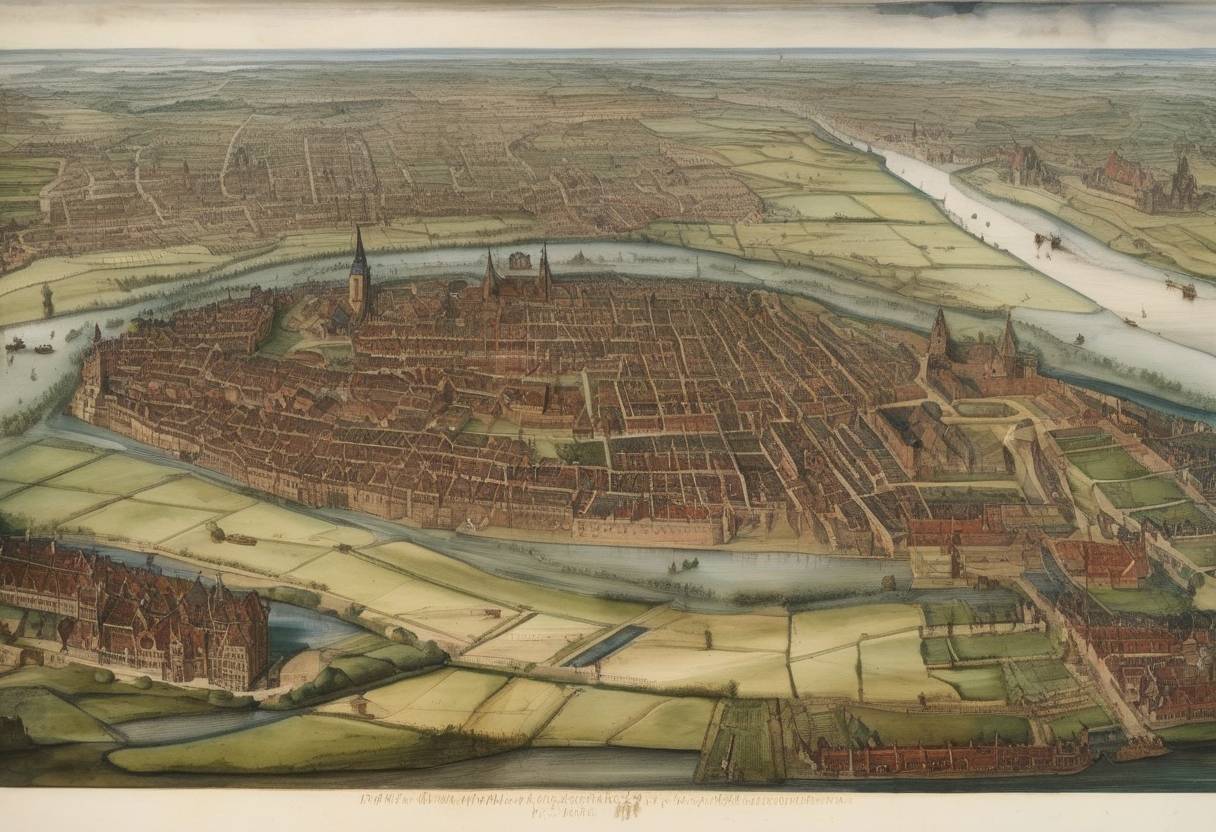
On October 1, 1596, the city of Groningen officially became part of the Dutch Republic by aligning itself with the Union of Utrecht. This event marked a pivotal moment in the Eighty Years’ War (1568–1648), during which the provinces of the Low Countries sought independence from Spanish rule.
The Union of Utrecht, signed in 1579, was a treaty that unified the northern provinces of the Netherlands in their struggle against the Spanish Habsburgs. It laid the groundwork for the formation of the Dutch Republic, resisting Spanish efforts to control the region. Groningen, located in the northeast of the Netherlands, had strategic importance due to its position and fortifications.
Before joining the Union, Groningen underwent several sieges, reflecting its contested status in the prolonged conflict between the Spanish crown and the rebelling Dutch provinces. The city frequently changed hands due to its defensive strength and economic significance.
By 1594, the siege of Groningen led by Maurice of Nassau, the Prince of Orange, successfully brought the city under the control of Dutch revolutionary forces. However, it wasn’t until 1596 that official incorporation into the Dutch Republic’s framework as part of the Union of Utrecht occurred.
Groningen’s incorporation into the Dutch Republic under the Union of Utrecht was significant in several ways:
Strategic and Military Advantage: Securing Groningen strengthened the northern provinces’ defenses against further Spanish incursions. The city’s inclusion helped fortify the resistance network in the region.
Economic Contributions: As a thriving center of commerce and trade, Groningen’s alignment with the Dutch Republic bolstered the overall economic stability and growth of the nascent state.
Cultural and Political Impact: Incorporation fostered unity among the provinces and reinforced the legitimacy of the Republic as an independent political entity.
By joining the Dutch Republic on October 1, 1596, Groningen played a crucial role in the collective effort to establish a distinct Dutch identity and independence from Spanish rule. This event marks a turning point in the Eighty Years’ War, leading to the eventual recognition of Dutch independence with the Treaty of Westphalia in 1648.
Source: en.wikipedia.org