The Beginning of the American Civil War: The Attack on Fort Sumter
1861 · Charleston, United States
The American Civil War began with the Confederate attack on Fort Sumter in South Carolina.
September 8, 1863
The Union forces began the siege of Fort Sumter as part of the American Civil War, following earlier attempts to recapture it.
Charleston, United States | United States Army
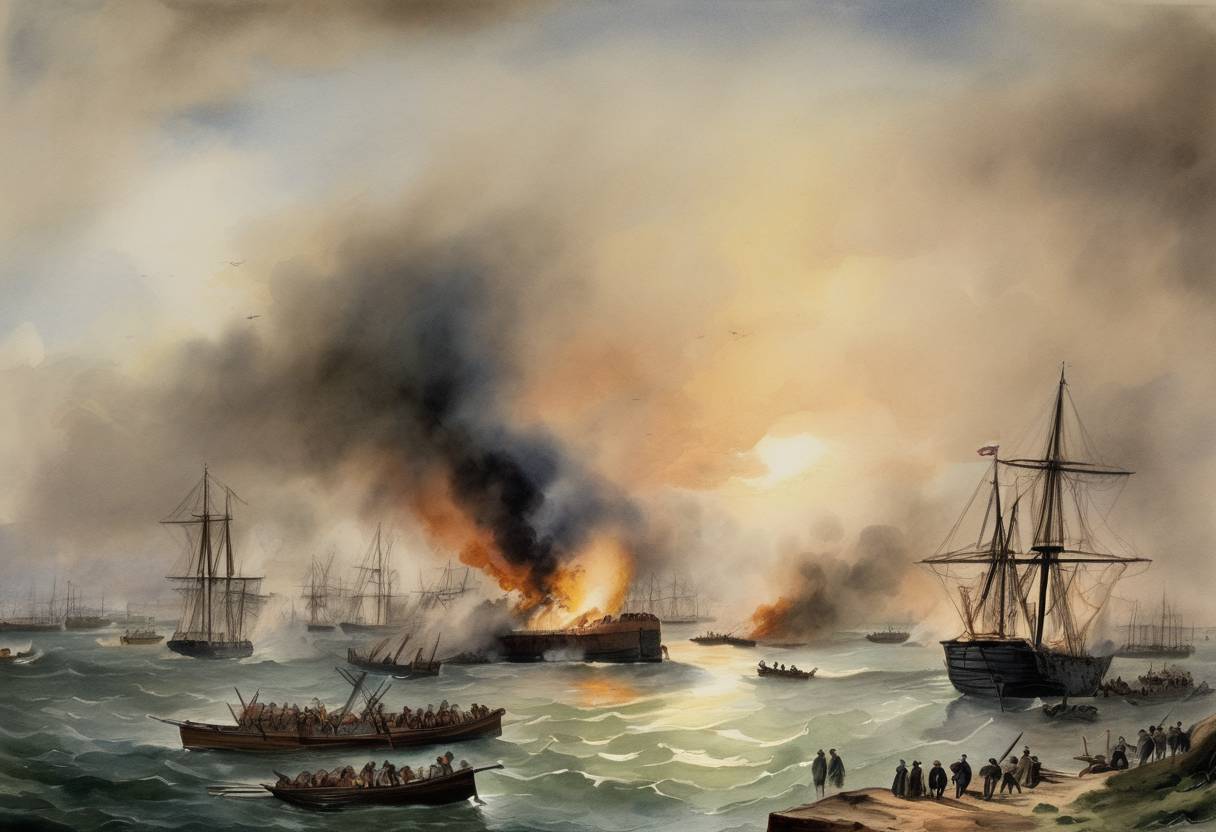
The Union siege of Fort Sumter, which began on September 8, 1863, was a significant episode in the American Civil War, part of the ongoing Union campaign to reclaim the crucial military fort located in Charleston Harbor, South Carolina. This siege was part of a larger attempt to regain control over Charleston, an important port city and symbolic heart of the Confederacy.
Fort Sumter held a strategic position at the entrance to Charleston Harbor, controlling access to the vital city. The fort had initially fallen to Confederate forces on April 13, 1861, following a bombardment that signified the start of the Civil War. Its capture spurred the secession of additional Southern states and solidified the Confederacy’s resistance efforts.
Throughout the war, the Union recognized Charleston’s strategic and symbolic importance, launching several campaigns to recapture it. By the summer of 1863, the Union, under the command of General Quincy Adams Gillmore, had focused its attention on besieging the heavily fortified harbor. The campaign included prior bombardments and land assaults, most notably the unsuccessful assaults on nearby Battery Wagner.
On September 8, 1863, Union forces initiated a direct siege on Fort Sumter. Despite previous bombardments rendering much of the fort’s structure ruinous, Confederate forces still maintained a determined garrison led by Major Robert Anderson. The Union’s approach was characterized by naval and land assaults designed to cut off Confederate supplies and reinforcements and to weaken their defensive capabilities.
The siege, extending over several months, drastically weakened Fort Sumter but did not immediately result in its capture. It remained under Confederate control until General William T. Sherman’s forces approached in February 1865, signaling the eventual fall of Charleston.
The prolonged engagement demonstrated the strategic importance both sides placed on Fort Sumter, underscoring Charleston’s symbolic significance. It illustrated the technological advancements in warfare, such as the use of rifled artillery and ironclads, which were pivotal in the Civil War’s later stages. The siege further epitomized the Union’s commitment to reasserting federal authority over the rebellious southern states and marked another step towards eventual Union victory.
Source: www.battlefields.org