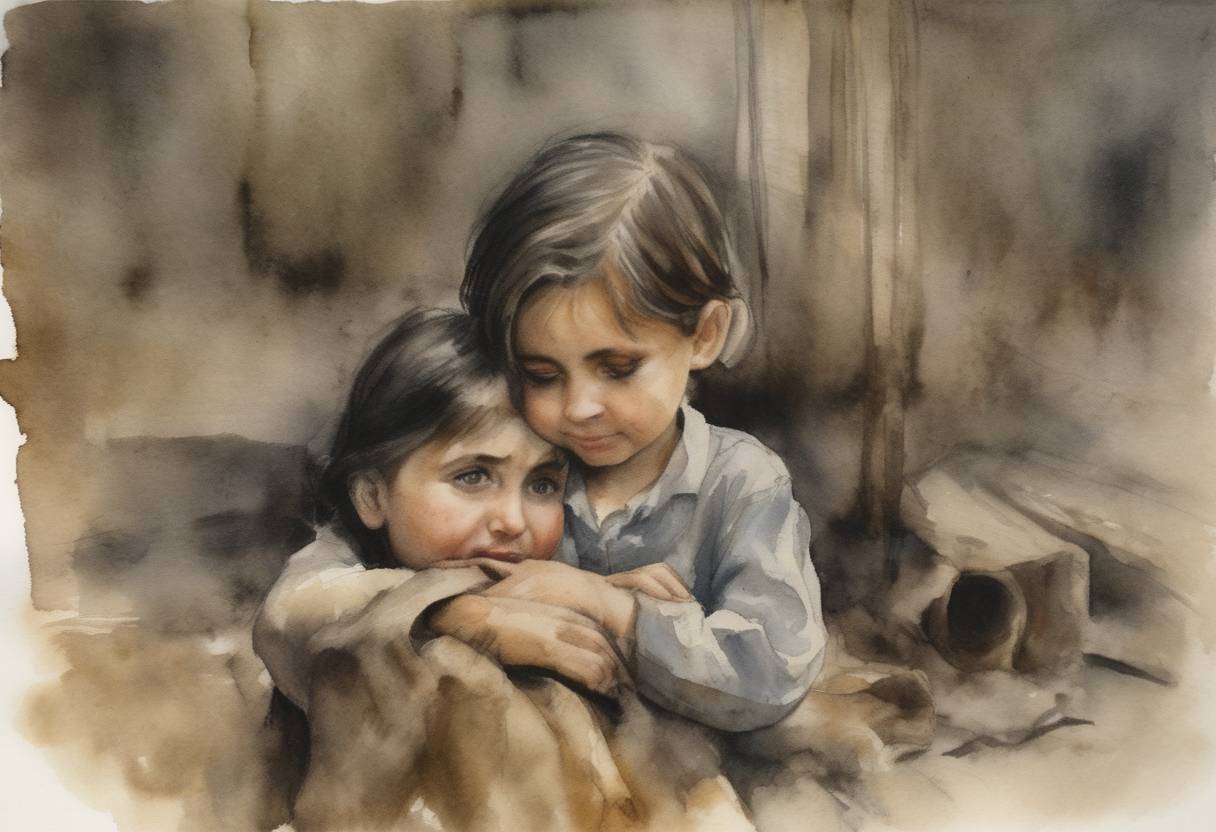
The Holocaust: The Tragic Murder of 800 Romani Children at Auschwitz on October 10, 1944
During the harrowing period of the Holocaust, countless atrocities occurred as part of the systematic genocide orchestrated by the Nazi regime. Among these tragic events was the mass murder of 800 Romani children at Auschwitz-Birkenau concentration camp on October 10, 1944. This horrifying act was a part of the broader genocide targeting Romani people, often referred to as the “Porajmos” or “Pharrajimos,” meaning “the Devouring” in the Romani language.
Context
The Romani people were among several groups persecuted by the Nazis, who deemed them racially inferior alongside Jews and other marginalized groups. In Germany and the territories it occupied, the Romani faced immense discrimination, deportation, and extermination. By 1944, Auschwitz-Birkenau, located in German-occupied Poland, had become a primary site for the mass extermination as well as forced labor.
Events Leading Up to October 10, 1944
Nazi Policies: The persecution of the Romani people began with discriminatory laws that escalated into forced internment in concentration camps. Many were deported to Auschwitz, which was notorious for its brutal conditions and mass exterminations.
Auschwitz-Birkenau: The camp complex served as a central hub in the Nazi regime’s plans for the “Final Solution.” Romani, along with Jews and others, were subjected to inhumane conditions, forced labor, medical experiments, and mass executions.
The Atrocity
On October 10, 1944, approximately 800 Romani children confined in Auschwitz were systematically killed. These children were either executed outright or succumbed to the impossible living conditions within the camp, echoing the broader genocidal strategy against the Romani population.
Aftermath
Loss and Impact: The massacre of the Romani children at Auschwitz is part of the estimated 220,000 to 500,000 Romani lives lost during the Holocaust. This event exemplifies the extreme extent of Nazi racism and the catastrophic impact it had on entire communities.
Post-War Recognition: For decades, the suffering of the Romani went largely unrecognized compared to other victim groups. Over time, awareness and acknowledgement of the Romani genocide have grown, with recent efforts aimed at remembrance and the fight against ongoing discrimination.
Historical Significance
The murder of the 800 Romani children at Auschwitz stands as a chilling reminder of the countless lives lost to ideological hatred and racism. It underscores the devastating reach of the Holocaust and serves as a call to remember and educate future generations about this dark chapter in human history to prevent such atrocities from occurring again. The ongoing struggle for recognition and rights for the Romani people remains a pertinent issue globally.