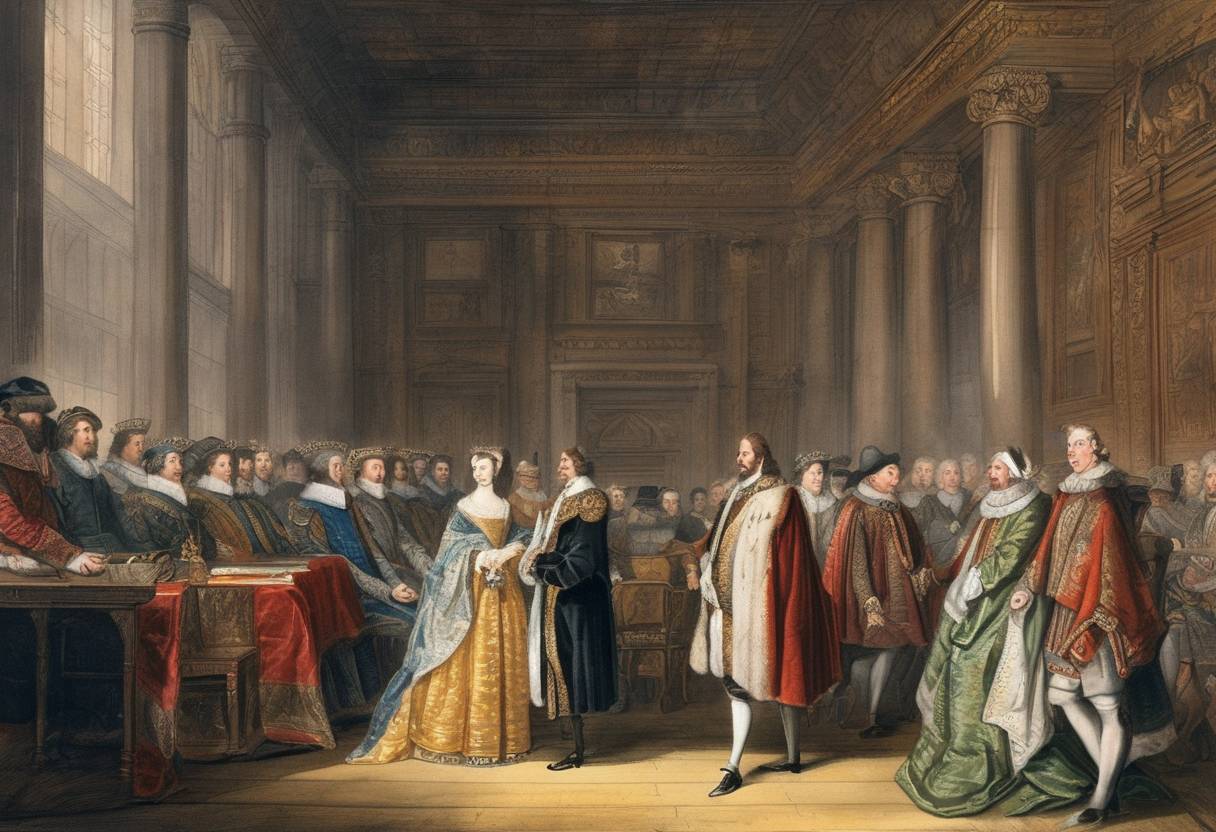
The Virginia Company of London and the Royal Charter of 1606
On December 20, 1606, the Virginia Company of London, a joint-stock company, received a royal charter from King James I of England. This pivotal moment set the stage for English colonial expansion in North America. The charter was a legal document that authorized the Company to establish settlements and govern them, thus instrumental in the founding of the first permanent English colony in America.
Background and Context
The early 17th century marked a period of increased interest in exploration and colonization among European powers. England, eager to expand its influence and compete with Spanish and French interests, sought to establish its own foothold in the New World. The Virginia Company, backed by private investors, was selected as the vehicle for this endeavor. It was formed by merchants and adventurers who saw potential financial gain in the new territories.
Provisions of the Charter
The royal charter granted by King James I conferred extensive rights to the Virginia Company:
- Territorial Claims: The Company was given the right to settle lands stretching from present-day North Carolina to New York. This area was defined as between the 34th and 41st parallels.
- Governance and Administration: It allowed the Company to appoint a council to govern the colony, with powers to create laws that were meant to mirror those of England, provided they did not conflict with English laws.
- Economic Activities: The charter encouraged the extraction and capitalization of natural resources. It enabled the Company to mine for precious metals, cultivate new crops, and engage in trade.
Founding of Jamestown
Following the receipt of the charter, an expedition was organized, and on May 14, 1607, the Virginia Company established the Jamestown Settlement in the Colony of Virginia. Jamestown became the first enduring English settlement in North America and faced numerous challenges, including conflicts with indigenous peoples, famine, and disease.
Historical Significance
The charter and subsequent establishment of Jamestown had profound implications:
- Cultural Exchange and Conflict: It initiated sustained contact between English settlers and Native American tribes, leading to a long history of cultural exchange and conflict.
- Economic Development: The settlement laid the foundation for the development of tobacco agriculture, which became a critical economic driver for the colony.
- Legal and Political Precedents: The governance structures established under the charter influenced colonial administration and ultimately the development of democratic principles in America.
The royal charter of 1606 thus marked a significant turning point in the history of European colonization in the New World, setting forth a pattern of exploration, settlement, and economic exploitation that would continue for centuries.