India Becomes a Republic: January 26, 1950
1950 · New Delhi, India
India officially became a republic, adopting its constitution and marking Republic Day.
September 2, 1946
The Interim Constitution of India is adopted, outlining the Indian government structure before the full Constitution is enacted.
New Delhi, India | Constituent Assembly of India
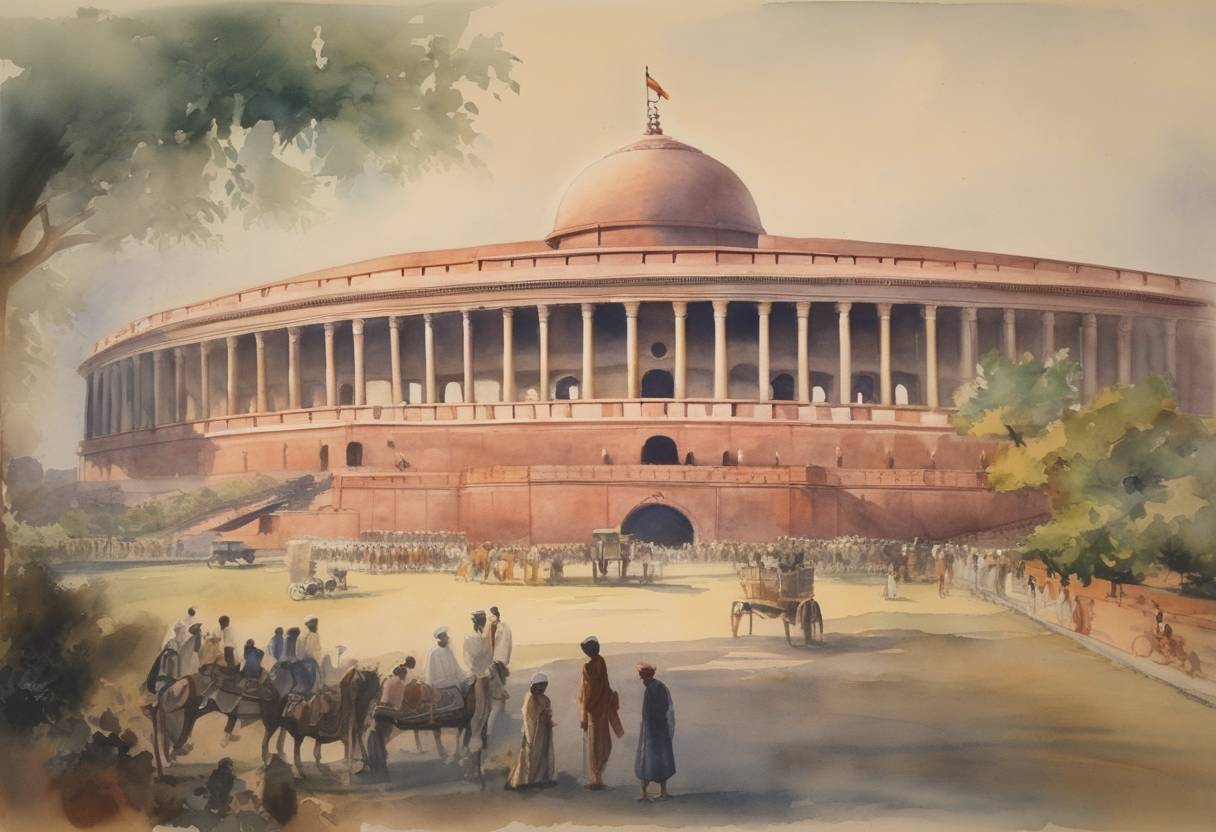
On September 2, 1946, the Interim Government of India was established following the announcement of the British Cabinet Mission Plan earlier that year. While the Interim Government set the foundation for India’s transition towards independence, the actual adoption of the Interim Constitution and the governmental restructuring took place subsequently, intersecting with the legislative processes that led India towards framing its permanent constitution.
British Rule in India: India had been under British rule for nearly two centuries, with growing demands for independence, reaching a peak after World War II. The Indian National Congress and the Muslim League were key political organizations advocating for independence.
Cabinet Mission Plan: In March 1946, a British delegation known as the Cabinet Mission visited India to discuss and finalize plans for India’s transition to independence and self-governance. The plan envisioned a union of provinces and princely states.
Formation of the Interim Government: Under the leadership of Jawaharlal Nehru, a National Congress leader, the interim government took office on September 2, 1946. This government aimed at facilitating the transfer of power and drafting a new constitution through a Constituent Assembly.
Composition: The Interim Government included members from both the Indian National Congress and the Muslim League, as well as other minority parties. However, significant political tensions existed, notably between the Congress and the League, led by Muhammad Ali Jinnah.
Powers: Although the interim government had limited power, still answerable to the British Viceroy, it assumed administrative responsibilities and represented Indian interests in discussions about future governance.
Preparation for Independence: This government played a crucial role in the preparation for India’s full sovereignty, setting up ministries, and addressing the communal issues that were prevalent during that period.
Path to Independence: The policies and administrative decisions made during the interim government paved the way for India’s independence and the eventual creation of the Republic of India on January 26, 1950, when the full Constitution came into force.
Constitutional Framework: The interim governance structure underscored the importance of a parliamentary system and federalism, ideas that were later embedded in the permanent Constitution of India.
The establishment of the Interim Government marked a critical chapter in India’s journey toward self-governance and laid the groundwork for the constitutional democracy that the country would later adopt and uphold.
Source: en.wikipedia.org