Battle of Oudenarde (July 11, 1708)
1708 · Oudenaarde, Belgium
Battle of Oudenarde occurs when forces of the Grand Alliance, led by Duke of Marlborough, defeat French troops.
September 29, 1708
The British and Dutch forces, led by the Duke of Marlborough, successfully captured the city of Lille after a prolonged siege during the War of the Spanish Succession.
Lille, France | Allied Forces (British and Dutch)
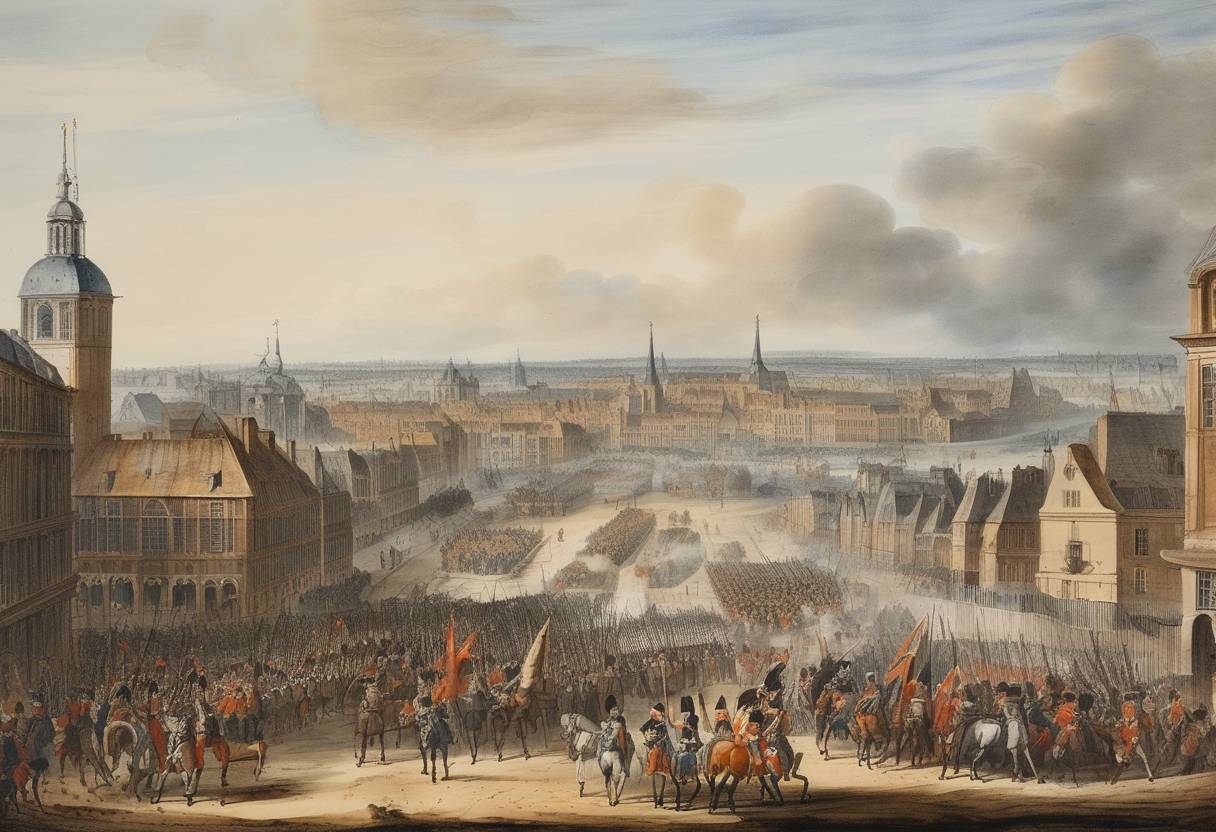
The Siege of Lille took place during the War of the Spanish Succession, a major European conflict that erupted due to disputes over the succession to the Spanish throne after the death of the childless Charles II of Spain. Various European powers lined up behind different successors, leading to alliances that pitted France and Spain against most of the rest of Europe, including Great Britain, the Dutch Republic, and the Holy Roman Empire.
On September 29, 1708, a critical moment in the War of the Spanish Succession occurred when British and Dutch forces, under the command of John Churchill, the 1st Duke of Marlborough, successfully captured the French city of Lille. This followed an arduous siege that began on August 12, 1708. The siege was a significant military engagement. Lille, one of the strongest fortresses in France, was defended by Marshal Boufflers and garnished with a substantial garrison.
Allied Strategy: Prior to the siege, the Grand Alliance, comprised of major European powers, sought to weaken France’s dominance. Capturing Lille was strategically significant to gaining control over Flanders and securing a route for a potential invasion into France.
Military Preparation: Marlborough, known for his exceptional military leadership, meticulously planned the attack. The forces assembled included British, Dutch, and auxiliary troops numbering approximately 90,000 men, leveraging a combination of artillery and infantry.
The siege was noted for its extreme difficulty, due both to Lille’s formidable defenses and the tenacity of its defenders led by Boufflers. The fortifications designed by the famed military engineer Vauban complicated the assailants’ efforts. Additionally, the besieging forces faced logistical challenges, including supply issues and adverse weather conditions, which prolonged the siege.
Strategic Victory: The fall of Lille was a turning point in the war. It marked a significant setback for the French, showcasing the erosion of Louis XIV’s military strength.
Boost to Allied Morale: The capture of Lille provided a substantial morale boost for the Grand Alliance and reinforced the Duke of Marlborough’s standing as a preeminent military commander.
Continuation of Hostilities: Despite the victory, the war continued until the signing of the Treaty of Utrecht in 1713, which eventually brought an end to the hostilities by redrawing the map of Europe and redistributing territory among the victorious powers.
The Siege of Lille remains a testament to the complexity and brutality of early 18th-century warfare, reflecting the broader geopolitical shifts of the era.
Source: en.wikipedia.org