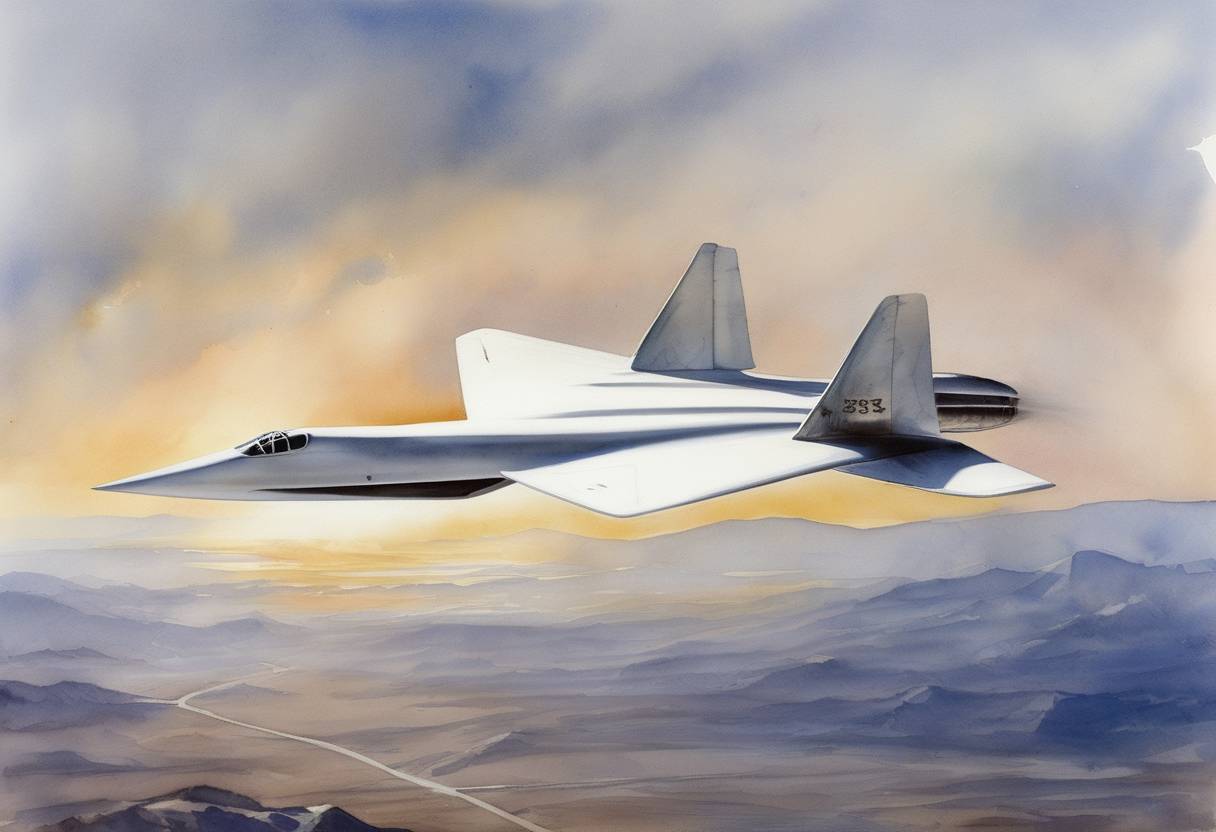
First Flight of the North American XB-70 Valkyrie
On September 21, 1964, the North American XB-70 Valkyrie, a prototype supersonic bomber, achieved its maiden flight. This flight marked a significant milestone in aviation technology and military aircraft design during the Cold War era.
Background
The XB-70 was developed by North American Aviation in the late 1950s as a part of the United States Air Force’s strategic effort to create a high-speed, high-altitude bomber capable of avoiding Soviet air defenses. The plane was designed to reach speeds exceeding Mach 3 and fly at altitudes above 70,000 feet. Its innovative design featured a delta wing and was intended to exploit advances in aerodynamics and materials technology.
First Flight Details
- Date: September 21, 1964
- Location: Palmdale, California
- Test Pilot: Alvin S. White
- Co-Pilot: Colonel Joseph F. Cotton
During the initial flight, the XB-70 flew from Air Force Plant 42 in Palmdale to Edwards Air Force Base. The journey lasted approximately 1 hour and 16 minutes. While the aircraft did not reach its intended speeds during this first outing, the flight demonstrated the basic airworthiness of the revolutionary aircraft.
Design and Capabilities
The XB-70’s unique design included six engines, which provided the thrust needed to achieve high-speed flight. The craft also featured distinctive folding wing tips, designed to improve stability at supersonic speeds. The aircraft’s structural composition involved the use of advanced materials, including stainless steel honeycomb panels, to withstand the heat generated by Mach 3 flight.
Significance and Legacy
Though originally conceived as a strategic bomber under the designation of WS-110A, changing defense priorities and the advancement of intercontinental ballistic missiles reduced the perceived necessity for a high-speed bomber. Only two prototypes were built, and the program was eventually relegated to research roles, focusing on high-speed flight dynamics and aerodynamics.
- Impact: The research conducted with the XB-70 Valkyrie contributed to the development of future aircraft, notably in supersonic transport and advancements in material science.
Conclusion
The first flight of the XB-70 Valkyrie represented a peak in human ingenuity and ambition in aviation design. While it ultimately did not enter operational service, its contributions to aerospace technology and understanding of high-speed flight have had lasting impacts and continue to influence modern aircraft engineering.