Preliminary Peace Treaty Between Great Britain and France - January 20, 1783
1783 · Versailles, France
The Kingdom of Great Britain signed a preliminary peace treaty with France, marking the end of hostilities in the American Revolutionary War.
July 10, 1778
Louis XVI of France declared war on the Kingdom of Great Britain, entering the American Revolutionary War.
Paris, France | French Monarchy
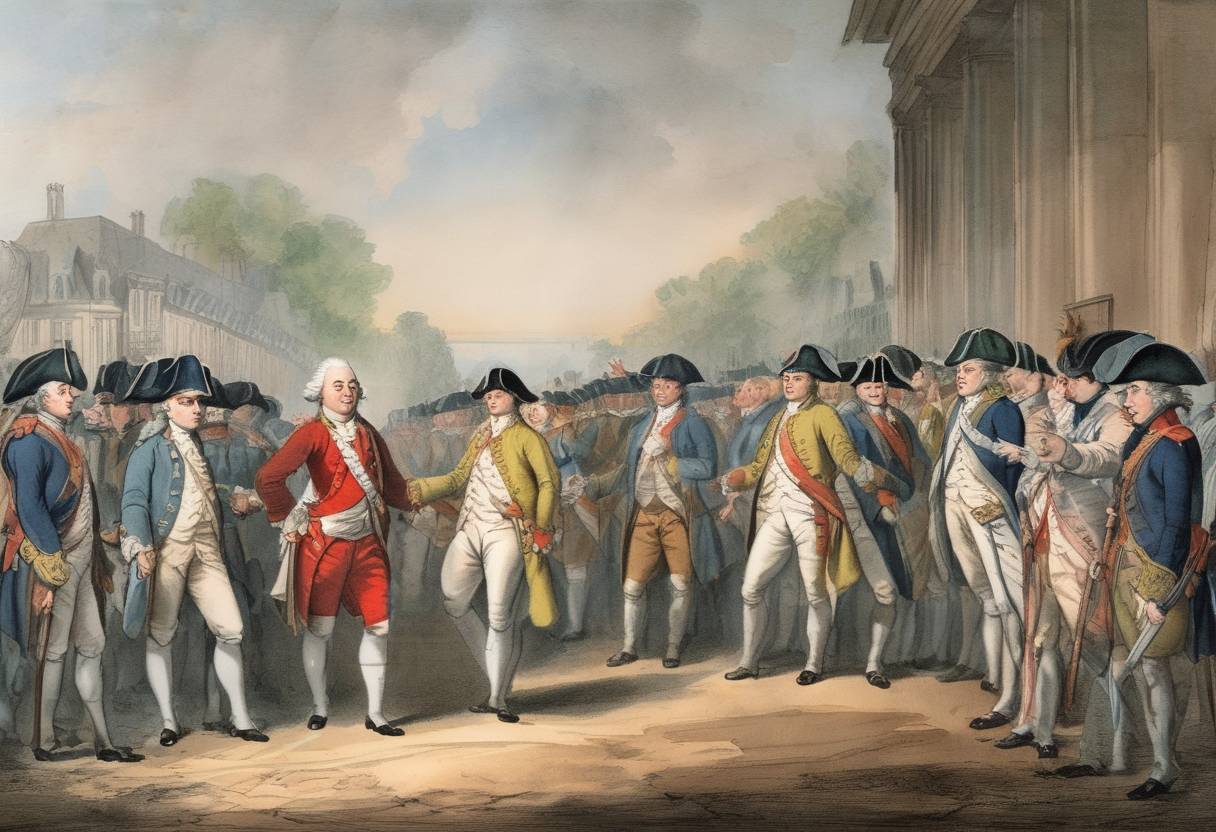
On July 10, 1778, King Louis XVI of France formally declared war on the Kingdom of Great Britain, marking France’s official entry into the American Revolutionary War. This significant decision was a turning point in the conflict, as it transformed what had been a colonial rebellion into a global war.
The American Revolutionary War began in 1775 as a struggle between the Thirteen American Colonies and Great Britain. The colonies sought independence from British rule, driven by grievances over taxation without representation and other restrictive policies imposed by the British government.
France, under the rule of King Louis XVI, had been closely monitoring the conflict. The French had long-standing animosities with Britain, stemming from previous conflicts such as the Seven Years’ War (1756-1763), which had resulted in significant territorial losses for France. The American Revolution presented an opportunity for France to weaken its rival and regain influence.
Alliance with the American Colonies: Prior to the formal declaration of war, France had already been providing covert support to the American colonies. This support became official with the signing of the Treaty of Alliance and the Treaty of Amity and Commerce on February 6, 1778. These treaties recognized American independence and established a military alliance between France and the United States.
Military Preparations: Following the treaties, France began preparing for war by building up its naval and military forces. The French government saw the conflict as a chance to restore its prestige and power on the global stage.
On July 10, 1778, Louis XVI’s declaration of war against Great Britain was a formal acknowledgment of France’s commitment to the American cause. This declaration was not only a military maneuver but also a diplomatic statement, signaling France’s support for the principles of liberty and self-determination espoused by the American revolutionaries.
Global Conflict: France’s entry into the war expanded the conflict beyond North America. It prompted Spain and the Dutch Republic to join the war against Britain, further stretching British resources and complicating their military strategy.
Military Impact: French military and naval support proved crucial to the American victory. The French navy played a decisive role in the Battle of the Chesapeake, leading to the British surrender at Yorktown in 1781.
Diplomatic Outcomes: The war’s outcome significantly altered the balance of power in Europe and the Americas. The Treaty of Paris, signed in 1783, recognized American independence and marked the end of British colonial rule over the Thirteen Colonies.
In summary, Louis XVI’s declaration of war on July 10, 1778, was a pivotal moment in the American Revolutionary War. It not only bolstered the American fight for independence but also reshaped international alliances and set the stage for future geopolitical developments.
Source: en.wikipedia.org