November 12, 2001

American Airlines Flight 587 crashes in the Belle Harbor neighborhood of Queens, New York City, shortly after takeoff from John F. Kennedy International Airport, killing all 260 people on board and five people on the ground.


New York City, United States | American Airlines
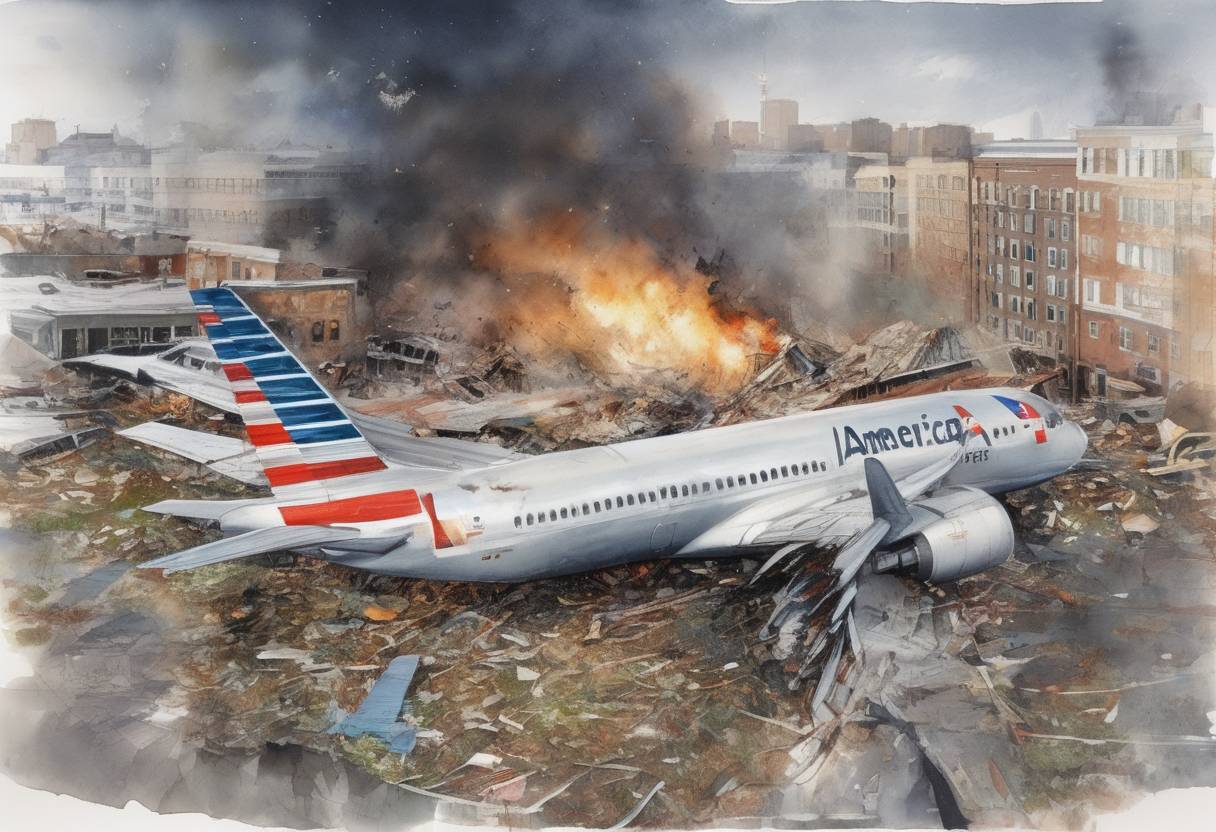
Watercolor painting based depiction of American Airlines Flight 587 crashes in the Belle Harbor neighborhood of Queens, New York City, shortly after takeoff from John F. Kennedy International Airport, killing all 260 people on board and five people on the ground. (2001)

American Airlines Flight 587 Crash

Overview

On November 12, 2001, American Airlines Flight 587, an Airbus A300-600, crashed in the Belle Harbor neighborhood of Queens, New York City. The flight was en route from John F. Kennedy International Airport (JFK) to Las Américas International Airport in Santo Domingo, Dominican Republic. Tragically, all 260 people on board and five individuals on the ground lost their lives.

Context

  • Date: November 12, 2001
  • Aircraft: Airbus A300-600
  • Operator: American Airlines
  • Flight Route: JFK, New York City to Santo Domingo, Dominican Republic

This disaster occurred just two months after the September 11 attacks, heightening public anxiety and initial fears of terrorism. However, investigations later confirmed that the crash was not related to any terrorist activities.

Key Events Leading to the Crash

  1. Takeoff: Flight 587 took off from JFK at 9:14 AM EST.
  2. Turbulence: Shortly after takeoff, the aircraft encountered wake turbulence from a Japan Airlines Boeing 747 that had taken off just ahead of it.
  3. Pilot Response: The first officer, who was flying the aircraft, responded to the turbulence with aggressive rudder inputs.
  4. Structural Failure: These inputs led to excessive stress on the vertical stabilizer, causing it to detach from the aircraft.
  5. Crash: The loss of the vertical stabilizer resulted in a loss of control, and the aircraft crashed into the Belle Harbor neighborhood at 9:16 AM.

Investigation and Findings

The National Transportation Safety Board (NTSB) conducted a thorough investigation into the crash. Key findings included:

  • Rudder Inputs: The first officer’s overuse of the rudder controls in response to wake turbulence was identified as a critical factor.
  • Training and Procedures: The investigation highlighted issues with American Airlines’ pilot training regarding the use of rudder controls.
  • Aircraft Design: The Airbus A300’s rudder control system was scrutinized, but ultimately, the design was deemed sound under normal operating conditions.

Aftermath and Consequences

  • Regulatory Changes: The crash led to changes in pilot training programs, emphasizing proper rudder use and handling of wake turbulence.
  • Community Impact: The crash had a profound impact on the Belle Harbor community, which was still recovering from the September 11 attacks.
  • Memorials: Memorials were established to honor the victims, both at the crash site and in the Dominican Republic, reflecting the significant loss to the Dominican community.

Broader Historical Significance

The crash of Flight 587 underscored the importance of pilot training and aircraft handling procedures, particularly in response to wake turbulence. It also highlighted the need for clear communication and understanding of aircraft systems among pilots. The event remains a somber reminder of the complexities and risks associated with air travel, even in the absence of external threats.

Source: www.ntsb.gov