Dwight D. Eisenhower's Inauguration
1953 · Washington, D.C., United States
Dwight D. Eisenhower is inaugurated as the 34th President of the United States.
January 20, 1945
Franklin D. Roosevelt was inaugurated for an unprecedented fourth term as President of the United States.
Washington, D.C., United States | United States Government
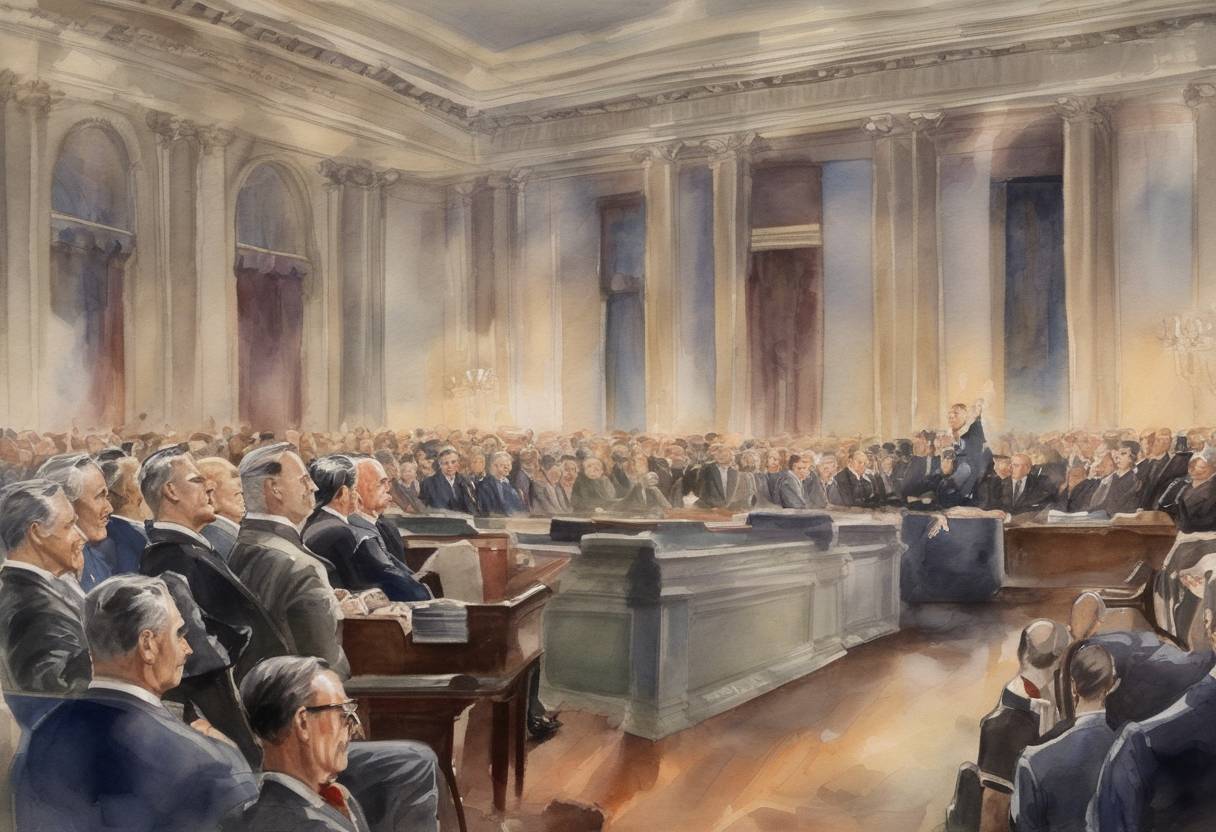
On January 20, 1945, Franklin D. Roosevelt was inaugurated for an unprecedented fourth term as President of the United States. This event marked a significant moment in American history, as no other U.S. president has served more than two terms, a tradition that was later codified by the 22nd Amendment to the Constitution.
World War II: Roosevelt’s fourth inauguration took place during the final stages of World War II. The United States was deeply involved in the conflict, and Roosevelt’s leadership was seen as crucial to the Allied war effort. His experience and established relationships with other Allied leaders, such as Winston Churchill and Joseph Stalin, were considered vital for the successful conclusion of the war.
The 1944 Election: Roosevelt ran for his fourth term against Republican candidate Thomas E. Dewey. Despite concerns about his health and the tradition of a two-term presidency, Roosevelt won the election with a decisive victory, securing 432 electoral votes to Dewey’s 99.
Ceremony: The inauguration was notably subdued compared to previous ones, reflecting the somber mood of a nation at war. The ceremony was held on the South Portico of the White House, rather than the traditional location at the U.S. Capitol, to conserve resources during wartime.
Health Concerns: Roosevelt’s health was a significant concern at the time. He appeared frail during the inauguration, and his speech was notably shorter than in previous years, lasting only about five minutes. Despite his declining health, he remained committed to leading the nation through the war.
Leadership During War: Roosevelt’s fourth term was primarily focused on bringing World War II to a successful conclusion. His leadership during this period was instrumental in the eventual victory of the Allies.
Death and Succession: Unfortunately, Roosevelt’s fourth term was cut short. He passed away on April 12, 1945, just months after his inauguration. Vice President Harry S. Truman succeeded him and led the nation through the final months of the war and into the post-war era.
22nd Amendment: Roosevelt’s unprecedented four terms prompted a reevaluation of presidential term limits. In 1951, the 22nd Amendment was ratified, limiting presidents to two terms in office, ensuring that no future president could serve more than eight years.
Roosevelt’s fourth inauguration remains a pivotal moment in U.S. history, highlighting both the extraordinary circumstances of his presidency and the lasting impact of his leadership during one of the most challenging periods in global history.
Source: en.wikipedia.org